

AT News: Typewriter Vision
Every fly-fishing guide has a process, at least the good ones do.


Every fly-fishing guide has a process, at least the good ones do. That probably goes for writers, marketing directors and business owners as well.
Because the ability to consistently map out a novel set of returns (fish in the net, page views, consumer connections) in a world of ever-changing variables (weather, water, technology, consumer behavior) is what generally separates the dabblers from the professionals.
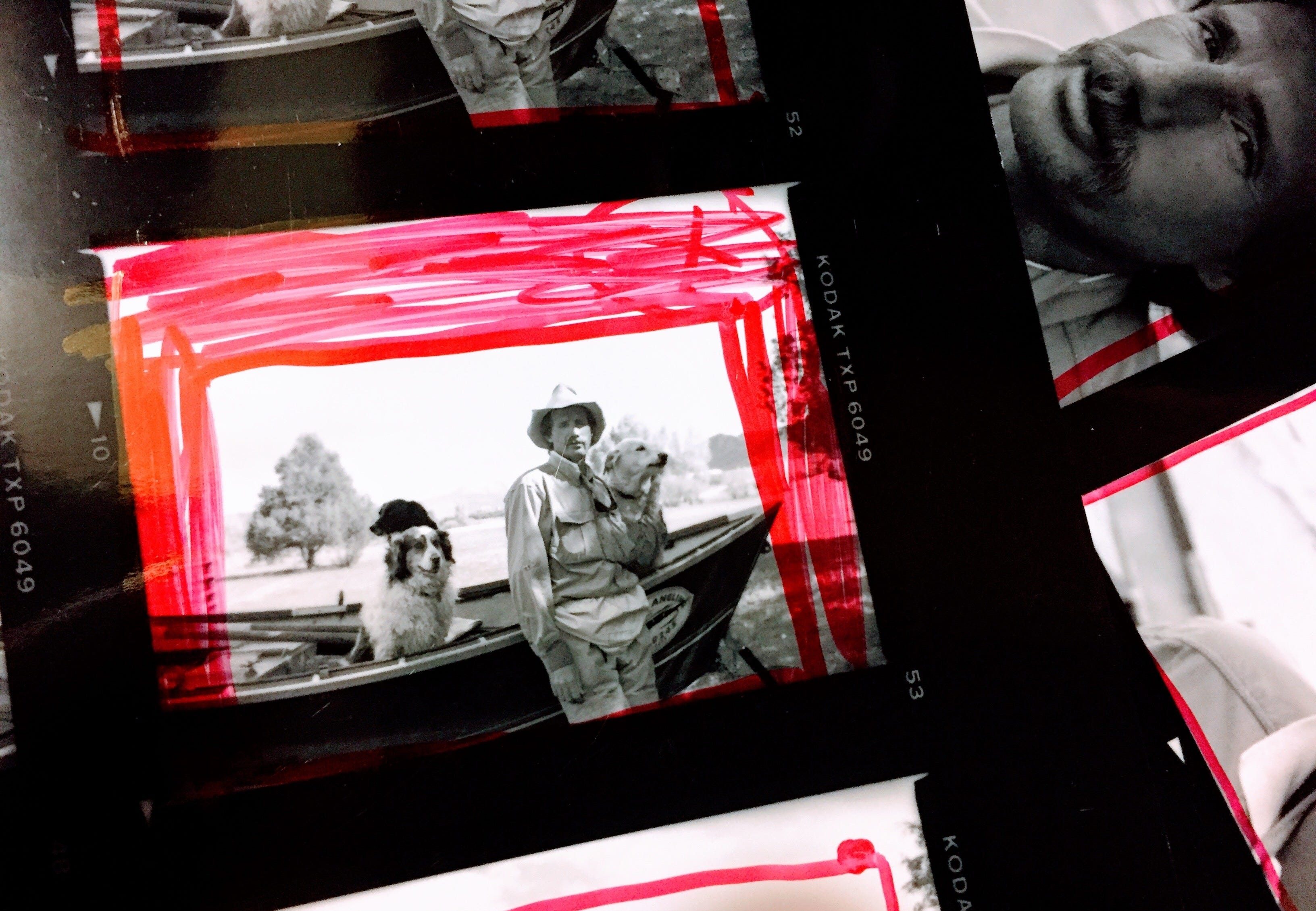
Back in the day when I was a young guide for Tim Heng at the Taylor Creek Fly Shop in Basalt, Colorado, Kea Hause was the best fishing guide in the valley. There were many other fine guides–Tony Fotopulos, “Big” Steve Avery, John High, Curly, Kris Suplee, Johnny Thunder, the list goes on and on–but Kea was atop the A-list.
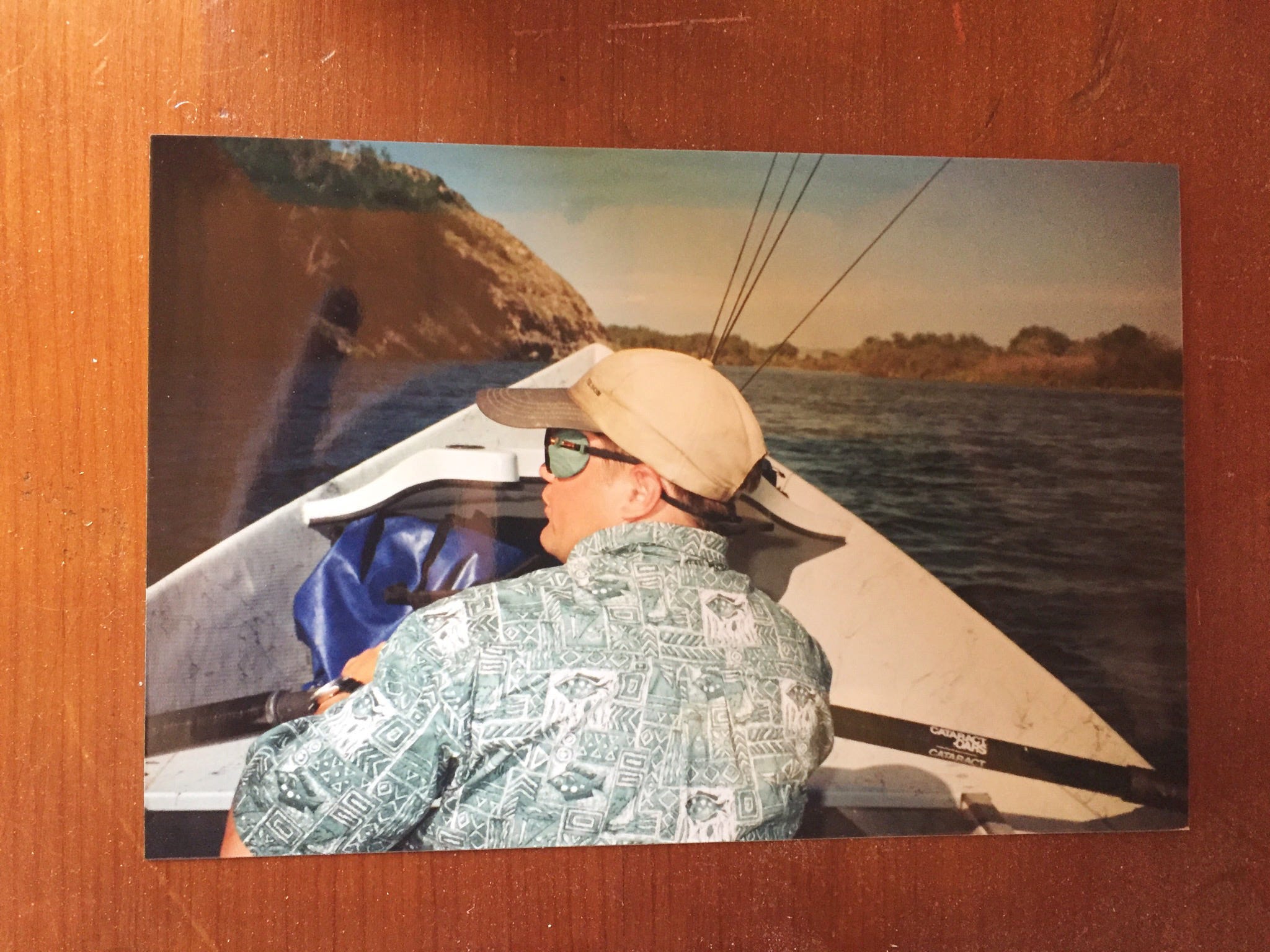
And what probably made Kea the best was his uncanny ability to both think in the moment (the now) and beyond the moment (the future) as he rowed down the river–he was analyzing and processing the conditions during the practice of fishing, not at lunch or later over a beer. He used to call it “typewriter vision,” a unique talent that allowed him to keep one eye on the client, and one on the next run.
When we interviewed him for Castwork, he summed up his on-water philosophy this way, “To be honest, there’s an inner voice… call it God, call it nature, call it gut instinct. You have to quiet your mind and your will to the point where you can receive instruction from that voice. I’ve learned to be flexible and listen to what the river tells me. When you have an open mind, you are in a better position to receive luck, energy, whatever.”
Essentially, he had configured his fishing practice to be an intuitive conversation with the world around him, and the river, specifically–two living organisms building real-time knowledge as they informed each other.
Donald Schön, a philosopher and MIT professor during the 70s, called this practice “reflection-in-action”–the ability to think about what you are doing while you are doing it. Before his research work and writings, the academic world basically treated learning like a textbook formula: you study opaque theory in a classroom, then apply it later to the real world.
But Schön argued (The Reflective Practitioner) 1 that real life doesn’t work this way. He noticed that the most successful professionals–particuarly artists, architects, designers and musicians–rely on a messy, intuitive form of intelligence that happens during the act of creation.
True intelligence is being created in the moment through interaction, observation and experimentation. 2 There’s always time to analyze and reflect on your experience later (the post-mortem), but the real work is being done in the moment.
The “Swampy Lowland”
Schön wrote about the “swampy lowland” of real practice versus the “high, hard ground” of theory. Up on the high ground, fishing or business challenges are clean and simple to solve with books, AI queries and “how-to” videos; down in the swamp, solutions are muddier and messier, requiring a much more utilitarian approach. Broken trailers and websites are often MacGyvered on the fly with what you have at your disposal.
He would argue that in the real world, weather, water and fish behavior are never fixed values and overly pedantic approaches generally struggle when conditions change.
Expertise isn’t having your fly rod rigged before you hit the water; it’s your ability to experiment and pivot when carefully mapped out plans fall apart. In this light, “mistakes” are not actually failures–they are opportunities to learn. And the best practitioners can ride the daily ebbs and flows of experience like a wave.
A-list fly-fishing guides are constantly exploring, building theories on the water (and often breaking them) and manufacturing solutions alongside their clients. For the writer and artist, the process of creation is the thinking. Stories aren’t cooked up the night before, then written down in the morning–you write them into existence, in the moment. And for the founder or business owner, spending months on AI-generated, 5-year business plans can only get you so far, before the market and tariffs shift, algorithms change, or customer retention strategies become dated and obsolete.
In this world view, the faster you fail, the faster you can adjust and learn. “Move fast and break things” in the parlance of early software development. 3
As a business strategy, founders should end every week by looking at the messiest challenges they had to overcome, and instead of asking, “How did our plans get messed up?” they should ask, “What did this problem teach us about how our business operates?” Then take those insights and plug them into next week’s operations. (A fishing guide might do this daily.)
At the philosophy’s core, you’re not trying to (completely) solve a problem before you push out into the current. You simply want to take action, experiment, quickly iterate, then learn from your mistakes. Eventually, navigating unpredictable, real-world situations will become second nature.
Looking for a Driveby
Kelly Galloup from the Madison River’s Slide Inn is famous for talking about how he’ll only go “five minutes with a fly color” (without any fish activity), before switching it out, and making a significant color change, i.e. not a subtle transition, like olive to a lighter brown, but a more dramatic one, like white to black. 4
White → Black → Tan → Olive → Yellow → Chartreuse
These aren’t random (color) guesses–it’s a rapid, real-time experiment intended to elicit information.
If you can figure out what fly color the fish are attracted to today–and not spend four-to-eight hours doing so–then you can begin to analyze and iterate any second-order challenges: the retrieve, action, fly size, materials, silhouette etc.
For Galloup, anglers who get stuck in the habit of explaining away their fishless outings are simply putting “Band-Aids on their egos”: It’s not us. It’s the wind. It’s the direction of the wind. It’s the sky. It’s the barometric pressure. But what did you do to change the outcome? If you were a competitive fisherman, you wouldn’t sit stagnant. If there was a $100,000 paycheck at the end of that, you wouldn’t sit around making excuses for one color or one style of fly, right? You would move through it.
The philosophy is identical to Schön’s: fail fast, so you can learn fast, while also explicitly rejecting any stale, inflexible “how-to” axioms like, bright day, bright fly; dark day, dark fly. For generations, anglers’ learning curves have been crippled by these kinds of shallow and preconceived notions.
A better strategy would be to simply show up at the river or saltwater flat and let the weather and fish dictate the day’s strategy. Sit on the bank and observe the birds and water for ten minutes before you get started, and you might just stumble onto a few clues everyone else has ignored.
As Kea was fond of pointing out, “I never wake up in the morning with an agenda, no set plan. I have hunches and ideas, but I don’t make final decisions until it is time to cast.” – Andrew Steketee
Ombraz Azzurro Armless Sunglasses
Ombraz has introduced a new pair of armless fishing frames: the Azzurro. They are a “water-first” full coverage performance sunglass built with ZEISS’s (premier German manufacturer) most advanced optics.
“On the water, you’re dealing with glare from every angle, sweat, salt, spray, hats, wind and long hours of exposure. The Azzurro takes the things Ombraz already does differently–no arms, no hinges, no side pressure, no slipping, no falling off–and adds the wrap coverage and lens performance needed for moving around water.” says Jensen Brehm, Ombraz co-founder.
The ZEISS lens collection: polarized grey with blue mirror (bright water), polarized grey with green mirror (bright sun), polarized rose with copper mirror (high contrast) and polarized yellow with green mirror (variable light).
We’ll be testing their brown prescription lenses in a few weeks, with and without mirrors. The Azzurros are priced at $195.

Recent News
John Simms, founder of Simms Fishing Products, passes at 89. “Simms’ career was marked by constant reinvention. Beyond fishing and avalanche safety, he launched rafting ventures and, later in life, became a large-scale metal sculptor whose work reflected a fascination with geometry and natural forms. As Big Life Magazine observed, there was a ‘generative quality’ to Simms–paired with a deep generosity–driving him to improve the experiences of others in the pursuits he loved.”
What Fly Fishing Taught Me About Building a Brand from Fast Company. “I have watched brilliant founders fall in love with a brand positioning for the same reason an angler falls in love with a fly: because it worked somewhere else, because it feels right, or because they simply like it. But comfort is not a strategy. The positioning that feels safe is almost always the one that sounds like everyone else in the category. ‘We’re the AI-powered platform for…’ is the brand equivalent of throwing the same Woolly Bugger that every other angler is throwing. The brands that break through, match the moment the audience is living in.”
From AFFTA: Why Fly Fishing Brands and Retailers Should Be on Substack. “People are hungry for intentional, slower-paced feeds. In a world of three-second reels and algorithmic outrage, a well-crafted 800-word piece that lands in someone’s inbox, from a brand or writer they chose to follow, is an increasingly rare thing. That scarcity is an opportunity. Partner with the writers already there. Substack has a thriving fly fishing ecosystem. Reel Pure Radio and Flylab are good examples of what’s possible when the writing takes the culture seriously. Denim brand Still Here partnered with five Substack creators for a product launch, giving each creator full creative agency, and saw 75%+ open rates and sold out on launch day, with 80–90% of click-throughs originating from Substack email. The fly fishing trade equivalent is straightforward: find the writers your customers are already reading and build something with them.” AFFTA also takes a dive into the Reddit content salt mines, and what, if any, value is there for specialty retailers.
Kyle Frost is now at AllTrails and he has some interesting data on the dropped reservations at U.S. National Parks. “The parks are going to be busy whether we worry about it or not. So if you’re headed to Yosemite, Rainier, or anywhere busy this summer, a few things that make the day better for you and everyone behind you: Show up ready. Download your maps before you lose signal, because service drops at many trailheads. Check recent conditions and the forecast so you’re not the person who needed help that a stretched ranger had to provide. Pack out a little more than you packed in, and be prepared to pivot; there are plenty of worthwhile options in and near these parks. Go when others don’t. The data is clear that weekends and mid-day are peak times. A weekday trip, or an early start, is the single biggest difference-maker, and the hikers already doing it are often the ones writing the most positive reviews. Check what time of day a trail tends to peak before you commit to a plan. Be kind. Rangers and gateway-town staff are short-handed and catching grief for decisions made outside the park boundaries. A little patience goes a long way right now.”
Where is product discovery headed? Dan Coe from The Brand Report on the ever increasing (sell-through and relevance) challenges for brands and specialty retailers: Place Was Never Just Place. “In outdoor, Place is collapsing back into Promotion. Distribution used to be something a brand earned once and then let do the talking. Now it is something a brand has to earn again and again, across a dozen fragmented, lower-trust surfaces–specialty floors, experiential stages, creator feeds, podcasts that get cited in answer boxes, and the recommendation engines doing the narrowing. The macro is moving the same direction underneath. Meta CPMs are running 20% higher year over year. DTC customer acquisition costs are up 25–40% across most apparel and outdoor categories. Google search traffic to publishers is down on the order of a third in a single year and still falling. The two surfaces a generation of outdoor brands built their growth model on–wholesale credibility plus paid digital reach–are both narrowing at the same time, and the new surface (LLM recommendation) is gated by editorial signal most outdoor brands aren’t generating yet. The new rack is an answer box listing five products for an exact trip a customer is planning next weekend.” Specialty retailers are going to have to do something they’ve never done before: start hiring incredibly competent and novel thinking marketing teams, not just people spinning up Shopify sites.
The wait is worth it. From Andrew Luter: The brands with the longest waitlists aren’t the ones trying hardest to grow. “There’s also something about friction that the slow goods companies understand intuitively. Modern commerce is designed to eliminate inconvenience. Everything is available immediately. Anything can be delivered overnight. And yet some of our most meaningful experiences involve waiting. Camping permits. Powder mornings. A permit tag after years of failed draws. Nobody tells stories about two-day shipping. People tell stories about finally getting a Melly. About the rod they waited three months for and have fished for twenty years. About a Dehen sweater that still fits the same way it did in 1987. In high school, I once waited for months for a hand-made Burton snowboard to come out of a little factory in Vermont. When it finally arrived, personally signed by Jake, it had an almost totemic presence. Nothing like anything I could feel running down to Evo and grabbing one off the shelf today. Friction and scarcity don’t just build demand–they build meaning. The waiting creates a relationship with the thing.”
Colorado Parks and Wildlife has been hard at work, salvaging Antero Reservoir’s fish as the lake is drained for drought mitigation. “Amid the draining and closure of popular fishing spot Antero Reservoir, Colorado Parks and Wildlife has been hard at work to salvage the lake’s fish. According to a report from the agency, their aquatic biologists in conjunction with Denver Water staff pulled more than 1,000 trout out of Antero Reservoir on Friday, heavily relying on the use of electrofishing. This technique involves sending a controlled electrical current through the water that temporarily stuns the fish, making them easy to capture while not harming the animals. Per a report from CPW, 981 rainbow, brown, and cutthroat trout that were caught via this means were relocated to Eleven Mile Reservoir. Some other fish that were captured were released into the South Fork South Platte River.” Sad to see for a (formerly incredible) CO stillwater fishery.
From the Wild Steelhead Coalition: The Ocean Just Went Dark Off Our Coast and the steelhead will pay the price. “The Coastal Endurance Array, part of the National Science Foundation’s Ocean Observatories Initiative, is being pulled out of the water. It is one of four of five arrays the administration has decided to dismantle, stripping monitoring infrastructure from the East Coast, the Pacific Northwest, and Alaska in a single stroke. For those of us who fight for wild steelhead, this is not an abstract budget line. It is a light going out over the exact water our fish depend on to survive. As the fisher-led Alaska Marine Community Coalition put it, when the data flows go dark, ‘decision-making happens with wider uncertainty,’ and that uncertainty ‘falls hardest on the people with the smallest margin for error.’ For us, that means wild steelhead, a fish already pushed to the edge across much of its range, and the rural communities, tribal nations, guides, and small businesses whose lives are braided into the runs.” It’s becoming increasingly obvious this administration is not tied to science or scientific research in any meaningful way, unless it’s a tool to manipulate, or remove altogether, when the political winds encourage you to stymie political or conservation opposition. What a great fantasy land to live in, where viewpoints or scientific data that don’t support your narrative and agenda can simply be removed from the public zeitgeist.
Ocean monitoring (teardown) update: The Trump administration has backed off its controversial plan to dismantle the Ocean Observatories Initiative. The National Science Foundation (NSF) announced it will pause efforts to take apart the network and will continue with planned maintenance. The reversal comes immediately after intense, bipartisan backlash and a swift, unanimous vote in the U.S. Senate to block the decommissioning–a bill co-sponsored by Senators Lisa Murkowski (R-AK) and Jeff Merkley (D-OR) passed the Senate by a unanimous vote to legally protect the sensors.
On the public lands war front: The Public Land Water Access Association (PLWA) has joined with Backcountry Hunters & Anglers (BHA) to challenge the “unlawfulness” of corner crossings in Montana. “Across Montana, more than 870,000 acres of public land are corner locked. In the eyes of MT FWP, this means the public cannot legally access these lands. We want to be clear, while PLWA has a fundamental disagreement over the interpretation and application of Montana law regarding the legality of corner crossing, this is not an attack on the agency itself. In fact, PLWA continues to work productively with MT FWP on other public access issues all across the state. After generations of legal grayness, PLWA and Backcountry Hunters & Anglers (BHA) have joined forces to seek clarity through Montana courts. Together, on behalf of our collective memberships, and for all Montanans, we filed a lawsuit challenging MT FWP’s new agency guidance to seek confirmation that corner crossing in Montana is lawful.” Although the Montana law is not settled on this legal confrontation (a landmark federal appeals court ruling in 2025 legalized corner crossing in Wyoming and five other states, but that decision came out of the 10th Circuit Court of Appeals–Montana sits in the 9th Circuit, meaning the Wyoming ruling does not legally bind Montana), the amount of time and resource (state, federal and non-profit legal defenses) being allocated in 2026 to fight these kinds of public lands wars is starting to border on the absurd (probably tens of millions in active courtroom litigation over access rights). All for land that the taxpayers already own…
And more: Jim Pattiz of More Than Just Parks reports on Mike Lee (R-UT) and the latest public lands disaster: Mike Lee Moves to Kill the Roadless Rule Permanently–Lee’s “immediate nullification” would erase the 2001 Roadless Area Conservation Rule and a “permanent ban” would prohibit the Forest Service from ever issuing similar roadless area protections in the future. “The amendment is titled, with the bluntness of a ransom note, ‘Roadless Rule Nullification.’ According to the text obtained by E&E News, it erases the 2001 Roadless Area Conservation Rule outright, stripping protection from millions of acres of national forest across thirty-seven states. To understand why Lee did it this way–the rider, the leak, the silence–you have to understand the numbers he’s up against, because they may be the most lopsided in the history of American public policy. When the Forest Service built the Roadless Rule a quarter century ago, it ran one of the most exhaustive public processes in the history of federal rulemaking: more than 600 public meetings across the country and about 1.6 million written comments, the largest response any federal agency had ever recorded for any proposed regulation, before or since. Over 90 percent of those comments favored the rule, and most of the supporters wanted the protections made stronger. The agency itself, in the final rule, pointed to ‘the sheer volume of comments received’ as ‘compelling evidence’ that the public had spoken and been heard.’” Back in reality, Wes Siler doesn’t think it will ever get the votes in the senate and survive the Filibuster. The legislative maneuver feels predictably brazen, but also increasingly desperate.
Use and fight for your public lands. A post election dispatch from Ryan Busse: YOLOing with Roosevelt and Abbey. “Last week, after losing an election here in Montana, I spent a couple of days fly fishing with my son, Badge. ‘Magical’ only hints at how good these moments are now after having missed so many on the campaign trail. The whole thing was refreshing, common, and accessible in a uniquely Montana kind of way. No expensive boats, guides, fancy lodges, or long travel. Just a spur-of-the-moment trip on public land that’s open to all. Both Badge and I have spent a lot of time lately fighting for Montana, have endured much stress at the attacks on what we hold dear, and probably not spent enough time enjoying it, and so for us, it was a good to channel Ed Abbey’s advice from Desert Solitaire, his iconic 1968 work in praise of wilderness: ‘It is not enough to fight for the land; it is even more important to enjoy it. While you can. While it’s still here.’”
Fly-fishing Media
Founder Tim Romano joins Joe Cermele on the Cut & Retie podcast. “Tim beams in to tell us about his favorite alpaca mousing sweater, we wrap ourselves in wet bed sheets and take a drive with the mayor of Gunnison Canyon, cry about the lack of water in the West and rejoice over the film Spring Breakers.”
From Field Mag: Steven Weinberg Talks Upstate Fly Fishing and Painting Trout. “There’s no shortage of fly-fishing books out there. Some focus on beginner education–rod weights explained, casting basics–while others dive into specific strategies like dry fly presentation or how to use entomology to sharpen an angler’s hatch-matching prowess. New York-based writer, artist, and angler Steven Weinberg takes a colorful approach to the subject in his latest title, The Fly Fishing Book: An Artful Guide to Angling, out 5 May 2026, which combines the artists signature water color illustration style with useful fly fishing tips covering gear, casting, fish species, fly patterns and more…”
Fly-fishing sales representative Kurt Krueger (Skwala, Sage, RIO, Redington, Tibor, Fishpond) on the House of Fly Podcast. “Just like everybody, I learned to fly fish the hard way. I didn’t have anybody to show me even how to put a leader on a fly line…” And later, everyone needs a chance: how did you start working in the outdoor industry? “I started working for $10 an hour, but it was for the right guy.”
Social media “hooks,” not utility. From Prof G Markets: how influencers hijacked the consumer economy. What does it mean for brands to build products with the intention of going viral? “I worry that we’re just creating all of these BS products (like buckets of coffee) because we want to go viral…” Finally, someone is getting the point of social media.
Near Father’s Day: Andy and Nicky Mill building some tarpon hunting memories–dad’s are where it’s at.
Gear Buzz
On-water performance: some basic equipment maintenance we often ignore (and shouldn’t) is fly line care (cleaning, conditioning, adding slickness etc.), particularly with the prices of today’s fly lines. This is a super simple way to improve your casting distance and accuracy. There are a number of relatively inexpensive line cleaning/maintenance starter packs from Glide (line dressing), Loon (line up kit) and others. We’ve used Glide and Mucilin (line & fly dressing) for years and they all work great. The brands may not matter a whole lot–it’s more about being diligent and working these practices into your seasonal equipment regimen (even daily if you’re a guide or more serious angler).
From Flylab founder Kirk Deeter: The Five Questions You Should Ask About Fly-fishing Product Reviews. “First, did a human being write the review? You think I’m kidding, but you’d be amazed by the amount of stuff that’s being cranked out via AI, even on some websites you’d recognize. Look for personal touches in the write-up of any product, e.g. where was it fished, by whom and for how long? How did it work compared to other products, especially those from the past. Look for boots-in-water context that AI cannot fake.”
Joe Rotter from Red’s Fly Shop on the evolution of trout spey. “Joe recommends starting with an eleven-foot four-weight rod, a Skagit head no longer than sixteen feet and three tips: a floater, an intermediate and a light sink tip. That will cover everything from swinging wets for rainbows and cutthroat to hucking streamers for browns and bass. Skip the heavy fast-sinking stuff at first. It’s harder to cast and snags up. ‘Snagging is the mortal enemy of success. Fish over their heads. Find out if they’re willing to come up before you try to go down and get them.’” Check out his spey school part one.
Francesca Krempa interviews the founders of Soča, a new women’s fly-fishing apparel brand. Founder Ellie Pitney: “Orvis, Patagonia, Miss Mayfly all make size-inclusive waders that really fill the gap of ‘hard goods,’ but we felt the biggest gap was in soft goods like apparel. The three pieces we’re starting with may look plain at first glance, but they’re really thoughtful. For example, the button-up shirt is designed off a blouse, with feminine details in the cut, trim, and the cuffs. There are tons of other button-downs up there, but ours is really tailored for women.”
Is it raining or hailing? From Backpacker: The Best Rain Jackets for Hiking and Backpacking (2026). On the Patagonia Torrentshell 3L Rain Jacket: “This rain jacket is a true three-layer shell–impressive at a sub-$200 price point–with a 50-denier, 100-percent recycled nylon ripstop face fabric and Patagonia’s proprietary PFC-free PU membrane. Tester Cody Memmel, a tough-to-please Colorado-based fly fisherman, climber, and hiker, was particularly impressed with its hydrophobic chops: ‘This shell was one of the more storm-worthy jackets I have ever worn,’ he said, appreciative of the ability to cinch down the hood, hem, and wrists, as well as the double-guttered front zipper. ‘The H2No membrane was stellar and it had no issues shedding water or pea-sized hail.’”
From Outside: The Best Water Shoes for River Hikes, Slot Canyons and Rowdy Rapids. The Astral Brewer 3.0’s stand out: “Testers named the Astral Brewer 3.0 the best water sneaker for the second year running, and for good reason. This shoe has stood the test of time among river guides, weekend paddlers, and anyone who needs a closed-toe option that handles serious water without looking like technical gear.”
From Field Mag: Eleven Best Film Cameras For Photographers of Any Experience. “Two things are characteristic of the Leica M6’s fame–Leica lenses, and durability (i.e. superior build quality). The Carl Zeiss Leica M mount lenses are arguably some of the best glass ever made. Functionally, all camera operations on the M6 are purely mechanical and manually operated–save for the light meter which takes easily sourced batteries and won’t affect camera function if inoperable. From the shutter function to the film advance and rewind, no automatic functions or modes exist on the M6, meaning it’ll work for as long as the mechanics are maintained.”
Where the real product innovation is happening in the outdoor space: Were You Born in a Barn? from Andrew Luter. “Proximity is the product. You cannot design a better wader if you’ve never stood in a cold river for six hours. You cannot improve a sandal’s strap system if you’ve never guided clients through the Gunnison Gorge with wet feet all day. The founders of these companies weren’t customers. They were users–often professional users–of the products they eventually built. The feedback loop between the problem and the solution was measured in feet, not miles. Startup Colorado puts it plainly: ‘Living and operating from a rural region–directly adjacent to the landscapes that inspire the products–is an experience that informs more than a lunch run or weekend retreat.’”
Protecting Cold-Water Trout Fisheries in the Northern Rockies with TroutCast. “TroutCast is an interactive tool that helps users explore the projected impacts of drought on valuable trout fisheries in the northern Rocky Mountains. As climate change accelerates the frequency and severity of droughts, TroutCast helps resource managers and the public stay ahead of the curve with data-driven insights and forecasts. By improving drought planning and water management, TroutCast empowers communities to make informed decisions that safeguard trout populations, sustain fishing opportunities, and protect the ecological health of our most valued freshwater resources.”
From the House of Fly: the Most Interesting Rods You Probably Haven’t Cast. On the Fly Project Saga Two-hand Rods: “I was out on the water with the Saga recently, and I must admit to smiling and giggling multiple times. I was swinging with my now OG 4114 sample rod on the Missouri River below Cascade. I enjoyed encounters with browns and rainbows while swinging a brace of soft hackle flies on my favorite Saga with our Ballistic scandi line. The Saga was the perfect tool for casting and swinging #14 and #16 flies, and cushioning 4X tippet while battling feisty 16-22” trout.” The Scott Session 9-foot 6-weight fly rod: “During summer in north Idaho there are hatches of PMDs and caddis and the fish key in on these, as well as hoppers. We started the day by throwing steamers against the banks and hit the drop-offs, looking for big bull trout and large rainbows. The Session threw mid-size streamers with ease. It had plenty of backbone to handle our weighted bunny leeches, as well as land some medium-size bull trout. Once the PMDs started popping, we quickly switched leaders and threw on some dries. I was amazed at how smooth and accurate the Session was. Not only could it launch streamers, but it still had the feel of a dry-fly rod. Long, smooth casts with soft landings were no problem for the Session.”
Steve Sullivan, the co-founder Cloudveil (1997) and Stio (2011), talks about the wins, losses and key insights of running an outdoor apparel business: 1. not “losing control” of the business 2. working with “good people” and 3. building the business in an “operationally sustainable manner.” An informative listen for young entrepreneurs that covers DTC and wholesale markets, the DTC versus wholesale product feedback loop (the delta is enormous) and the ongoing challenge of tariffs.
Boating News from SCS
Small Craft Sales interviews Jordana Barrack on her launch of the Poudre River Fund, a new effort focused on protecting and enhancing one of Colorado’s most beloved rivers. For people hearing about it for the first time, what exactly is a River Fund? “Technically, a River Fund is a community-governed pot of funds that are designated for a set of goals related to the needs of a watershed. Through our work at Mighty Arrow, we were seeing other river funds pop up around the western U.S. River funds are managed in similar ways to endowments. The money is actively invested in public equities and bonds, similar to your retirement accounts. Each year, there is a look back period to determine what the average earnings were for the fund. That then determines the re-granting budget that the fund gets to activate for projects in the watershed. For example, on average a fund might earn 4.5%. If the fund has $10 million in its fund, then 4.5% in earnings could yield $450,000 for the year to invest in river health projects. Then it does that every year, year over year, and that money really starts to add up to significant impact for a river and its community.”
The WoodenBoat Show returns to Mystic Seaport Museum June 26 to 28. Three days of wooden boats, tools, varnish, sharp transoms, questionable hat choices and people who can say “lapstrake” without blinking. The show includes classic boats, traditional boats, demonstrations, speakers and the “I Built/Restored It Myself” exhibit. Go for the boats. Stay because someone will probably explain why they own 400 clamps.
Flint Riverkeeper is hosting the Lower Flint Paddle on Saturday, July 25. The group meets at Punks Landing at 9 a.m., then shuttles cars and gear upstream to Radium Springs Landing, also known as Marine Ditch. From there, it’s a 9-mile paddle back down to Punks. The trip is rain or shine, unless severe weather is in the forecast or the river is too high. Flint Riverkeeper members paddle free. Non-members pay $45, which includes a membership. Kayak, paddle and PFD rentals are available for another $15. More info here.
Water Education Colorado has a sobering piece on the emergency drawdown from Flaming Gorge Reservoir. The release is meant to help Lake Powell, but it is hammering Flaming Gorge and the businesses that depend on that reservoir.
Drought.gov’s June 18 Southwest monsoon update says parts of the Southwest may see above-average monsoon rain this summer. Good news for dry ground. Less helpful for big river flows and reservoir storage. A wet afternoon in the desert does not refill Lake Powell. It also does not fix a bad snowpack. It may knock down dust, green up some hillsides and make the creosote smell great–we’ll take that, but nobody should confuse it with a reset button.
Paddling Magazine has a good video on the back deck roll–this is one of those kayak moves that looks like falling over on purpose, then somehow getting credit for it. Worth a watch if you paddle whitewater, mess around in playboats, or would rather roll than swim while your friends pretend not to laugh.
Bonefish & Tarpon Trust is running its 2026 Ultimate Flats Boat Sweepstakes. The prize package includes a Floyd 5WT Skiff, Magic Tilt trailer, Yamaha F40, Minn Kota trolling motor, Simrad electronics, Sage gear, a push pole, Turtlebox, Fishpond gear, Costa sunglasses and more. The package is valued at more than $49,000. It supports BTT’s work for bonefish, tarpon, permit and the flats they live on. Start measuring the garage now.
Down River Equipment has a useful guide to raft rigging: cargo floors, King Slings, drop bags, Captain’s Bags, crossbar bags, thwart bags, cup holders and all the other stuff that keeps your boat from looking like a garage sale after the first wave train. The big lesson is simple: rig tight. Keep heavy gear secure, suspend what needs to be suspended and do not donate your dry box, sandals, sunscreen and lunch to the river because you got lazy with straps.

Music
MJ Lenderman performing a few songs from Manning Fireworks live on KEXP–one of the better albums of 2025, if you haven’t listened. On the discipline of writing: “It comes and goes I guess. I’m grateful when it does happen, and I try to keep some sort of discipline and reading helps–also being attentive to my surroundings.” Good advice for thinkers, writers and creators. It’s always about the process, not the outcome. The Pitchfork review: “In an MJ Lenderman song, the extraordinary is always elbowing its way into the mundane. His 2022 breakthrough album, Boat Songs, thrived on these situations. One minute someone was clinically depressed on the Six Flags log flume, the next they were locked in a spat about a ‘dumb hat’ outside a butcher shop. ‘Being really sad or upset while wearing a costume,’ he told Pitchfork last year, ‘that’s funny.’ Over the last couple of years–as he signed with Anti- and remained a guitarist and songwriter in the great Southern indie rock band Wednesday, alongside his now ex-partner Karly Hartzman–Lenderman became a cult folk hero for people willing to talk about their feelings if they could couch it in a joke about Jackass.” – Andrew Steketee
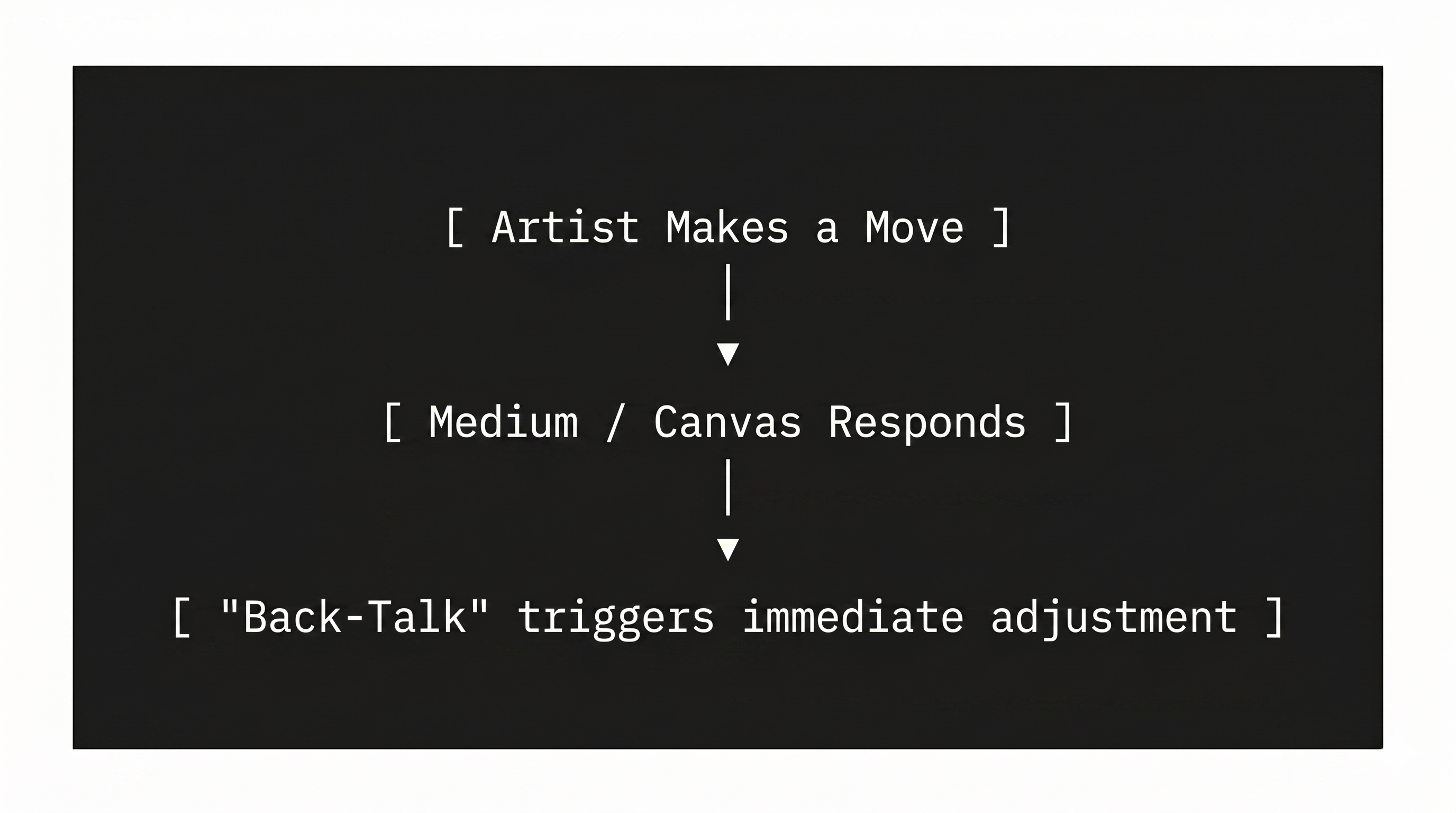
“Conversation with the situation”: Instead of following a rigid blueprint, you make a move, the medium responds and you instantly adjust. You aren’t stopping to think; the thinking and the doing are fused together. 1. The “Back-Talk”: Schön noted that materials (paint, code, musical notes, clay) (also, rowing, fishing) have these forms of “back-talk.” When you apply a stroke of paint, it might run or blend unexpectedly. The artist listens to this back-talk and answers it with their next move. 2. On-the-Spot Experimentation: You are testing hypotheses in real-time. “What happens if I apply more pressure here? What if I let this mistake sit?” The rules of the project are being rewritten while executing the process. 3. Reflection-on-Action (The Post-Mortem): This is the thinking that happens after the event–when you step back from the river or canvas, clean your fly lines or wash your brushes, and analyze what just happened. This is where “intuition” is built–by analyzing your in-the-moment decisions after the fact. Once those lessons are internalized, your “in-action” reflexes will necessarily become sharper.
“Move fast and break things”: Coined by Mark Zuckerberg during the early days of Facebook, it served as the company’s internal developer mantra until it was officially retired in 2014. The original philosophy wasn’t an excuse for sloppy, reckless coding. Instead, it was an aggressive push toward rapid experimentation and feedback loops. Breaking minor elements of the software was considered an acceptable tax to pay for learning what worked in real-time.
How do I pick a fly color? (featuring Kelly Galloup).
 | A guest post by
|
Didn't wake up expecting the Flylab x Schön collab, but what a pleasant surprise to see a favorite thinker applied to this passion.
Reading The Reflective Practitioner right around when my "career" hit a certain maturity phase gave me a new sense of patience, timing, and altitude—thanks for putting more folks on to the wizard.