

Flylab Interview: Jensen Brehm
Ombraz founder, Jensen Brehm, discusses his uniquely designed sunglasses, building authentic brand equity and the business’ carbon-negative supply chain.


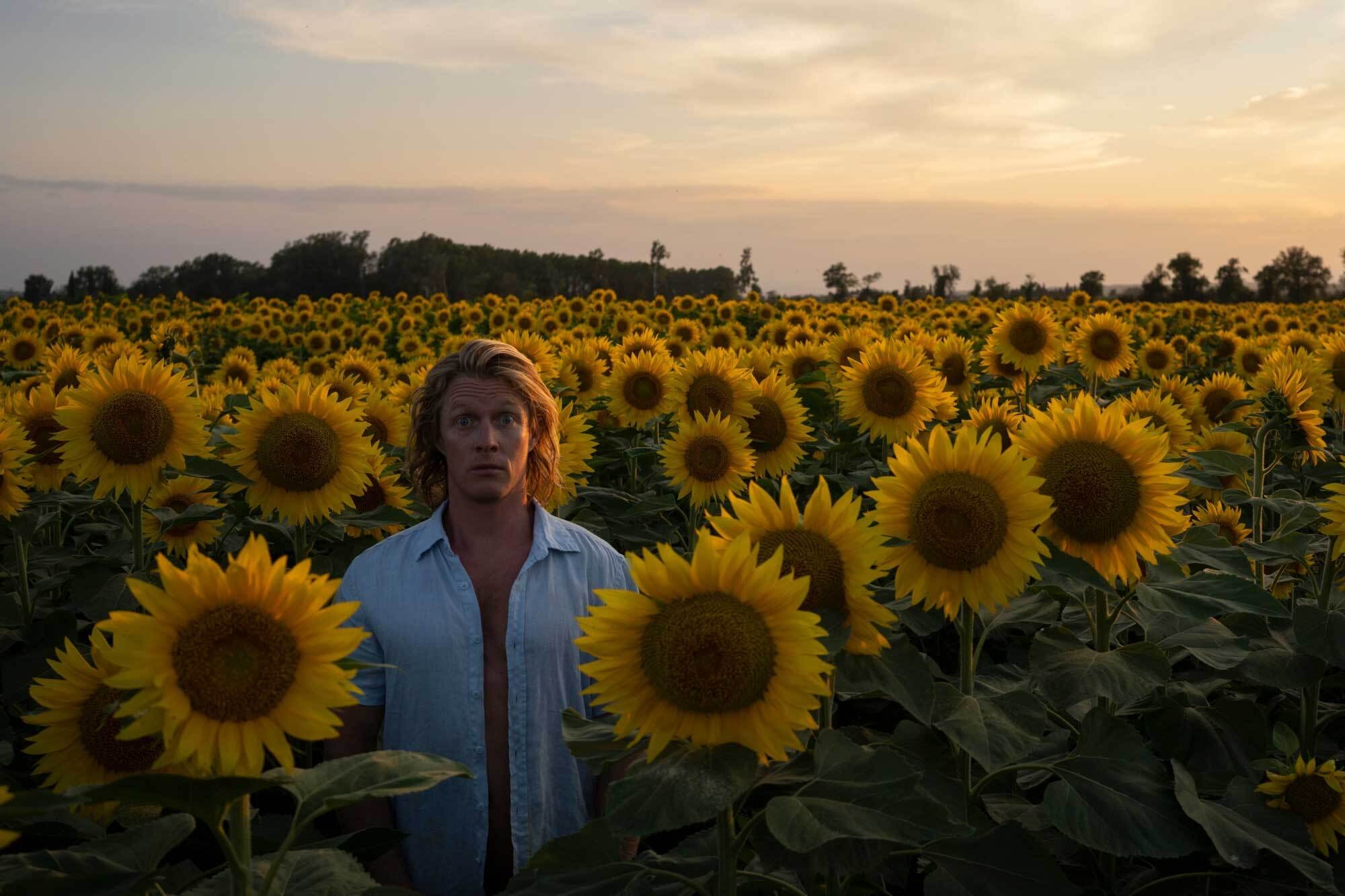
Jensen Brehm is one of the co-founders of Ombraz armless sunglasses and describes himself as a “creator, environmentalist and explorer.” In a RUX interview he summed up his deceptively simple world view this way: “I put the same emphasis into running Ombraz, that I do living life–have a great time, laugh, learn and explore, but do so with a profound appreciation for earth’s fragile ecosystems, and an intent to make this planet a better place for all its inhabitants.” Ombraz has quickly gained a devoted following in the hyper-competitive outdoor sunglasses vertical with their thoughtful (and original) design aesthetic and commitment to sustainable manufacturing (they plant 20 mangrove trees for every pair of sunglasses they sell). Young, sustainable brands typically don’t earn their “street cred” with hip marketing and stunning Instagram visuals–you do it with smart, well-built products and the humility to own the production side of the business with a carbon-negative supply chain.
Being a photographer for the last 20 years, I consider myself a bit of an optics nerd. Humbly, I would say that you guys are the first people I’ve seen doing something different in the sunglasses space in a really long time. For those people who don’t know what you guys do or what you’re all about, can you give them a brief explanation of how the Ombraz brand is different.
Absolutely. Sunglasses have been around for 250 years now, just about. And the overall design, like you said, hasn’t really changed. A lot of what differentiates brands are the different materials they use or their brand marketing. Growing up, I’d always lose or break sunglasses by sitting on them, and that was super frustrating to me. They’d slip off my nose, they’d pinch my head. I couldn’t put them in my pocket because they would break. Someone would sit on them and they’d break. So, yeah, sunglasses were just always super frustrating for me. And then I was on a camel safari in India–I was 20 years old, racing camels through these sand dunes near Pakistan. And I had just bought this new pair of sunglasses in New Delhi.
Did you say you were racing camels?
Yeah, yeah, we were racing camels on a four-day desert safari. I had my own camel for the whole trip. I found out during this trip that I’m definitely allergic to camels, so it wasn’t super enjoyable. Not deathly, but very allergic. I couldn’t breathe. I couldn’t sleep. It was gnarly. I’ve digressed… so, I’d just bought this new pair of sunglasses in New Delhi at this really cool vintage optical shop and then three hours into the expedition, we stopped for lunch on the first day and someone sat on my sunglasses at lunch and the sidearms broke off. I remembered a fix that my brother had come up with on a trip in Mexico. I took a piece of string and tied the string around the broken hinges, wrapped the string around the back of my head and secured the sunglasses to my face, and they worked really well for the whole four-day expedition. They weren’t slipping down my nose. They weren’t jostling around on my head.
They were really secure. I had the cord tension dialed so that it wasn’t too tight. It wasn’t like a pair of goggles. They just rested comfortably around my head. There was no pinching on the side of my head. I could take them off, throw them in my pocket and not have to worry about anything breaking, because the breakable parts had already broken off. And I could drop them around my neck when I didn’t want them on–letting them hang there whenever I needed them next. I finally realized this pair of glasses worked better than before. And I took the twine, replaced it with a leather cord and wore this “MacGyvered” pair for the next five years. Didn’t ever lose them…
Enough people came up to me and asked who made this pair of sunglasses–what was up with the cord, where were the arms–that I realized a lot of people had these same frustrations with their own sunglasses. This was just a simple solution to fixing those frustrations. So, long story short, we’ve come up with armless sunglasses that remove all the fragile screws, hinges and arms. They are easier to store, and more comfortable because you’re not having those tension headaches from the arms around your head. We realized that this could be a product that a lot of people would benefit from and enjoy using.
We launched in 2018 with an Indiegogo campaign and crowdfunded our launch. We didn’t really have much expertise in the sunglasses vertical, besides the fact that we knew we had a concept that actually provided a lot of value for people. We pre-sold a million dollars worth of these armless sunglasses without a supply chain. We sold pairs in all 50 states, all seven continents and 52 unique countries with the initial Indiegogo campaign. It was pretty wild to see that kind of interest and support for a concept that had never been tested on the market. Along with Nikolai, my co-founder, we handmade our first 3,000 pairs in a barn loft in Bellevue, Washington.

What do you mean by handmade–you had the frame and were putting in the glass?
Yeah, good question. The impetus came from my girlfriend at the time. She sat on the pair that I had made, the MacGyvered pair, five years into me using them. When she sat on them the frame didn’t break, but the lenses were glass and shattered. So, I took the sunglasses into this eyewear shop in Seattle–I also took the string off this broken frame, because I didn’t want the eyewear shop taking the idea. I don’t know why I was thinking that, but I brought them in and the owner–he’s actually one of our mentors now–said, “What’s going on? Why do you want me to fix these? This is a broken pair of sunglasses.” I looked around and I saw that the slogan of the shop was “fight evil.” This is Eyes on Fremont in Seattle. It’s a really cool boutique eyewear shop and I thought, “This guy seems cool. I’ll tell him.” I said, “I have this idea for a pair of sunglasses without arms.” And he said, “That’s a really interesting concept. Come down into my office and let’s talk about it and I might be able to help you…”
We got to chatting. He introduced me to a factory in China that he uses–a really good acetate factory that he uses to create his frames. So, I started ideating about what the attachment system could look like, and sending the factory drawings and hand sketches. We developed our first pair of armless sunglasses with that frame and factory. This is the “classic” frame, which was the only frame we had at the time. It’s still our bestselling frame. And up until we transitioned to Italy last year, we were making all Ombraz in that factory from that introduction, which is super cool. This guy in a little boutique workshop in Seattle basically was the impetus for me starting the company, because I really had no idea where to start.
I didn’t know how to get a hold of frame manufacturers or how to develop a different attachment point–he was instrumental in that. We ended up getting this crazy introduction to Zeiss and the rep, for some reason, believed in what we were doing and let us make a smaller order than normal for our first order. We had the frames and the lenses and we went to China for a month, going to different cord manufacturers and trying to find the right cord. Finally, we found a cord that worked. We had the beads figured out for the adjustment system. We developed a custom bead, tied in a knot at the end of the cord, then we tightened it with pliers, trimmed the edge and counter sunk the knot inside the bead and glued it. So, each pair was handmade like this–3,000 pairs we made this way. Later, we brought in a guy from Louis Vuitton and Filson, who developed custom stitches on this cool Japanese bar tacking machine and made a custom stitch that had never been done before (to sew the cord back to itself). Each pair had like 165 touch points…
Was this scalable?
Not really–165 touch points for 3,000 pairs ended up being close to a half-million touch points over a two-month run, and we quickly realized that this was not scalable.
How much were they?
They were originally $140 with a 50% discount with the crowdsource–we were selling these pairs for $70 bucks a pop. It was crazy, man, we weren’t making much. We weren’t paying ourselves. The first pairs went out from the first batch and we won Backpacker Magazine’s Editor’s Choice Award and Ski Magazine’s Sunglass of the Year and a few big awards with this handmade pair and got a ton of press, because we were doing our own PR–writing handwritten notes and sending these handmade pairs to publishers and editors who we tracked down. It was really well received and REI got a hold of us too–they wanted to put us in-store, so we rushed to develop packaging to get into REI. Since then, we’ve just focused on improving the product and concept, and developing new styles.
I have to say, without brown-nosing or blowing smoke, I truly seem to find something that I hadn’t thought of for your glasses almost every time I wear them. I’ve boogie boarded in the ocean with my daughter. I used them whitewater rafting. I love them for fishing, because I have a prescription–I don’t know who’s making your prescription lens, but they’re awesome. I can drop them around my neck and put on readers or do whatever. Packing with them is also great, because I’m a chronic “over-bringer” and these slip in flat anywhere…
That means a lot. I really appreciate it. I feel super fortunate to be in that kind of unique place of having invented our own category of sunglasses, really. They’re good for anything. Any kind of movement outside.

I agree. I think the first time I used them, I probably wore them too tight. And I don’t know if someone suggested it, or you did, but once you realize you can loosen them, that helps a ton. They really don’t move, but they’re not tight on your face at all. So kudos.
That’s been our biggest hurdle as a brand–educating people that you don’t need them tight, because I think you have the goggle industry and the swim goggle industry, where if you have something wrapped around your head, people’s initial reaction is to just crank them down. I’ve seen customers who’ve bought pairs and cranked them down into their eye sockets. I’m like, “Whoa, whoa, whoa. What are you doing with those? That can’t be comfortable, man. Let me tell you how to wear these. I’m the founder of this company. This is not how you do it.” And they’re like, “No, I like it like this.” I’m like, “No, no, no. Let’s loosen these up.” And they’re like, “I like it like this, because they don’t go anywhere.” I’m like, “They’re still not going to go anywhere. Just trust me on this.” So, you loosen them…
I also have been very interested in the brand’s ethos, and correct me if I’m wrong, but you guys claim to be one of the most carbon neutral products ever made?
Carbon neutrality means that you are basically zeroing out or balancing out the carbon that you emit. We’re actually carbon negative, meaning that we take a lot more carbon out of the atmosphere than we emit and that’s done through our tree planting initiative, where for every pair we sell we plant 20 mangrove trees in Madagascar. That has been our ethos since day one.
We launched the Indiegogo campaign with our “20 trees planted per pair sold” mentality and that was a really important brand aspect to me. We can’t just participate in business “as usual,” because that’s the reason why our planet is in so much peril. We needed to deliver a net benefit impact with this product. So, with those 20 mangrove trees planted, we’re actually sequestering 1,700 times more carbon than we emit–to produce and deliver every pair.
No other outdoor product has that kind of impact.
Yeah, we’re super proud of that. We’ve planted over two million mangrove trees now. And we actually had a full spectrum carbon audit done of our production line–everything from material extraction to product delivery. We had a third party measure the carbon of that entire process, and then measure that against the carbon carbon sequestered by 20 mangrove trees over a 20-year period. That’s the “1,700” number we came up with from the carbon audit.
Good for you guys. I think in the fishing industry, we’re hyper aware of protecting resources and climate change, because our resources are everything to everyone.
It’s everything.
Absolutely. So, bravo. Am I correct in saying that your cords are recycled fishing nets? Is that true?
Yes, the cords come from recycled fishing nets, and we’re actually in talks with a company out of the UK who makes frames out of recycled fishing nets as well. We’re developing a frame that’s going to be made out of a fully recycled fishing net and the cord will be too. That’ll be super special.
Our hope is to lead the way in terms of new tech new materials that have never been used in the sunglass world before. Our goal is to be leaders in that space and show what’s possible and help reduce our use and dependence on dirty plastics.
Regarding your ethos, it seems like it carries over into your marketing–you guys seem to really lay it out there, which I appreciate. I’m curious, does it ever get you guys in trouble?
No, it doesn’t really get us in trouble. Sometimes, I think some people get offended by our marketing. We posted this video from a campaign we recently did, and the American flag was upside down and a couple of people were offended by that. But if you’re going to be offended by that, you’ve got bigger problems…
I don’t mind pushing buttons. That’s my whole thing: How do you do things differently? How do I show people that we’re marching to our own drum and we’re not like everybody else.
It’s fun. It shows. I love your marketing. I always say, it’s impressive and good and seems very honest.
Yeah, it’s genuine. And I think that’s something you lose as brands grow and evolve. A lot of these brands across sunglasses, across the outdoor space as a whole, they’re owned and controlled by private equity, venture capitalists and umbrella companies–it’s all for the shareholders. So, all these brands look and feel the same. You go to a brand’s Instagram (you’ve heard of) and it’s going to look the exact same as every other Instagram, right? There’s not a lot of differentiation. And our whole thing is to keep it genuine, keep it authentic, keep it in-house. Let’s not outsource this to an agency, because we’ve also had to become a media company as well.
If you’re not in charge of your own media and if you’re letting someone else dictate, you’re gonna lose what makes you special.

Are you finding that your sunglasses are being used in other industries (like aviation) you hadn’t considered?
Yeah, it happens quite often. A lot of people with brain tumors, actually, this is a crazy one, will find us. We had this one guy who said he was in tears thanking us, because he couldn’t protect his eyes–when you have something removed from your head, it’s super sensitive at times. The frame arms will dig into your head, and you can’t wear sunglasses because it’s super painful. With our cord, you don’t have that issue. We’ve had so many people who’ve had brain tumors reach out and be overwhelmingly grateful–that was by no means was part of my vision. Which is really cool. It’s been really special. People with hearing aids, as well–younger people with hearing aids, older people with hearing aids, you have the arms that conflict. The biggest revenue driver has been the Air Force and Navy–having pilots wearing these under headsets. We get pretty big orders coming from squadrons all the time. Maybe I should think twice about this American flag upside down concept, now that you mention it…
Tell us about the new frame that’s coming out for anglers. Obviously, that would be important for our readers, if you can.
I can give a little glimpse into it. We basically have been looking at top frames for anglers and watermen and women in the space. You need a bit more coverage and wrap. This is going to be a performance frame, but you get a bit more wrap. So, instead of a base curve six, you’ll have a base curve eight, which blocks a bit more of your peripheral light.
Sorry to stop you–what was the term you just used?
Base curve six. Basically, you have all these different base curves of lenses. A zero base curve lens is a flat. Base curve six is our standard collection, but a base curve eight is just a bit more wrap.
I prefer the six because it packs flat. You can sit on them and there’s still a bit of curve, but it’s not like anything that’s going to dig into your butt, or if you put the glasses under a shirt, you won’t see them. But with the base curve eight, anglers, watermen and women need to be blocking all light from every direction. And so this frame will be a bit more curved.
We developed them with Zeiss for the best water lenses. We’ve got specific colors that are best for the different fishing scenarios, as well as mirrors. Then we’ve integrated Zeiss’s absolute number one best material for this lens, because we know how important and pure an optical lens has to be for anglers.
The yellow lens is my favorite. It blocks out around 82% of light. Then we’ve got a brown, which is really good for any condition, but you get a bit higher contrast. It makes the colors pop a bit more. And that filters out 86% of light. And then we have a gray, which is true to color and provides really good depth perception. It blocks out 89% of light. Gray is our top selling lens. But I prefer the brown or the yellow, because of the heightened contrast and saturation you get in the colors.
The fishing lens: do you have a name for it yet?
That’s funny. I was on a call yesterday trying to figure out that name…
No name yet. Cool, I’m looking forward to that. Lastly, just tell us one unexpected thing about yourself or the company.
Oh man, that’s a loaded question. Well, it’s got to be something fun.
Yvon Chouinard wrote me a handwritten note a year and a half ago, saying that he really is loving his Ombraz glasses, and he wears them for fly fishing, which I thought was really special.
He really liked the practicality and functionality, specifically for fly fishing.
I’d say that’s a pretty strong endorsement.
We’ll take it…

I’ve been flyfishing for almost 55 years and worn every top brand sunglass out there over years. Still looking for the perfect pair. You had me sold. I was about to buy a pair just off this article. Your marketing was absolutely brilliant — until you had to choose a side. The brag concerning the upside-down flag wasn’t just unnecessary. It repelled a certain customer. You may consider it brave to wear your politics on your sleeve, but if you’ll allow yourself some honest introspection — you’ll realize that instantly alienating 50% of your potential market isn’t smart business.
See, there are actually many folks with what are called “conservative” ideals that are all about just that — conserving what is. And many of them have enough resources available to them to purchase nice things like your product. But they don’t tolerate virtue signaling well. They prefer to quietly do what they do and not draw attention to stoke their egos. So thanks for making my decision for me, and good luck in the future.