

Castwork: Kea Hause
Kea dives in with both feet when he starts something. Such was the case with fly fishing.


Glenwood Canyon is a metaphor for Colorado at the dawn of the 21st century. Ancient layers of sedimentary rock and Precambrian granites rise up in rusty walls and dirty-gray outcroppings, nearly 1,800 feet above the canyon floor. Below, the Colorado River, flanked by pine, willow and tamarisk, twists its way through the canyon’s basement, still waging a turbid assault it began millions of years ago.
Carved and blasted through the middle of it all is a four-lane highway, neatly planned into the side of the canyon to blend with the environment, its guardrails painted in earth tones. Even so, it cannot camouflage a 24-hour torrent of chrome and steel. Cars and RVs whiz along, lashed with bikes and kayaks, their sounds muffled by the water and occasionally drowned-out altogether by the thunder of the railroad.
In places, it is possible to see the mighty Colorado River fed through tunnels, dammed and diverted. There are even spots where the river practically runs dry in giant piles of rock. It is hard to hide human fingerprints.
At the western exit of the canyon are hot springs, first used by the Ute Indians for their believed healing powers, but now turned into giant, steaming pools for tourists. In their namesake town, Glenwood Springs, you make a roundabout turn that points you toward the Fantasyland of Aspen and a handful of less affected hamlets that line the Roaring Fork River. The Roaring Fork Valley is where Heaven can be bought by the acre.
For real estate moguls, movie stars, and dot-com millionaires, this is the place where real money and the western lifestyle come together.
This valley has been home to artist and fly fishing guide Kea Hause for more than 35 years. While he has seen an evolution of development that would make many people bitter, he holds no contempt. Kea is a philosophical optimist who has fought bigger battles than change.
“You will never alter a landscape to fit the wishes of one individual,” he says. “The key in this life is changing the individual to adapt and thrive in the landscape around him.”
* * *
Kea was born in Hawaii. He moved to Carbondale not long after he learned to walk, and after his parents accepted teaching jobs at the Colorado Rocky Mountain School. Fly fishing always has run in his family. His grandfather mechanized the process of making split cane fly rods. And his dad loved to wander and fish the Rockies in the summer, carting the family around in a Volkswagen bus after the school year ended, fishing the lakes, rivers and creeks for subsistence. Kea caught his first trout in the Crystal River when he was five years old, using a salmon egg and a lead sinker.
It was not until many years later, however, that Kea and the sport he now loves found each other. Growing up, Kea did not have the time or patience for serious river study, preferring to improvise his own more reckless adventures. Occasionally, he would tape a spinning reel to the end of a long fly rod, hoping to outcast his brother, but beyond that, he shunned the sport and the rivers in his backyard. His taste for the wild side was strong, and he spent much of his time partying and helling around.
He looks back on his younger days now, part with regret, but also with pride for not having followed a beaten path. At that time, most boys growing up in Carbondale went to public high school, played four years of football, then headed to work in the Redstone mines after graduation. Kea did not. He traveled by thumb, he played guitar, he found art and he found addiction. It was only after he “crashed” in 1984 that Kea turned to fly fishing to help steady his feet in a world that was not spinning fast enough to keep him interested.
“I used to be in bars from five until two,” he describes. “And when I got treatment, I learned that fly fishing could take me away from all of that. I found safety and spirituality on the water. I didn’t have to be around people. Fishing was a bridge between my mind and the natural world.”
* * *
Kea dives in with both feet when he starts something. Such was the case with fly fishing.
In 1987 he got busted by Bill Graham for bootlegging Grateful Dead t-shirts at a concert in California. Broke and downhearted, he decided to focus on the real world and an education, so he enrolled at the Colorado Mountain College. Kea was older than most students, so he took a job as a resident hall advisor. He spent much of his study time reading Hemingway, Steinbeck and Mark Twain, and most of his cash on fishing gear and trips. Whatever time was left over was spent hanging around Tim Heng’s old fly shop in Glenwood Springs.
“I made my education count in both ways,” Kea recounts.
Tim is Kea’s mentor. He remains one of the finest anglers and oarsmen in the Roaring Fork Valley. But perhaps more notably, Tim Heng has a reputation as a gentleman fly fisher. In a valley rife with in-fighting outfitters and endless self-promotion, Tim has remained true to his own quiet and understated respect for the sport and all those operating within it. Kea says you will not find anyone who treats people with more respect than Tim Heng.
“Plain old respect goes a long way in this valley.”
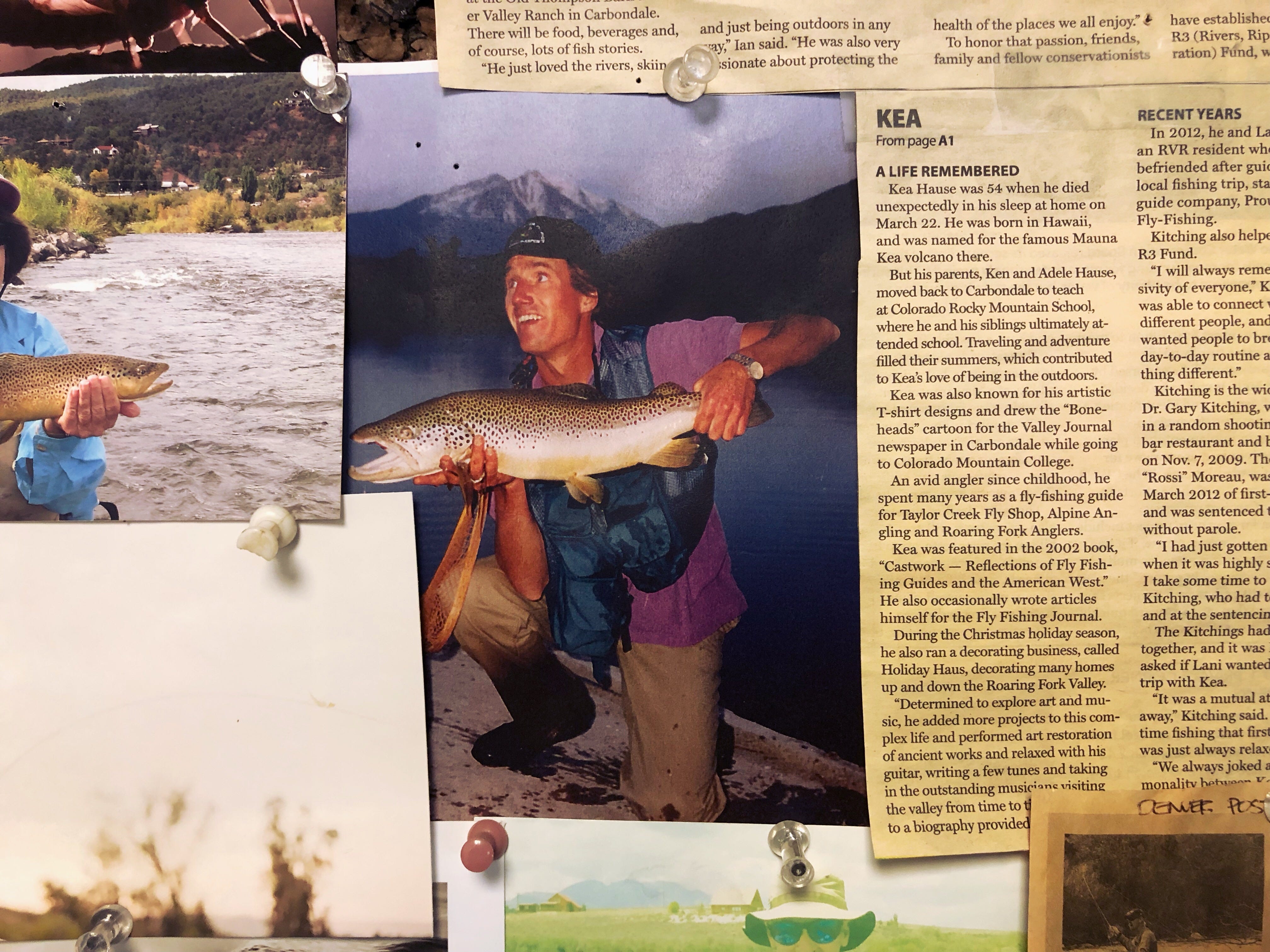
Kea backed into professional guiding. Thirteen years ago, the Little Bear Guide service needed help for a day to handle some extra bookings. Kea was known in the community, and word on the street was that he was getting fairly handy with a fly rod, so he got the call. He borrowed a pair of waders, gathered some advice at Tim’s shop, took out two long-time anglers on the Roaring Fork for 12 hours and got skunked. He felt so bad that he told his clients if they could stay over, he would take them again the next day for free.
The two men agreed. So, Kea called a close buddy, in order to give his customers some one-on-one attention. In the morning, they met at a new spot on the Roaring Fork and prepared to fish the same way they had done the day before: heavy stoneflies, some lead and bright strike indicators. Rigging up for the day, Kea set his own extra rod on a rock, tied only with a small dry fly. By accident, the elk hair caddis popped free, skittered across into the current, and was promptly inhaled by a healthy rainbow trout.
Plans changed. Kea and his buddy quickly rigged with caddisflies, headed up the banks and spent the day hooking more trout on dry flies than they ever had imagined possible. Thus the guiding careers of Kea and his buddy, Tony Fotopulos (now owner of Alpine Angling in Carbondale), two of the best fly fishermen in the United States, let alone the Roaring Fork Valley, had their “official,” if not inauspicious, genesis.
“That first day taught me the most important lesson of my guiding career,” says Kea. “I never wake up in the morning with an agenda, no set plan. I have hunches and ideas, but I don’t make final decisions until it is time to cast.”
* * *
Guiding the Roaring Fork Valley requires the ability to row a boat. If you cannot do that well, your options are severely limited by state in-stream trespassing laws that safeguard landowners from bank-walking anglers. Unlike Montana, Idaho, or Michigan, the wading angler does not have a river-right-of-way through privately held property in Colorado. Rowing a boat allows the guide the opportunity to fish miles and miles of otherwise inaccessible river.
Tim Heng gave Kea a loaner drift boat in his first fall of guiding, telling him to practice drop-ins and turns in the low water, so he could guide float trips the following spring. He got a call a week later. A guide canceled, and Tim had two clients from Colorado Springs who wanted a float trip on the Roaring Fork. Kea’s third time ever in a Mackenzie boat, he was guiding a trip.
“I beat the hell out of those two guys,” he describes. “We found every rock in the river. But to this day they are clients. We fish together every summer.”
Now Kea rows a boat with prowess. He has spent thousands of hours piloting dories and rafts through the whitewater and canyons of the Roaring Fork and Colorado Rivers. He has pushed through Cemetery Rapids when the Fork was rolling at 9,000 cubic feet of water per second, with eight-to-ten-foot standing waves in the center. In these conditions, the water will stand a drift boat straight on end. With the bow aimed at the clouds, the oarsmen must press forward with resolve, before the dory backslips on a wave and slides under. Screw that setup, and you are done.
With time in heavy water comes respect. Kea has seen many boat wrecks in the valley’s often volatile rapids. He watched as a friend lost his life “river surfing” the Crystal River, tied to the CRMS Bridge with a rope and a makeshift board. And Kea nearly drowned himself on a $20 bet to swim across the Colorado at Moab. Half-way across the muddy churn, he was sucked down and bounced along the bottom by a hydraulic. The water spit him back up a minute later, a hundred yards downstream.
“That was the river’s choice, not mine,” he says, admitting that his days of tempting water that big are over.
* * *
Driving his pickup out of Carbondale one frosty May morning, Kea explains how he always has been a “Carbondale guy.” He notes the subtle differences between the different Roaring Fork Valley communities and describes Carbondale as the working class town without much home-grown flash. He concedes that real Aspen money has swept its way down the Fork and now deep into the Colorado River Valley. Nothing is the same as it was 20 years ago. Kea reminisces how he and Tony used to spend hot, summer afternoons sitting out on Carbondale’s Main Street with a case of beer.
“We’d just sit out there with lawn chairs all day, looking up at Mount Sopris, and maybe we’d see one or two cars go by,” he describes. “It was a dirt road with one stoplight back then. And the town’s only cop was usually pulled under a shady tree, taking a nap.”
Change has come very quickly to the Roaring Fork Valley, and it has forced friends and old families to sell houses and farms. Skyrocketing taxes and the enormous sums of money to be made selling out their land has convinced many to move on. And, for better or worse, it is change that will continue. But Kea holds no animosity towards Aspen, and he rarely takes the small town or its people too seriously. He laughs as he recounts an afternoon on the Roaring Fork, downstream of Slaughterhouse Bridge, and only a few miles from the town.
“Several years ago, I was fishing this back channel of the river, and I popped out from this thicket of bushes and saw Bert and Ernie standing in the river,” he describes. “Real big foam puppets, Bert and Ernie, from Sesame Street, out there fly fishing. I guess they were filming some John Denver special. And I thought to myself, ‘well, that’s kind of what the Aspen experience is all about, isn’t it?’”
* * *
Kea has a magnificent ability to adapt to change–on the river, in his life and in the world around him. In Kea’s mind, God only made so much of the kind of country in which he lives. He views the blue-ribbon trout valleys of the west as rare commodities; valleys that people will see once, then immediately, will have to have. The Internet, phones and faxes will allow thousands to claim a chunk of the mountains. And there is nothing anybody can do.
For Kea, trying to hold back this influx makes about as much sense as trying to push back the current on the Colorado River. The issue for Kea is how can the transformation happen in a way that has less impact on the environment?
Driving upstream to some clear water on the Roaring Fork, he points out an impressive log home set against the north riverbank. It is a 5,000 square foot “second home” that belongs to a Los Angeles businessman.
“A lot of people complain about the trophy homes around here, but they’re really just 10-flush houses,” he says. “Most of these people are only around a few weeks out of the year. So, you tell me who’s stressing the environment more, the guy who owns that house, or the guy who used to run 500 head of cattle?”
* * *
Standing in Woody Creek Canyon, fishing pocket water with small Royal Wulffs and Beadhead Princes, a private jet tears off a nearby runway and over our heads, marking the sky with contrails. It is one of many. We realize that we are standing on the fault line of change. We push this life-long local to talk more about the transformations he has seen in this valley.
“We all are transplants on this continent,” he says. “To bitch about the new guy is stupid. New people have resources, and you have to work with them to reach a common goal.
“People are buying up real estate. Maybe that’s bad, maybe that’s good. I think as long as 50 percent or more of a river is public, that’s oka. I don’t believe in the public trust. People will trash stuff.”
We thought about all the cans, bottles and piles of fishing line we had seen in the last two days.
“Private water is a fish refuge. I’d like to have four or five miles of river for myself someday, but not so I could fish it. I’d leave it be.”
A small rainbow flips over on the Wulff, but misses the fly completely. One of many young and healthy fish we would catch or miss that day. Kea turns, and with a wink and a smile, says, “I will say this, if I weren’t in the guiding business, there wouldn’t be a fence or sign that could keep me out. There’s nowhere I wouldn’t fish. Only outlaws go where the fishing is good.”
* * *
On cold mornings in May, Kea likes to chase a big fish or two below Reudi Reservoir. To do so, we will have to check our egos at the door, sharpen our casts and wade into the upper Fryingpan River. This well-documented piece of water is where Kea cut his guiding teeth, but now seldom visits. The pressure and abuse on the trout, the absence of angling etiquette and the sheer volume of rods on the upper 1/4 mile of the Pan have made this scene hard for Kea to stomach.
When we arrive, the plan is to “spoon feed” imitations of mysis shrimp to the fat rainbows, browns and brook trout who live just beneath the Reudi Reservoir spillway, a stretch Kea calls “the petting zoo.” We immediately spot fish from the bank. They are well-fed monsters, frightfully gorging themselves on a unique protein source of freshwater shrimp that dump, periodically, out of the lake. Kea has the perfect fly, a fuzzy white blob with tiny black eyes, which he rigs on a rod beneath a light-pink San Juan worm. The worm, he explains, is to be used as a sub-surface strike indicator. It is doubtful that the fish will eat it, but if the worm halts or wiggles, more than likely, something will have eaten the shrimp. What and how big? That is all just part of the fun.
We make three casts and score. Then, at Kea’s prodding, we pack up and leave.
As we drive off, Kea points to another guide hunkered down in the river with two clients, working a bend of the Fryingpan he revisits nearly every day.
“Some guides make a career in 1/4 mile of river,” he laughs. “To me, that’s totally lazy. That guide is a slacker. He’s also the one who bitches most about pressure and crowds.”
We stop for lunch at Bucky’s in Basalt. Best chicken sandwich in the fly fishing universe. Kea says he feels like exploring this afternoon. Maybe we will go carping on a slough near New Castle. Spring runoff has the Colorado and the Fork running chocolate brown. He is not worried. He has options.
Kea explains how he has 15 different full-day float trips available to him. He has fished this region most of his life and still finds new places. Which, says Kea, is the beauty of guiding here. Diversity deflects pressure. Crowds are not an issue in Kea’s mind. In fact, he foresees the fishing being better in 10 years than it is now.
“It’s all about habitat,” he explains. “We’re not facing some of the same agribusiness issues they’re facing in Montana. Even though our stream access is worse for the average person, our habitat may be better. Having sections of these rivers in private hands helps preserve habitat. I can say that the fishing quality is better today than it has been in my fly fishing lifetime.”
After we eat, Kea settles on checking out a spot he has been interested in for several weeks, a small creek beneath a dam, not far from the town of Rifle.
When we arrive, the wind greets us in gusts from a nearby reservoir. But the tiny creek is set down in a gully, protected on all sides by thick stands of waving grass. Peering down into the sandy blue water, we see fish scurry out from our shadows. We tie on a “do-anything” mayfly pattern, a size #14 Adams, and start wading upstream, firing short, calculated casts behind willow snags and rocks. The trout are hungry, if not massive, and to Kea’s delight we each hook a dozen or more brown and rainbow trout. Kea is in his element, crouching in the grass above us, spotting rise forms, calling out the next shot. He has discovered something new, a place he will commit to memory for the hot grasshopper days of August.
As we leave, he decides to give this spot a nickname: “New Zealand.”
* * *
Moving water is spiritual to Kea Hause. His church is the river. Still, he does not fly fish much on his days off. Not because he doesn’t enjoy it. He just cannot make himself feel good about lashing away at the same fish he works over day after day with clients. Besides, he says, he is at a point where he prefers fishing vicariously through others.
“I pressure the environment enough for a living,” he explains. “It’s a conflict, because I think water is holy, and the river is a sacred environment.”
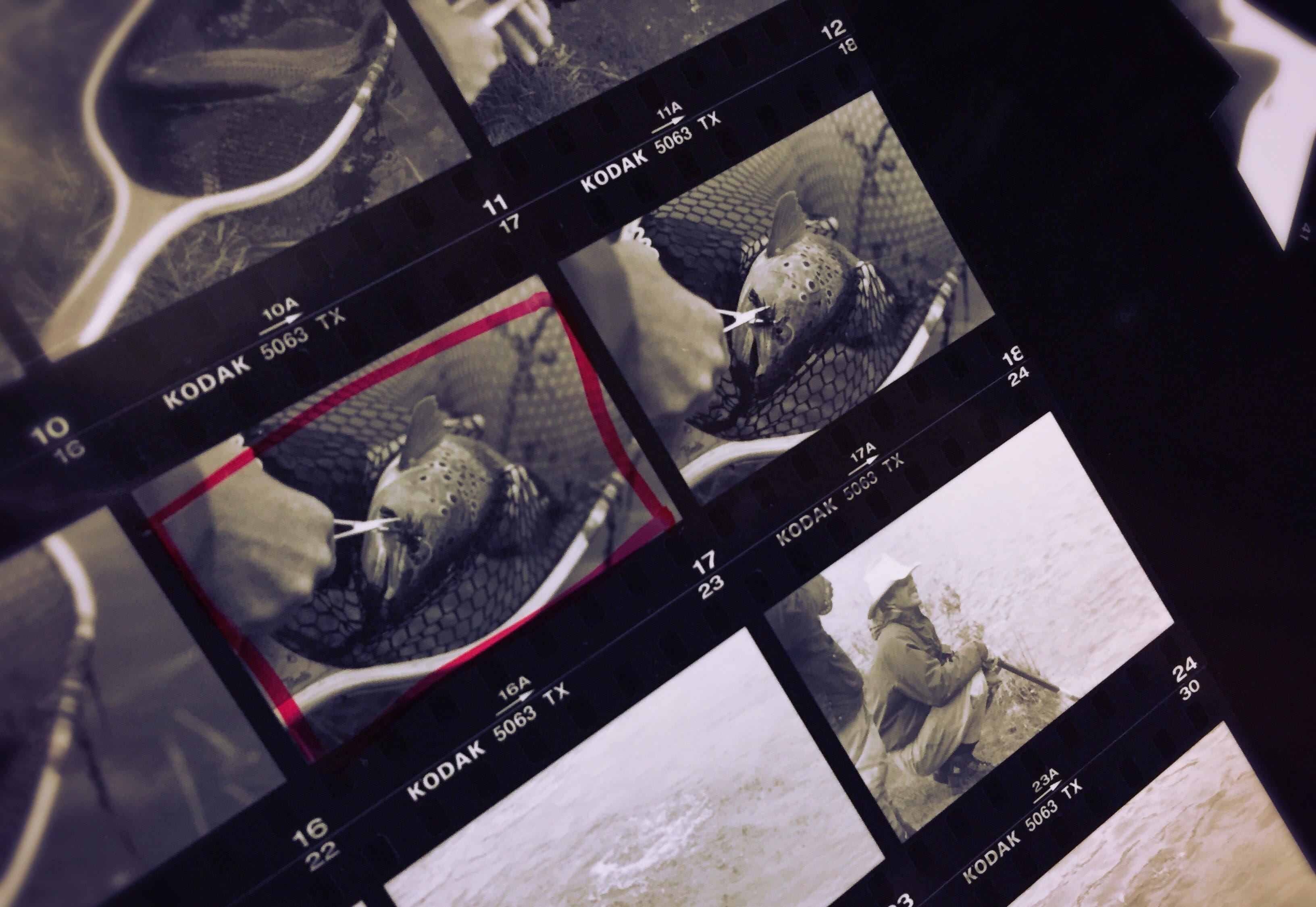
In recent years, however, Kea explains that he has found a compromise–cutting off the hooks of his dry flies. He calls it “tagging” or “rolling” fish. In his mind, if he can match the hatch, make the cast and prompt a trout to eat, he figures he has won the game. A split-second tug on his line is enough to make him satisfied.
“After that, what do you really need?” he asks. “The whole game is about tricking millions of years of instinct. What then? Do you really have to prove something by physically exhausting and landing the fish? Do you need that photo?
“I’m not hypocritical enough to condemn people for landing fish. That’s what my clients all do for fun. What I am saying though, is that for every individual, the game ends somewhere different, and for me, the game is over long before you grab a net.”
* * *
Other guides who work for Tony Fotopulos like Kea the person. Kea the guide is a nemesis. Always sharp, always producing results, always one step ahead of the pack.
Said one guide: “I’m not sure how he does it. Word gets out that a certain hatch is on, that a specific run or bug is fishing hot, and you get there to find Kea’s already been fishing that run with that bug for several days. Or he’ll wave you through, giving you what you think is first shot at prime water, only to have you looking over your shoulder and see him pulled up in some side channel, with his people busting one fish after another. It’s unreal.”
We ask him about this “second sense” everyone believes he has. He laughs and explains that he has “typewriter vision,” a unique talent that lets him keep one eye on the client, and one on the next run.
Then, in a serious tone, he adds: “To be honest, there’s an inner voice… call it God, call it nature, call it gut instinct. You have to quiet your mind and your will to the point where you can receive instruction from that voice. I’ve learned to be flexible and listen to what the river tells me.
“When you have an open mind, you are in a better position to receive luck, energy, whatever.”
* * *
Kea is an open book with his life’s work. When it comes to sharing information with other guides, friends, or even total strangers, he is not guarded. Kea is the kind of guide who will gladly dedicate the last hour of the day’s trip to pouring over maps, revealing less popular locales and the flies to use there. He is generous, almost to a fault.
“Guiding isn’t about physics, or entomology. It’s about knowing how to talk to people. I’ve had trips where I never took a rod out. Just sat in the truck and answered questions.”
Kea hates to see people dissatisfied, in life, in work, or in fishing. If someone does not learn something on a guided trip, the first thought that may cross their mind is that, “I could have done that myself.” And the next time they will do it themselves. For Kea, that is a far greater threat to his livelihood than having clients pass on secret patterns, or overlooked places to fish. He gets the “why did you tell so-and-so about that spot” from a few other guides, but he does not give a damn.
“Guiding should be a profession of honor. If you have confidence, you can share your information. I learned everything I know about fishing from someone else,” he says. “There is no such thing as a secret spot. There is no original fly. So, at what point can you claim exclusivity on knowledge? The more information that spreads through people, the better.”
* * *
Fly fishing is a great equalizer. The river never considers anyone high or mighty. The river does not care how rich, or how fit, or how smart you are. The only human power trout respect is the pressure applied to a strand of tippet, and just about anyone can give them that. Although some people are luckier than others, and others have more skill with a fly rod, the baseline is the same for everyone: cast a tiny, feathered bug into the river and try to catch a fish. Do it well, and you will succeed. Do it poorly, and you will not.
Kea says that many of his powerful, hard-charging clients respect the honesty and simplicity of the sport. It is a way for them to “disappear” from their busy lives. He says fishing brings out the “real” person, and he likes that. One of his favorite clients is a “type A” movie producer, whose staff quakes in their shoes when they are around him. But when he gets on the river, he is completely down to earth.
“I think that’s the real person,” Kea says. “Fishing lets that part of you come out. The river has a real power to do that.”
* * *
To prove his point, Kea describes how he once spent the day with a chief executive from a major media corporation. They had floated five miles of the Roaring Fork when the executive realized that he had to be back in Aspen sooner than expected. There was no way to make it to the scheduled takeout in time.
So, Kea got on his cell phone and started calling everyone he knew, looking for a ride back to Aspen. He tried 10 people without any luck. Finally, he got a hold of Kevin, an aspiring guide and “Deadhead” who drove around the Valley in a rock-and-roll minibus. Kevin, Kea says, is a kind-hearted person, and every Saturday that summer, he had made plans to do outdoor activities with some of the area’s emotionally and mentally challenged kids. It just so happened that Kevin was out driving these kids around the valley, when he made a quick pit stop at the fly shop and got Kea’s distress call.
Twenty minutes later, Kevin pulled over at the side of the river where Kea and the CEO were waiting. As he arrived, five kids started to hang out the side of the van, singing and laughing at the stranded fisherman. They just had been to the ice cream parlor, and everybody was smeared with strawberry, vanilla and chocolate ice cream.
“And the CEO just started laughing right with them, as he jumped in the van, waders and all,” Kea laughs. “He was a good sport. I remember thinking, here’s a guy who probably rides limos wherever he goes, but now he’s rolling down the road with these kids and Kevin in a Grateful Dead minibus. It was a cool sight.”
* * *
We go back to visit Kea once more, this time in July. It is a broiler day. Kea has made us promise to come back, so we can float the Colorado River below Glenwood Springs after the runoff. This stretch of the Colorado is magical water, often overlooked by anglers drawn to the Fryingpan and Roaring Fork. Neither pure-bred tailwater, nor true freestone, this part of the Colorado is wild and mysterious, challenging and rewarding. And never to be taken for granted. Its fish are valiant fighters, but not easily understood. In its toughness and honesty, the Colorado River is a lot like Kea. As we float in the heat, telling stories and turning trout, it seems more and more appropriate that we should end here.
“I’m glad we could do this,” Kea says. “I like that little element of voodoo the Colorado has to offer.”
Later, Kea drops us off at the West Glenwood boat ramp. We watch as he drives away. He is going swimming in the natural hot springs, the same water where Doc Holliday had sought comfort and chased away personal demons over 100 years ago.
Just before he leaves, Kea tells us that he is optimistic about the change in these valleys and the future. Optimistic that these rivers we have fished together will be holding up in thirty years. We believe him.
“This water will be around a lot longer than any of us. It may not always look exactly how we want, but it will be around.”
River Notes
In the last three years, we have fished with Kea in every season except winter. He asked us once to come float the lower Colorado in February, and we jumped at the chance to bang gray Zonkers at some of the wildest fish in the state, but a giant front snowed us out. Without ski traffic, the drive from the Front Range to the Colorado River in Glenwood Springs takes a little over two hours which, depending on your outlook, is either a blessing or curse. We live close enough to Kea’s home waters, the Fryingpan, Roaring Fork and Colorado Rivers, to fish them regularly, and do so with and without him. Although we never will log the kind of river days and knowledge he has accumulated over the years, we have begun to find our way around this part of the Colorado River watershed, piece by piece. And as long as the Aspen Valley’s land grab, dwindling stream access and parochial attitudes do not drive us out, or completely away, there should be enough decent water left for our children to experience someday.
How long what is left lasts is anybody’s guess. But despite the chronic pressures of Pitkin-county-based development and the ever increasing recreational use of the area’s limited natural resources, the Fryingpan and Roaring Fork of the upper valley and the Colorado of the lower continue to show themselves as healthy, battling rivers. Whether the rest of the non-human inhabitants of these corridors fare as well as the rivers themselves remains to be seen. Yet Kea believes that the rivers, fish, bugs and birds are as healthy now as any time he can remember. Maybe he is just overly optimistic, but Kea believes that the valley-wide development in some ways may be improving the health of the rivers. Replace a working cattle ranch with 10 trophy-vacation homes, and you may remove some old character or “look” from the valley, but you also end years of pesticide use and bank erosion, he says.
He could not stop the waves of development even if he wanted. Some of the deepest pockets in the west, even the world, call Pitkin County home (at least for a few weeks a year), and no one tells them what to do, no one. So, Kea and many others do their best to work with developers (when willing) to reclaim stream banks, dramatically reduce pesticide use and create new spawning areas for trout without a lot of political posturing and even fewer victories. The slews of new houses and golf courses, ones that siphon off water and transform century-old prairie into concrete-and-sod subdivisions at alarming rates, have become part of the western landscape. There are no easy answers.
The fish and many of the reddish-iron insects that persevere in the Fryingpan, Roaring Fork and Colorado rivers are some of the toughest and most unique we have encountered. Summer hatches of Green Drakes and the ever-cycling populations of freshwater Mysis shrimp on the Pan receive most, if not all, of the outdoor writing world’s attention, yet there are miles of lesser known water throughout the area, all with fascinating insect life and respectable trout. Uncovering many of these “secret” spots takes years of diligent work, or the help of a knowledgeable guide. Either way, you are going to pay to discover. We have fished with Kea on most of the well-known water with excellent success but regard our off-the-beaten-path treks as some of the finest: fall streamer fishing on the lower Colorado, stalking mid-runoff sloughs for carp and bushwhacking through small brown and brook trout water north of Rifle. There is not a type of fish or water that Kea will not get after. As long as it swims, he says.
Tip: On the big, brawling currents of the Colorado River, large, poor-flying insects like grasshoppers and giant stoneflies are submerged routinely within the deep and severe hydraulics. Many anglers make the mistake of immediately recasting imitations of these flies once they have slipped below the surface, which is a mistake. Fishing a Dave’s Hopper or Sofa Pillow deep into the water column, or even on the swing, is one of Kea’s favorite ways to unearth truly large fish, ones that rarely feed above the surface. While detecting these subterranean strikes can border on witchcraft, the vantage point of a drift boat and a legitimate pair of polarized sunglasses can even the odds.
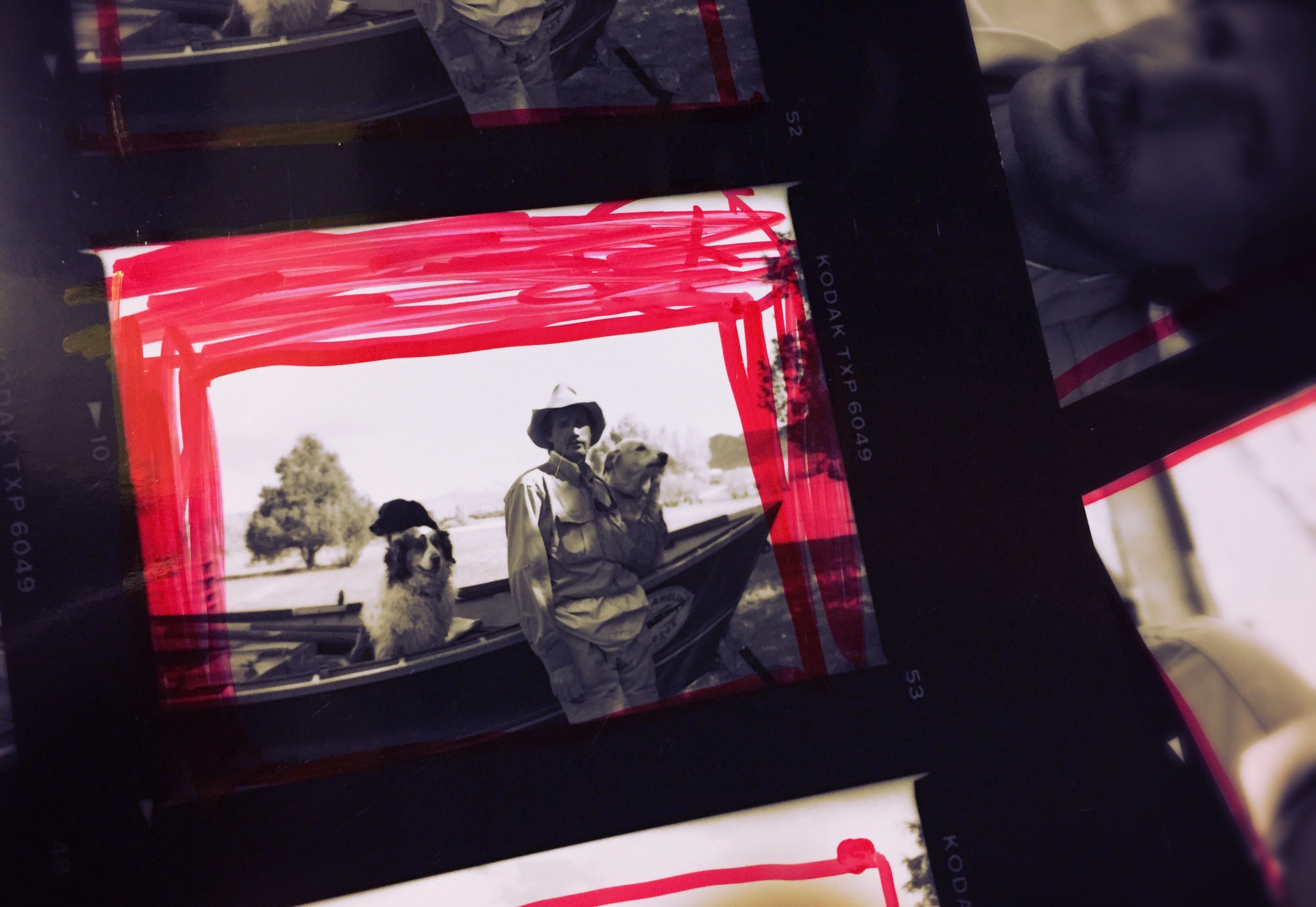
This chapter is excerpted from Castwork: Reflections of Fly Fishing Guides and the American West (2002). Photo proofs: Liz Steketee
 | A guest post by
|
 | A guest post by
|
I bought my first copy of Castwork on a trip to the Rockies in 2004. It was my first trip to the US to flyfish. I’ve since bought some ten copies to give to friends. As a (at the time) newspaper photographer, a career i pursued for thirty years, I loved the rawnes and poetry of text and pictures. Some ten years ago I found a used copy in a shop somewhere in the west, I bought it and when I got home to Sweden I found a dedication that says:
”To Justin, Hang em’ High
Love Kea” I treasure that book.
Thank you for generously sharing this chapter of "Castwork." I am relatively new to fly fishing and hadn't heard of Kea Hause. Naturally, I searched the internet for his guide practice and learned that he passed in 2015. Grateful that your book and the guide service he founded, Prideline, is keeping his legacy alive.