

The Cut Bank
When fishing cut banks, your first presentation will typically be the one that gets hit.


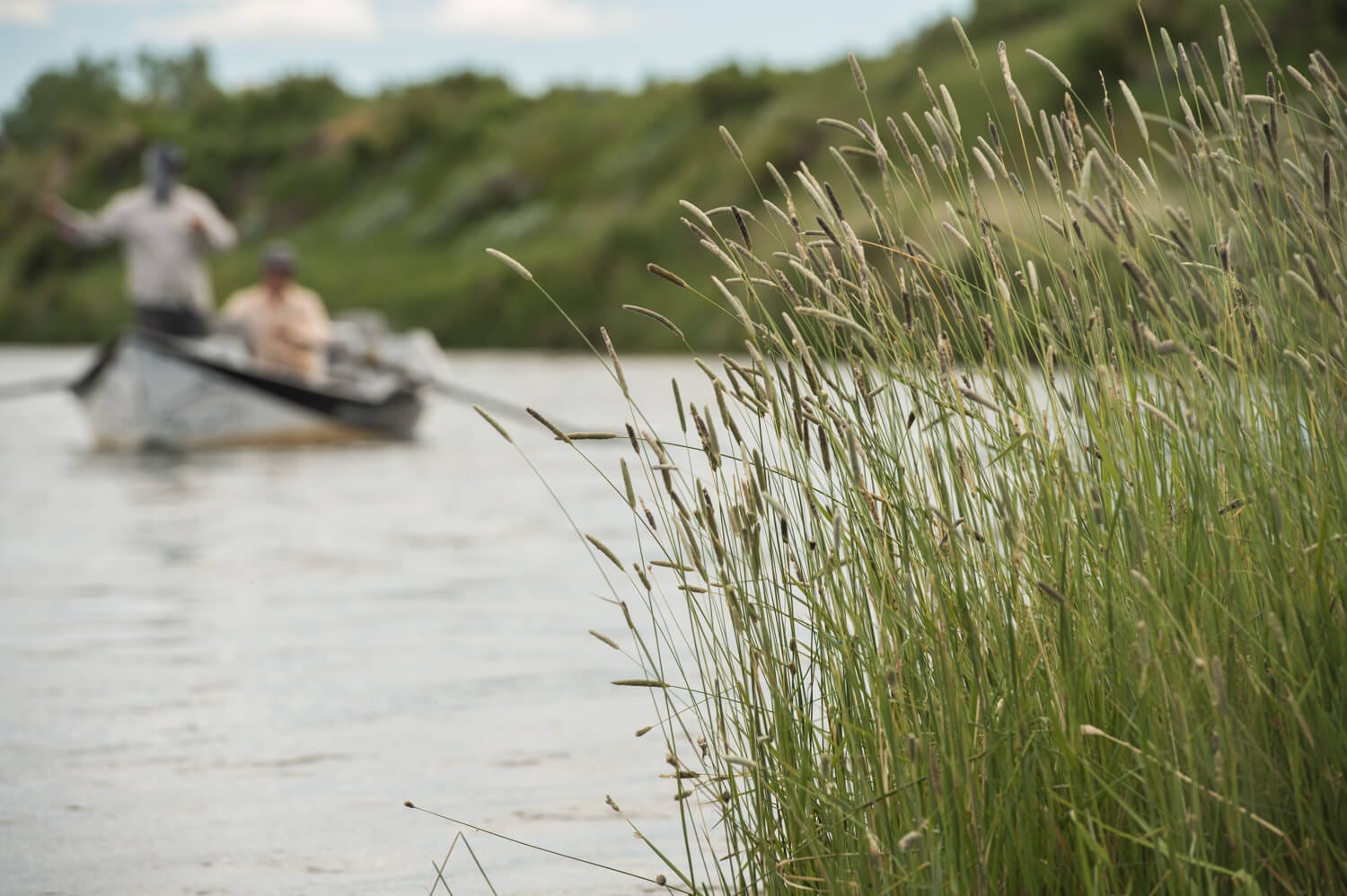
There is no place a big cutthroat or brown likes to hang out more than under a cut bank, where the high water currents of the river have scoured out a cave to hide in. Rainbows tend to prefer riffles and seams, although they, too, will inhabit cuts if there is enough current.
When you find a horseshoe bend on the trout stream, which creates a deep, dark, cut bank, you can almost bet there will be a big brown trout living inside.
Always be on the lookout for cut banks.
Once you’ve found your target, the trick becomes getting a fly to float into the strike zone. The overhang on a cut bank often makes dropping a shot directly in prime water impossible. You can try to sidearm a cast, or skip a hopper into the cut, but that’s sometimes too splashy to produce good results.
For me, the best approach for fishing the cut bank is from upstream, at an angle. I shoot the cast as tight to the bank as possible, then feed slack line downriver and hope the current sucks the fly under the cut.
Make your first cast count. When fishing cut banks, your first presentation will typically be the one that gets hit. This isn’t the place to experiment or mess around.
Check out KD’s new book: A Fishable Feast: Fly Fishing and Eating Your Way Around the World—coming out next spring, published by Rizzoli in New York. (Pre-order at Amazon, Barnes & Noble, Books-A-Million.)

 | A guest post by
|
Not just trout either. I used to fish a stream in MD, that there was not a lot of places that looked to hold fish, but cut banks and wash outs in large tree roots along the banks often held Smallmouth Bass and some panfish. There wasn't any trout, the water was too warm for them. Those "spots" with undercuts in the banks were not always obvious.