

Some Fly Casting Mistakes and Solutions
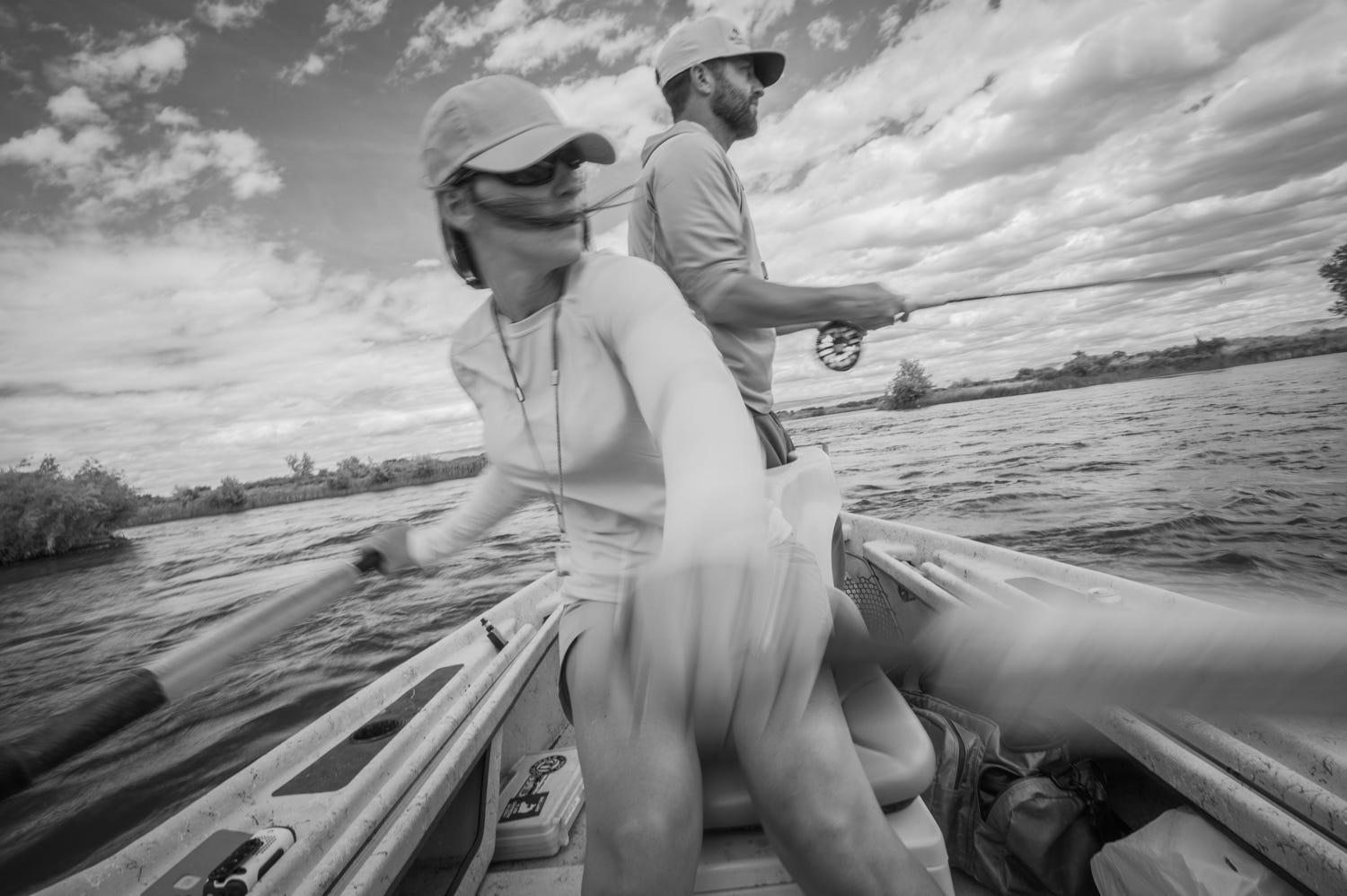
In a mechanically sound casting stroke, the elbow moves up on the backcast and down on the forward cast.

By John Juracek
In the process of teaching fly casting, certain faults of technique show up regularly among my students. In the notes I send to each student after a lesson, I find myself reiterating certain principles time and again.
Here are a few common ones. I hope they’ll stimulate you to think about your own casting.
The length of the casting stroke changes with the length of the line being cast. The rule is this: “Short line, short stroke. Longer line, longer stroke.” Most anglers are unaware of this concept, and consequently can’t turn their fly and leader over with authority. But adjusting your stroke length to the line length is absolutely essential to good casting. It’s how you maintain complete control of your line, leader and fly–regardless of wind.
In a mechanically sound casting stroke, the elbow moves up on the backcast and down on the forward cast. There should be no pushing-and-pulling, parallel-to-the-ground motion with your arm or elbow. The elbow moves up and down–always. It may be a short up and down motion (as in a short cast), but it’s always present. (Note that I am not talking about long distance casting here, where we make significant changes to the length of the stroke and its trajectory.)
If you’re tailing your loops or your fly ticks your rod as you cast, your first corrective thought should be to raise and lower your elbow during the stroke. Tailing loops are fundamentally caused by power application problems during the cast (“shocking” the rod via abrupt acceleration, mostly). Raising and lowering the elbow (which raises and lowers your rod) creates a clear path along which the line can unroll without hitting the rod or colliding with itself. This correction works well even when power application problems aren’t fully addressed.
If your leader and fly turn over lazily and get blown around in the wind, shorten your stroke. Authoritative turnover of leader and fly is never about equipment, and only rarely about using more effort. Rather, it’s about using the proper length stroke. Most folks will need to shorten their stroke as the first step towards a powerful turnover of their fly. In strong winds you may need to use more effort, but remember that if your stroke isn’t the right length in the first place, no amount of effort will straighten your line and leader. Look at shortening your backcast first; this is where most errors in stroke length manifest themselves.
Simon Gawesworth from RIO heads to the Far Bank Loop Lab (at 9:22) to talk about making your first fly cast, as well as some foundational casting tips (start slow, finish fast).
You might also want to read about the right fly lines to facilitate your casting progression: The Real Story About Fly Lines.
John Juracek is a fly fisherman, writer and photographer from West Yellowstone, Montana. For twenty-some years he was a partner at Blue Ribbon Flies, a local fly shop, and is currently the head casting instructor at the School of Trout and Anglers Academy. His writing credits include Yellowstone: Photographs of an Angling Landscape, Fly Patterns of Yellowstone, Fishing Yellowstone Hatches and Fly Patterns of Yellowstone, Volume Two.
He is considered one of the sport’s expert fly casters and instructors and offers casting lessons for $100/hour at jjuracek@gmail.com or (406) 640-2828.