

Part One: The Vise
Webb and Cheryl had married in their late twenties after meeting at a friend’s oyster shuck in New Smyrna Beach, where Cheryl had arrived with another man, a cell-tower technician named Garrett...


The Pilates teacher’s name was Diego, and he had come to Brevard County from Guayaquil by way of a strip-mall studio on Eau Gallie Boulevard where he taught reformer classes to women who were otherwise satisfied with their marriages. Webb’s wife, Cheryl, had signed up in January on the advice of a girlfriend who said it would fix her hip, and by March she was stretching in ways that exceeded the original prescription. Webb learned about the affair from Cheryl’s mother, who called to say she was sorry but also to ask if he planned to keep the house, because she had always liked the house. That was in April. It was now midsummer, and Webb had not been past the mailbox since. The yard had gone to seed in the way that Florida yards do when left alone for even a week, which is to say it looked like something the jungle was actively digesting. His neighbor, a retired roofing contractor named Pudge who had survived three wives of his own without once losing his appetite, left a bag of oranges on the porch every few days and asked nothing in return except the right to describe Webb’s situation to anyone who would listen.
Webb had been a building inspector for Brevard County for nineteen years, a job that put him inside every new construction and renovation between Titusville and Palm Bay and gave him a thorough knowledge of load-bearing walls that he wished, in retrospect, could be applied to marriage. He had been decent at the work, methodical, slow to fail anything he could pass with a note and liked by most of the contractors, who appreciated his willingness to look the other way on cosmetic infractions if the bones were right. He was now on unpaid leave, having exhausted his sick days, his vacation days and his supervisor’s patience. His supervisor, a portly woman named Deena Riggins who wore steel-toed boots and a ponytail that could have been classified as a weapon, had called twice and mailed a letter. The letter said that his position could not be held indefinitely and that she wished him well in whatever he was going through, a formulation that suggested she knew exactly what he was going through and considered it insufficient grounds for the collapse of a man.
The house was a three-bedroom concrete block on a quiet street in Rockledge, close enough to the Indian River to smell the water when the wind was right but not close enough to see it, a distinction that had mattered to Cheryl when they bought it and that Webb had failed to understand as a warning. They had lived there for fourteen years. Cheryl had painted the kitchen yellow, planted jasmine along the fence and hung curtains that she replaced every two years in a cycle that Webb now recognized as the only reliable evidence of forward motion in their marriage. Without her, the curtains were a cycle behind, and the jasmine, which had been merely ambitious when she was tending it, had become hostile, sending runners across the walkway and up the side of the house toward the bathroom window with the determination of something that intended to get inside.
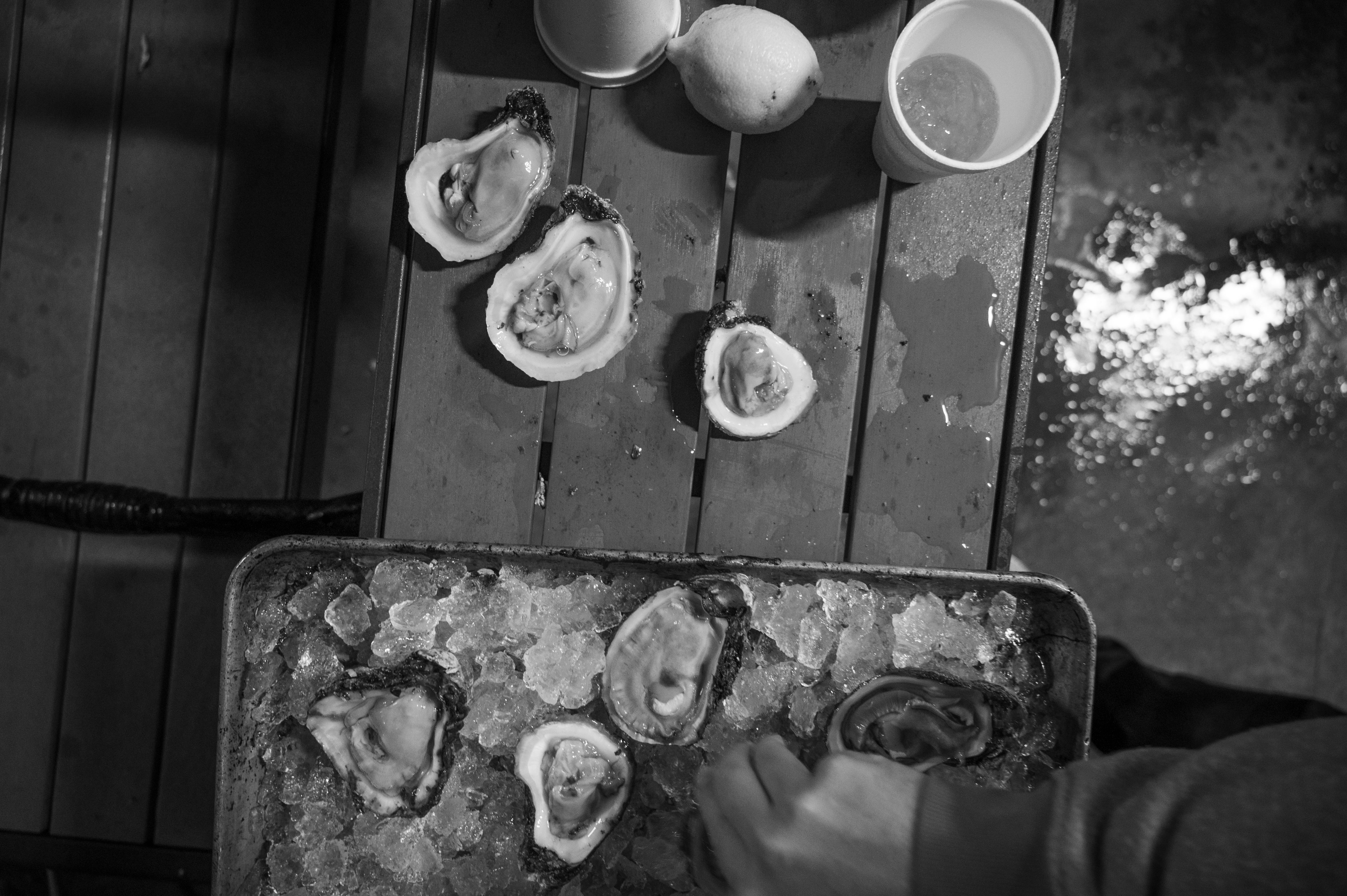
Webb and Cheryl had married in their late twenties after meeting at a friend’s oyster shuck in New Smyrna Beach, where Cheryl had arrived with another man, a cell-tower technician named Garrett who spent the evening explaining the difference between 3G and 4G to people who wandered away mid-sentence. Webb didn’t steal her so much as provide an alternative to Garrett’s lecture series, and their courtship was built on the quiet understanding that neither of them had better options and that this was, in its way, a form of compatibility. They were fond of each other. They went to Chili’s on Fridays. Cheryl liked to read novels in the bath, and Webb liked to fish, and between these two activities they had assembled something that looked enough like a life that when it ended Webb was genuinely surprised. His friend Curtis, who had fished with him for twenty years and who had been divorced himself in circumstances that involved a traveling dental-equipment salesman and a timeshare in Gatlinburg, told him that every man is surprised. “Even the ones who saw it coming say they didn’t,” Curtis said. “It’s constitutional.”
Curtis had been by four times since April, each visit an attempt to get Webb on the water. He was a lean, sun-darkened man who had spent thirty years running fishing charters and who, even in retirement, looked like something that had been left in a smoker too long. He wore the same sun shirt every time Webb saw him, bleached to the color of old bone, and a pair of Costa Del Mars so permanently fixed to his face that Webb sometimes forgot he had eyes. Curtis’s skiff, a battered Hell’s Bay Whipray that he had owned since before his own marriage ended, sat on its trailer in his driveway in Cocoa Beach and was, by his own accounting, the only female in his life who had never disappointed him. He brought his own beer and sat in Webb’s living room and talked about what was happening on the lagoon.
“The redfish are schooling like they used to on George’s Bar. I mean stacked. And they’re eating whatever you can get in front of them.”
“I’m all right here,” Webb said.
“You’re not all right. You’re sitting in the dark watching Judge Judy.”
“Judy’s on at four. It’s eleven.”
“What are you watching at eleven?”
Webb looked at the screen. “I don’t know what this is.”
Curtis drank his beer and looked around the room with the careful, non-judgmental assessment of a man who had himself once spent two months on a couch after his wife left and who knew that any criticism would be both accurate and useless. The living room had acquired a layer of disorder that was not quite squalor but was advancing in that direction. There were pizza boxes on the coffee table, though neatly stacked, which Webb took as evidence of his continued grip on civilization. Mail accumulated in a pile by the door, unopened except for the things that looked like they might be from Cheryl, which turned out to be credit card offers addressed to her. There was a bath towel on the recliner and another one on the floor. The blinds were closed.
“I’ll tell you what,” Curtis said. “Tie me some flies and I’ll fish them for you. It’ll be like you’re out there.”
“It won’t be like that at all.”
“It’ll be like that to the fish.”
Webb considered this. He had been tying flies for thirty years, ever since his uncle Carl in Titusville had shown him a Clouser Minnow at the kitchen table and Webb had experienced, at fifteen, the rare sensation of encountering something he immediately knew he could do. He had a Renzetti Traveler vise, a full inventory of materials from hooks to hackle, and the muscle memory of a man who had spent thousands of hours winding thread over steel and fur and feather. He had not touched the vise since Cheryl left. It was in the spare bedroom, which Cheryl had called the office and Webb had called the tying room, a disagreement that, like most of their disagreements, had been resolved by each of them continuing to use their preferred term without acknowledgment. The room had a desk, a magnifying lamp and a set of wooden drawers that held materials organized by a system that Cheryl had once compared to the filing practices of a serial killer.
“I could tie you some,” Webb said.
“Now we’re cooking.”
Webb didn’t tie any flies that day, or the next, but on the third day he went into the tying room and sat down. He opened the drawers. The materials were all there: the bucktail, the flash, the lead eyes, the thread, the hooks, the EP fibers in every color from chartreuse to purple, the craft fur and the polar fiber, the rubber legs, the marabou. The smell was particular and familiar, a mixture of adhesive and animal fiber and the faint chemical note of head cement. He clamped a hook in the vise and looked at it. It was an Umpqua saltwater hook, size one, and in the grip of the Renzetti jaws it looked like something waiting patiently for instructions.
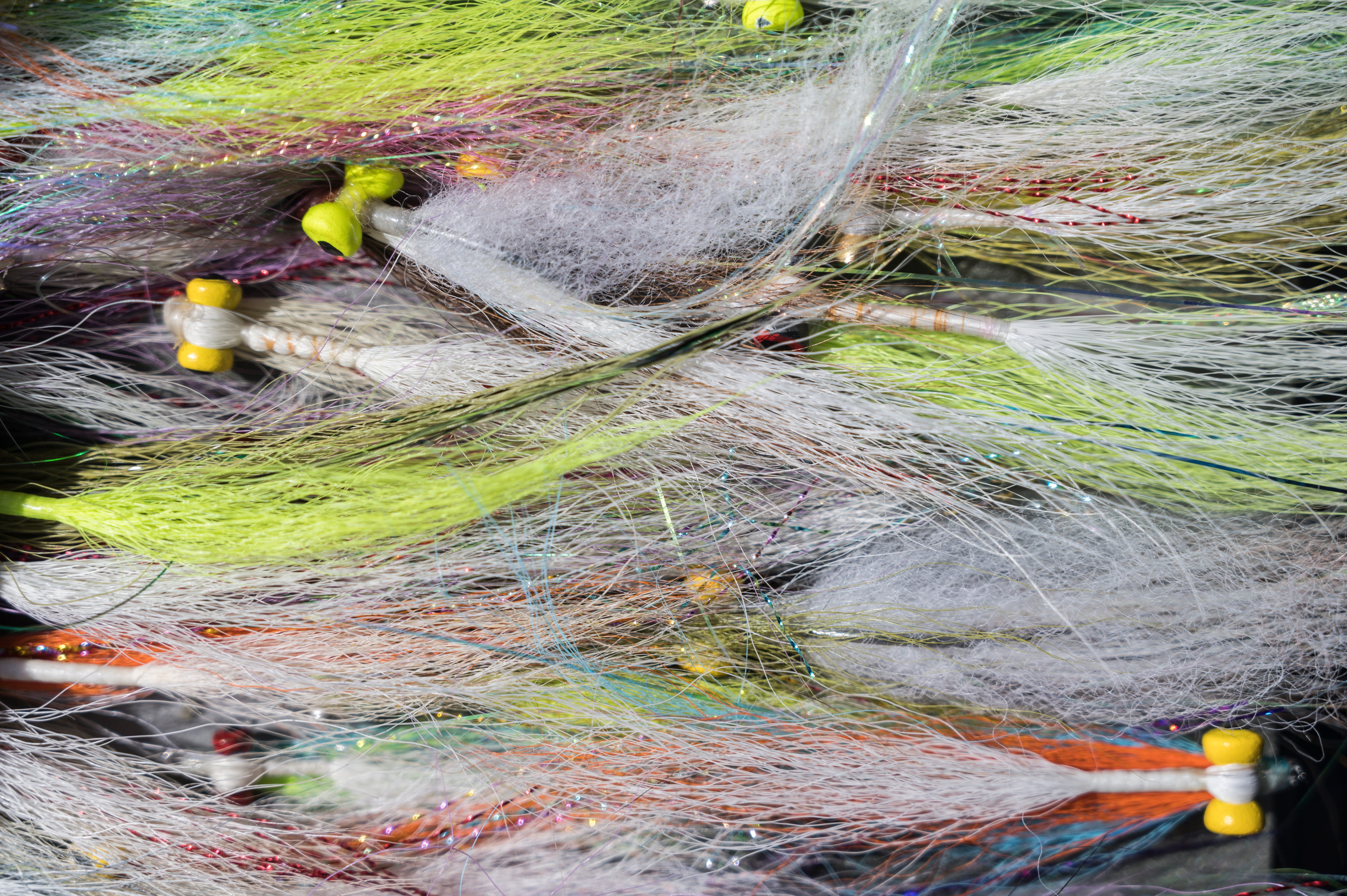
He tied a Clouser Minnow. White and chartreuse, lead eyes, sparse bucktail. It took him four minutes. He held it up to the light and it was good. Not perfect. The thread wraps behind the eyes were a little sloppy, and the bucktail on the belly side was slightly uneven, but the proportions were right and it would swim the way it was supposed to swim, which was with a jigging, darting motion that imitated a wounded baitfish and that had been catching redfish in the Mosquito Lagoon since Bob Clouser had invented the pattern for smallmouth bass in the Susquehanna and someone with more imagination had thought to throw it in saltwater. Webb set it aside and tied another one. Then another. By the end of the afternoon, he had tied fourteen Clousers in various color combinations, and when he stopped it was only because he had run out of lead dumbbell eyes.
He ordered more online. He also ordered new hooks, new thread and, on an impulse he did not examine, a packet of jungle cock feathers that he had no practical use for. Jungle cock was for Atlantic salmon flies, ornate Victorian patterns with names like Jock Scott and Thunder and Lightning that were designed to catch fish in Scottish rivers and that had no application whatsoever to the fisheries of Brevard County, Florida. But they were beautiful, and Webb found himself looking at pictures of them on his phone like other men in his condition might have looked at pictures of women.
 | A guest post by
|