

For Six Days and Five Nights
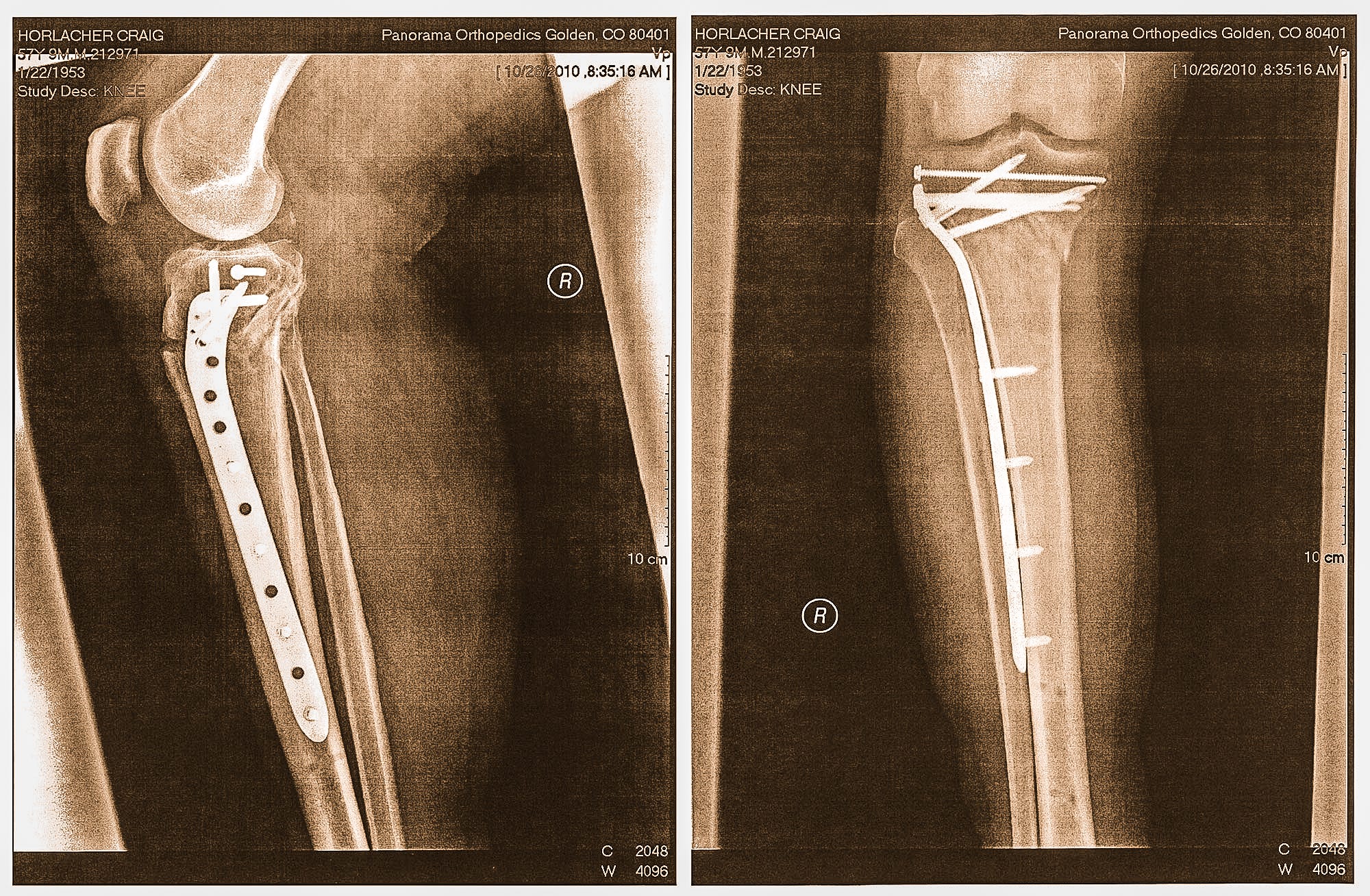
When Craig Horlacher fell into the Middle Fork of the Little Snake River, he went down hard. His shin impacted a pointed rock just below his knee–and shattered.


In 2010, I was still writing travel pieces and visiting fishing destinations, and as much as I liked to fish and travel, I was drawn to other, more compelling stories–one was the case of Craig Horlacher, a fellow Colorado resident, who endured a painful and life-threatening experience while fly fishing.
One thing about writing articles that involve trauma, pain and loss that I didn’t think about early in my career is the emotional strain it puts on the people I’m interviewing. I learned this the hard way when I pressed to meet Craig in person for this interview.
My goal was to ask questions and really hear how the event happened–to see and feel how he talked about his ordeal. I wanted to understand not just what happened, but how he spoke about it, how it felt as he relived the experience. It was important for me to see how he recalled things and hear those painful details, beyond what I’d read about in a short news article in the local Colorado papers.
Even though Craig answered most of my questions over email ahead of time, I still wanted to hear the words, firsthand.
But as Craig recounted his ordeal, it felt like I was asking him to reopen barely healed wounds. It was painful. I could sense the weight of his experience and his awareness of how close he had truly come to death. He had looked it in the eye and lived to tell the story.
Our conversation happened at a small coffee shop in Denver on November 3, 2010. Craig was still having trouble walking and the conversation was raw. To me, his story of survival remains incredible.
The original title of this essay was “For Six Days and Five Nights,” and was published in The Drake, Spring 2011, Volume 13, Issue 1.
Shattered
When Craig Horlacher fell into the Middle Fork of the Little Snake River, he went down hard. His shin impacted a pointed rock just below his knee–and shattered.
“The stream bottom there is like walking on slippery talus, meaning the rocks are angular, loose and not well embedded in the sand and gravel of the stream bed,” said Horlacher in a recent interview.
The force of the impact fractured Horlacher’s right leg, just at the top of the tibia. Although this type of injury would not typically be life threatening, this small misstep along the unbeaten path would set off a chain of events that nearly proved fatal.
On the morning of August 6, 2010, Horlacher, a seasoned geologist by trade, left Denver, Colorado to explore new water. For the 57-year-old Horlacher, solitary exploration was not new. His work had taken him much further off the grid to places like Alaska, Africa, Venezuela and many of the more desolate states in Western America. He has been an avid angler and fly tyer since the 1960s. Horlacher’s plan was to first hit the Middle Fork of the Little Snake River 50 miles north of Steamboat Springs, Colorado, just south of the Wyoming border. After that he was to move on to the North Platte river just outside of Walden, Colorado–a destination that he would never reach.
“I believe most western fly fishermen, who are not drift fishing from a boat, prefer to fish solo, probably for self-interested reasons, of not having to share the good runs with the competition,” said Horlacher. “Some guys, myself included, enjoy the solitude.”
After spending a few hours successfully hooking small rainbows, Horlacher was attempting to subdue a fish when he slipped and fell into the skinny river.
“I actually fell twice right in a row. It was the second time–‘boom!’. I knew it was bad as soon as I started to move it. My leg was not stable–it felt loose below the knee,” said Horlacher, describing the first moments after he went down in the river. “That is when I flipped into the mode of coming up with a B-plan.”
It was time to make a decision: attempt a self extrication by crawling out of the river and up the steep canyon to his car parked only 1/2 mile away, or wait for a rescue.
“As the Preacher once said–there is a season for every purpose unto Heaven, including a time of taking action and a time of waiting,” said Horlacher. “This event was definitely in the latter case, as I had little mobility to move or ability to communicate with the outside. That was the hand I was dealt.”
Horlacher was able to pull himself up on a rock protruding from the water. He carefully assessed his situation. His ingress to the canyon he was fishing was difficult with two good legs. On his descent to the river he had to pick his way down a fairly steep ravine with loose rock and ledge drop offs to reach the river’s edge. He realized within 20 minutes that a self rescue, which would require a crawling ascent back up the rocky slot canyon, was simply too dangerous.
“Within just a few minutes I knew I couldn’t make it back up to my car,” said Horlacher. “I honestly don’t believe anyone could have made it without risking further injury. The risk of trying and potentially doing more damage like a compound fracture was just too great.”
So wait he did.
For six days and five nights. On three rocks. Partially submerged in the river.
“I had left enough information back home that my friends and colleagues would be able to figure out where I was to a good approximation,” said Horlacher. “My car was clearly parked along a well-traveled county road. I maintained that I had good chances of rescue in say three days. While I did not give up hope of getting out of there, as time went on, I was thinking that I might not make it.”
To quench his thirst, Horlacher drank from the cold waters of the Little Snake–and subsequently suffered the effects of giardia. To ease his hunger, he ate fish raw from the river–two rainbows to be exact. Both on the second day.
“I was fishing with a size #16 Beadhead Hare’s Ear Nymph and doing pretty well,” said Horlacher. “I basically went into a contemplative state saying to myself, ‘My strategy is what it is. I don’t control my destiny in this case, so I will patiently wait,’” he said. “The sound of the rushing water was conducive to meditation and actually made the passage of time bearable.”
“I looked at all the factors that surrounded me and made a plan–I stuck with that plan because my situation was static,” Horlacher said.
By the time the authorities finally began searching for Horlacher, days had passed. Routt County Sheriff’s Office deputies found Horlacher’s car on the fifth day after he was injured. The Search and Rescue volunteers began their search that evening and continued searching until about 1:30 in the morning. That night, it was estimated that rescuers got within about 200 yards of where Horlacher lay injured. At that point, Horlacher was incapacitated and has no recollection of hearing anyone or knowing that he was so close to salvation.
The following day the rescue team came across Horlacher. According to local media reports and Routt County Search and Rescue incident commander Jim Linville, Horlacher was conscious and breathing but disoriented when searchers found him at about 9:20 a.m. on August 12. The night before he was found, the temperature had dipped to 46 degrees.
When Horlacher first arrived at the hospital his body temperature was down to 86 degrees.
“We knew even on the scene something bad had happened to his right leg, but what really got him was hypothermia, and that’s what almost killed him,” said Russ Sanford, President of Routt County Search and Rescue who was on the rescue scene.
Rescuers used a rope system to pull Horlacher 200 vertical feet up the rocky canyon wall to a place where a Flight for Life helicopter could land.
“Really, I have zero memory of the contact with the rescue team. They tell me that I said some half-way amusing things to them in my delirium,” said Horlacher. “I have no memory of being pulled up the canyon wall, nor the hospital in Steamboat.”
“I have no clear memory of the first days on the ICU in Denver,” said Horlacher. “The effects of hypothermia had compromised my body’s functions–some of which were in outright failure. At that time the broken leg was the least of my problems.”
All told, the exposure to the river and the elements were devastating. In addition to giardia, Horlacher’s kidneys had failed, he had anemia and other internal bleeding. He spent 15 days in the intensive care unit and a total of 33 days in the hospital. Hospital staff estimated that if Horlacher was exposed to the elements for another three to four hours he would have expired.
Horlacher has made an amazing recovery, and he still believes in fishing and the spirit of exploration.
“The effects of the hypothermia have completely resolved and the leg is bearing weight with no pain,” he said. “I should be operating 100% on both legs in the next month or so. Soon, I’ll plan a visit to Steamboat to personally thank the Search And Rescue Team over dinner and a few beers.”
To that end, Horlacher and his colleagues raised $5600 for the Routt County Search and Rescue organization who he credits with saving his life.
“I am grateful to be alive,” Horlacher says. “Enjoying and appreciating life, family, friends and colleagues, our beautiful state and looking forward to fishing in the New Year.”
Will Rice is a journalist and writer whose work has appeared in The Denver Post, The Drake, The Flyfish Journal, Outside Magazine and more titles that we can count. He’s also the creator of Down The Path, a true-crime and investigative podcast that focuses on the mysterious disappearances and tragedies in the world of fly fishing and remote travel, while also giving a voice to the families and communities left behind. Originally from upstate New York, Will spent many years in Colorado before relocating to Vancouver, British Columbia, where he now lives with his wife, Sara, and their dog, Buzz.
 | A guest post by
|