

Follow the Bubbles
When you see a pronounced bubble line on the surface, there’s a very good chance that trout will be underneath it, and feeding.


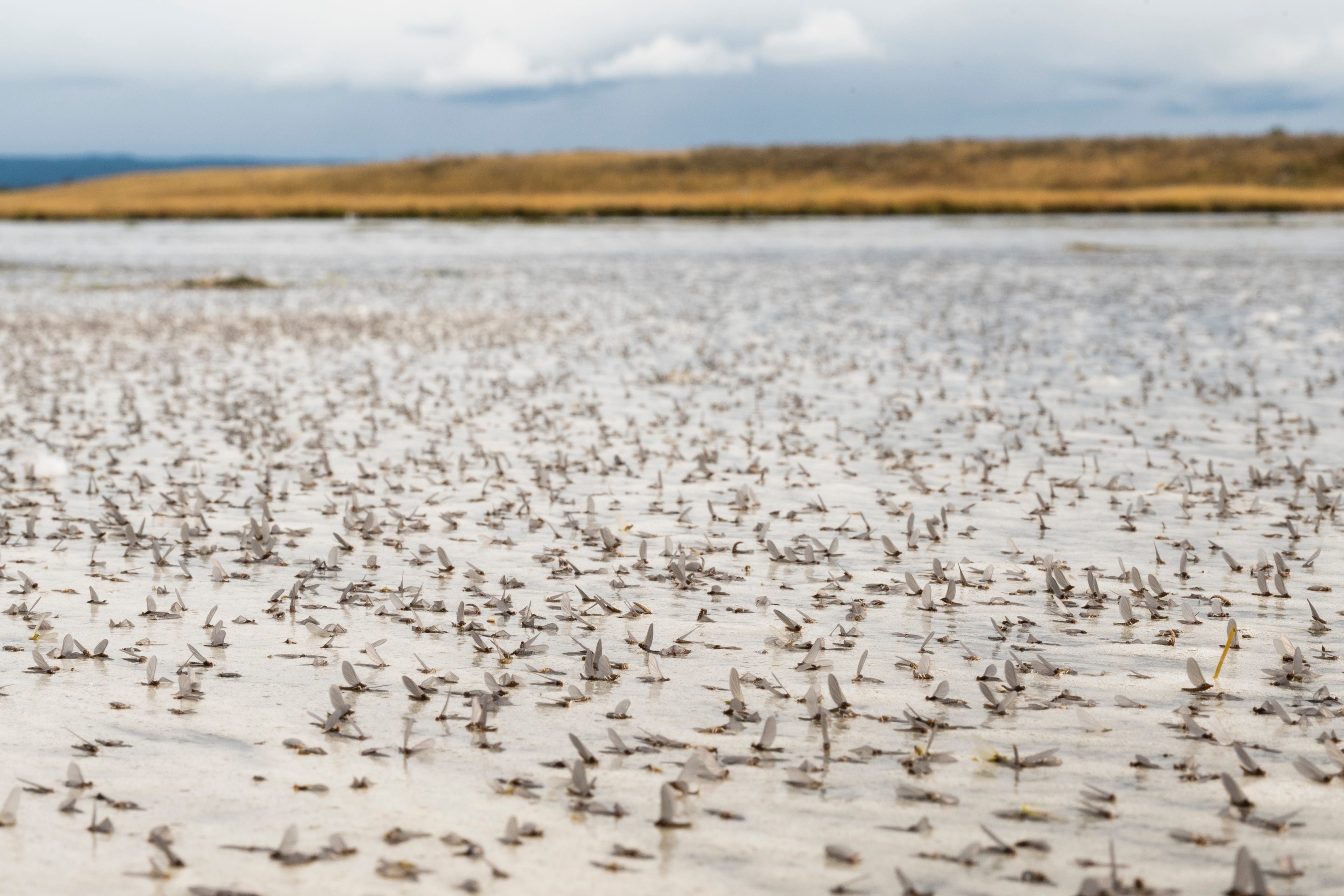
One early morning, while dry fly fishing a Trico mayfly hatch (Tricorythodes) on Montana’s Missouri River, guide Pete Cardinal checked me up, then told me to stop casting and watch the water.
We were working a seam where fast water, colliding with a slow pool, was creating a foamy bubble line. At times, that bubble line would disperse and spread out in wide fronds of white, wispy water. At other times, the currents converged and collected hatching insects in a tight, white highway that ran straight through the run.
Until Pete pointed it out, I hadn’t noticed that the fish were keyed into this system.
When the currents dispersed or collapsed, the fish didn’t rise. When the foam line formed a hard seam and collected those tiny mayflies, the trout began slurping away at the surface.
The lesson? Follow the bubble line.
When you see a pronounced foam or bubble line on the surface, there’s a very good chance that trout will be underneath it, and feeding.
Check out KD’s new book: A Fishable Feast: Fly Fishing and Eating Your Way Around the World—coming out next spring, published by Rizzoli in New York. (Pre-order at Amazon, Barnes & Noble, Books-A-Million.)
 | A guest post by
|
Oh yeah, that’s my default. Drift it in the bubbles. That’s the buffet line.