

Flylab Interview: Ryan Busse
Montana’s District 1 candidate talks about public lands, western politics, hunting influencers and his favorite fish, the Westslope cutthroat.


Ryan Busse is a Montana-based author, conservationist, public lands advocate and 2026 candidate for the U.S. House of Representatives in Montana’s First Congressional District. In 2024, he was the Democratic nominee for Governor of Montana, but was defeated by the Republican incumbent, Greg Gianforte. He has served as a board member for conservation organizations like Backcountry Hunters & Anglers and Montana Conservation Voters and is a committed hunter and fly angler, who prioritizes public land access. As a former firearms executive, his highly-regarded memoir, Gunfight: My Battle Against the Industry that Radicalized America, details his career at Kimber and his eventual break with the firearms industry, which he critiques for moving away from traditional sportsmanship toward political radicalization. He is straightforward, ferociously honest and a breath of fresh air in western politics. As his Substack bio aptly notes, Busse is a “believer in something better and the need to fight for it…”
Ryan, tell us where you’re from and why you’re running for the U.S. House of Representatives.
I’m running for Congress in Montana District 1, which is the western part of Montana. We have two congressional seats, two congressional districts. For fly anglers, Montana District 1 encompasses most of what you think of as the fly fishing water of Montana. Not all, but it runs from Bozeman to Missoula, down the Bitterroot River valley and up to Kalispell in the Flathead Valley and all the way to the Canadian border. It’s like a giant “C-shape” transposed on the western part of the state, with a lot of the big mountains and rivers in it. I’ve lived in the Flathead Valley in Montana for 31 years–raised my family here, got married here, and love this place. I have bent many a fly rod in this part of the world, and spent a lot of my time, especially on small streams, casting big, ugly dry flies, which I very much love to do. I’m running for several reasons, not the least of which is that the Montana that so many people know and love, the Montana that made me a better person, the Montana that gives everybody a chance–that’s all in peril up here, because our public lands and waters and basic conservation system is enduring a full-frontal attack from Washington D.C., including Representative Ryan Zinke (R-MT), who just dropped out of the race last week. There are a lot of reasons to run, but protecting the backcountry and our rivers is a big big reason I’m doing this. My youngest son is named Badge after the Badger-Two Medicine roadless area, one of my sacred places, so, that kind of gives you an idea of how personally we’re tethered to this place.
For outdoorsmen, fishermen and hunters, what are some of the stakes in this race?
The pointy-headed political prognosticators would tell you that the only thing that matters in this election is cost of living, which is huge. Healthcare also, which is a disaster. Tariffs are driving everybody’s grocery prices up. All of these things are on the tip of everybody’s tongues, and they are extremely important to my constituency, supporters and everybody who, hopefully, votes for me and my family this fall. But if you value and are concerned about public lands and waters, and I think Montana has always been front and center for protecting so many of these sacred places, it’s very difficult to overstate the existential crisis that’s facing our public lands and the things we love to do there. So, I guess what I’m saying is that, yes, cost of living, housing, healthcare–that’s all extremely important, and we should vote accordingly there. But anybody who really, really cares about fishing, hunting, hiking, floating, those sorts of things, it’s time to buck up. Because it’s difficult to imagine a worse time in our country for the future of these activities, if you think about all that’s currently being risked.
I’ll give you a few examples. So, the very reason we have the North American wildlife model, why we have access to our rivers, why we have fisheries, why we have clean water, why we have wildlife on a continent where we almost wiped it all out–all of these things are guaranteed in the bedrock of our environmental laws. Legal protections like the Endangered Species Act, the Clean Water Act and the Clean Air Act. I could go on and on, but all of these are being undermined by the right, by the Trump administration and their enablers in the Republican Party right now. The very bedrock of how we manage threatened species and safeguard clean air and clean water are being undermined and attacked–legally, and in policy terms. What does this actually look like on the ground? Well, rolling back protections for Bureau of Land Management land, empowering the extraction industries and not prioritizing conservation. These are good examples. It means huge oil and gas companies are going to rototill the shit out of everything that you love. And people who may value sage grouse or clean water or a trout stream are going to be relegated to second-class citizens. That’s literally happening across the West right now, and it’s being propagated by the Trump administration and his enablers.
You mentioned that the recent Conservation in the West poll said that people across the western states don’t really like any of this stuff, right? 75-to-80% of people would say these things are horrible and destructive, and I won’t vote for that. But that’s not exactly true. People definitely are concerned about these legal rollbacks, but still, way too many people are voting for it. If you voted for a Trump Republican or MAGA Republican or pretty much any Republican in the last election, all those things I just described, you did vote for them. They are happening. They are being done by the people you voted for. And I take changing that, stopping the attacks and reversing these legal rollbacks very goddamn seriously. The things I love–hunting, fishing, exploring sacred places–are under attack by this administration. Like so many people who live in Montana, I didn’t move here to make a gazillion dollars. We moved here to have a decent life and experience the things we care deeply about–elk hunting, bird hunting, training my three bird dogs, and I love to fly fish. If I wanted to make a ton of money, I’d go live in Silicon Valley or New York City…
Did you view Senator Mike Lee’s (R-UT) land grab last summer as a way to test the waters–to see if the electorate had an appetite for this wholesale public land attack? We now know the pushback (“not one acre”) was a hundred times what they thought. But that doesn’t mean the land attacks are going away–they’ve simply moved to plan B: attacking and undermining the legal and legislative foundations of the country’s public land management, if they can’t actually sell the land.
Actually, if I’m a big corporation, the way they’re doing it now is way better than what Lee tried to do. If it used to take a copper mine three years of environmental review and eighteen months of public comment to build consensus and assess environmental impacts, now they can simply push it through, with the administration’s blessing, in four weeks (Interior wants to do NEPA reviews in 28 days. Is that even possible?)–that’s the endgame: zero red tape.
If you’re a money-grubbing Chilean mining company (like Twin Metals Minnesota, a subsidiary of Chilean conglomerate Antofagasta) who wants to ruin the Boundary Waters, and by the way, I’m describing a scenario that’s actually happening right now–and I ask you, “Mr. money-grubbing Chilean mining executive, would you rather be forced to buy all the public land, to spend that time and money to deal with all the regulations and title transfers and bullshit, or would you rather just be told, hey, you can simply access our public lands. We will charge you basically nothing. We’ll remove all of the restrictions. You can just have this mine and profit from it. All of the toxic waste, environmental damage and insurance exposure? Don’t worry, we’ll socialize that…”
The second scenario is way better for you if you’re a big mining corporation. Oh, and by the way, that is precisely what the Republicans just voted to do in the Boundary Waters. Yes, they decided not to sell public lands. Good, glad, low bar. Everybody should step over it. But the thing they did is actually speeding the destruction of public lands faster than if they would have sold them. And that’s happening in tons of places. It’s happening in Alaska at breakneck speed. There’s a new mine here in Montana–the Sheep Creek Proposed Mining Project–at the headwaters of the Bitterroot River on 4,500 acres of Bitterroot National Forest. They have that on the fast track. Same exact thing. Nobody’s having these mining corporations buy the land, because it’s public. If you’re a U.S. citizen–this is happening on land you own. They are doing it on your land. They’re going to fast track the mine at the head end of the Bitterroot River–at the very tops of the mountains on the Idaho-Montana border. Literally, where the Bitterroot begins to flow. So, as the pollutants roll out of there, they will flow through the whole 75-mile long stretch of Bitterroot River, all the way down to the Clark Fork. Does this sound like a disaster in the making?
This is the same game plan that the largest oil and gas companies in the world have used to acquire major western land tracks, like in the sagebrush steppe along the Rocky Mountain front or the Pinedale Anticline, in the Upper Green River Basin of Wyoming, or the sagebrush steppe in New Mexico. I could go on and on. And the things you and I are talking about here today are particularly egregious for rivers, fishermen, lakes, bodies of water. The oil and gas industry has been doing this on public land for a few decades.
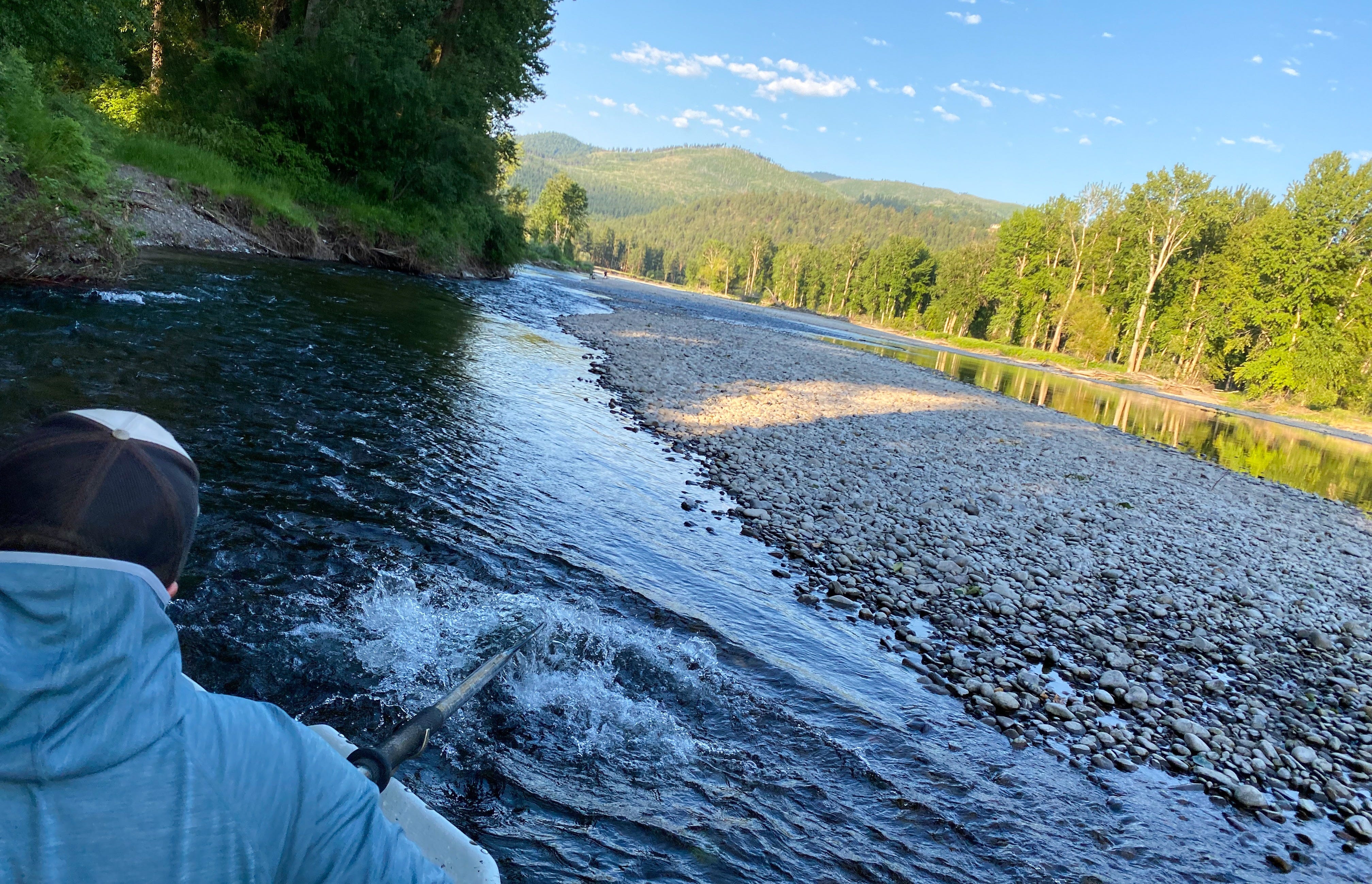
How does the ordinary outdoorsman push back against these attacks and extractive companies, other than signing petitions, making your voice heard and voting in November?
Obviously, the main things are to stay engaged (politically), understand what’s really going on, voice your opinion and get out and vote.
What these huge companies have been doing is to fund right-wing organizations that basically said, “You know what we’ll do? We’ll dream up all these culture war traps. We’ll get everybody super hyped up and angry about it. They’ll go vote on these culture war issues and then while they’re doing that, we’ll be robbing them blind, mining their public lands, poisoning their rivers, taking their sagebrush steppe…”
So, if you’re a fly fisherman, if you’re a bird hunter, if you’re an elk hunter, if you care about these things, you’ve got to do two things: One, you’re going to have to put away the culture warring for a moment, and decide that public lands and waters are important to you. And two, once you do that, then you’ll have to threaten to vote against Republicans and at some point, actually do it. Maybe just one time or maybe a couple times, a couple of election cycles. But if you want all this to stop–and just think back 20 years, Republicans used to not want to do this, because they knew their constituents hated poisoning rivers and hurting fly fishing–you’re going to have to scare the hell out of them, tell them you will vote against them and then go do it.
Will that be painful, if you’ve decided that your identity is wrapped around one particular political affiliation? Maybe. But is it more painful to lose an entire river? And all the river-related jobs in a valley? It is for me. So, I guess what I’m saying is you’re going to have to start saying these things are important to you. You’re actually going to have to vote on them for a couple cycles, so you can fix this party. And If you don’t, kiss this stuff goodbye.
You have to threaten that you’ll vote against them, and you have to mean it. They have to believe you, because so far, what the Conservation in the West poll tells Republican politicians is that 75-to-80% of people care about public lands, but they don’t vote on it. They are laughing at you behind the scenes. People are saying that this stuff is important, but you won’t vote for it. Phillips Petroleum Company, ExxonMobil, the Chilean Mining Corporation, they are laughing at you. And why would you be okay with that? Forget the laughter. They’re taking your public land. They very well may ruin the Boundary Waters–the most visited wilderness area in the world, a place that holds more than 20% of the fresh water of all wilderness areas in this nation. And a bunch of you voted for them ruining it.
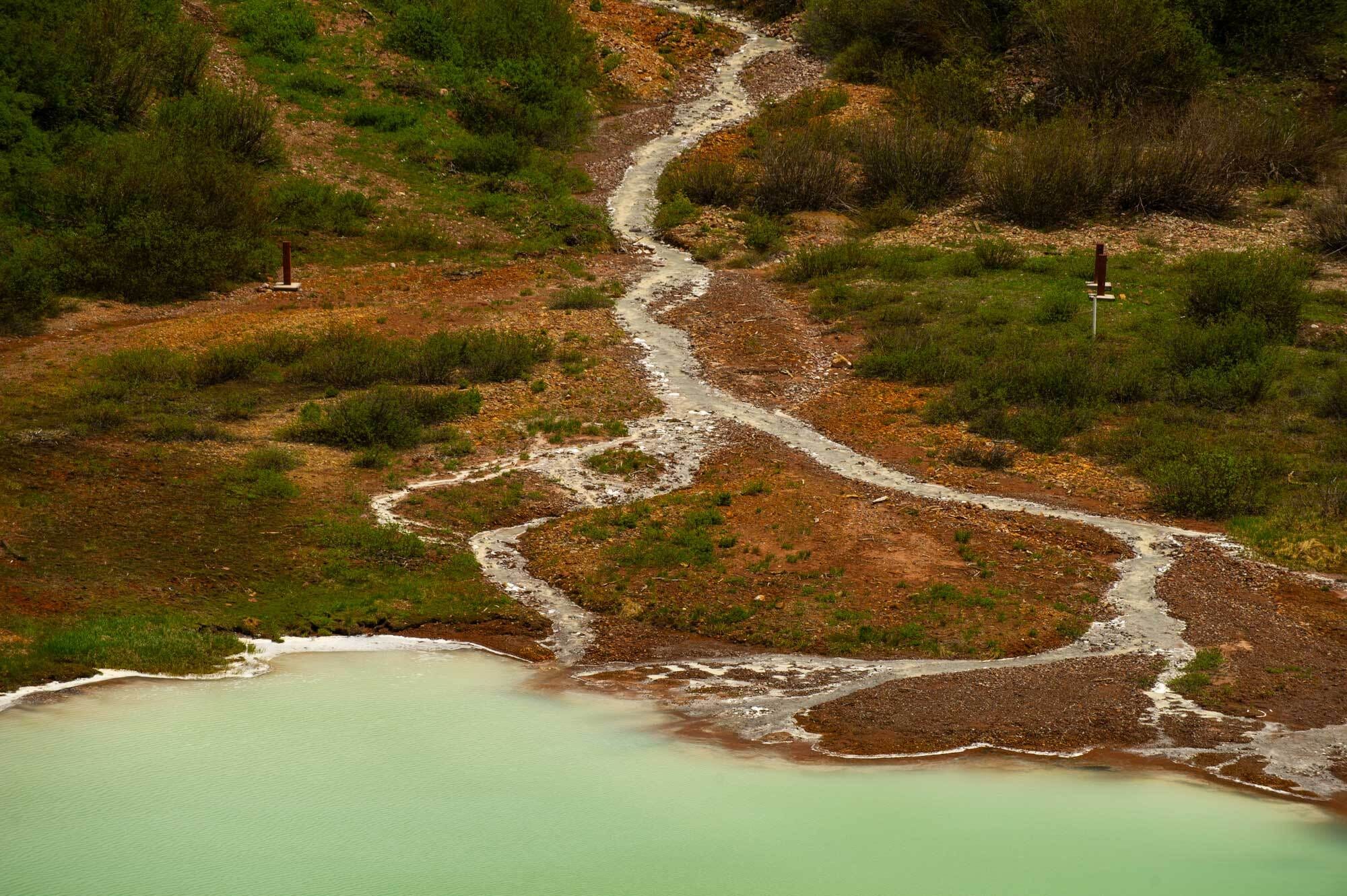
If you have a mine go in and poison the Bitterroot and Clark Fork, what happens to all those river towns and people? What happens to these communities? What happens to the land values in Missoula? What happens to the ranchers requiring clean water for their herds? What happens to the fly shops and outfitters and tourists sitting in the bars or going out to dinner?
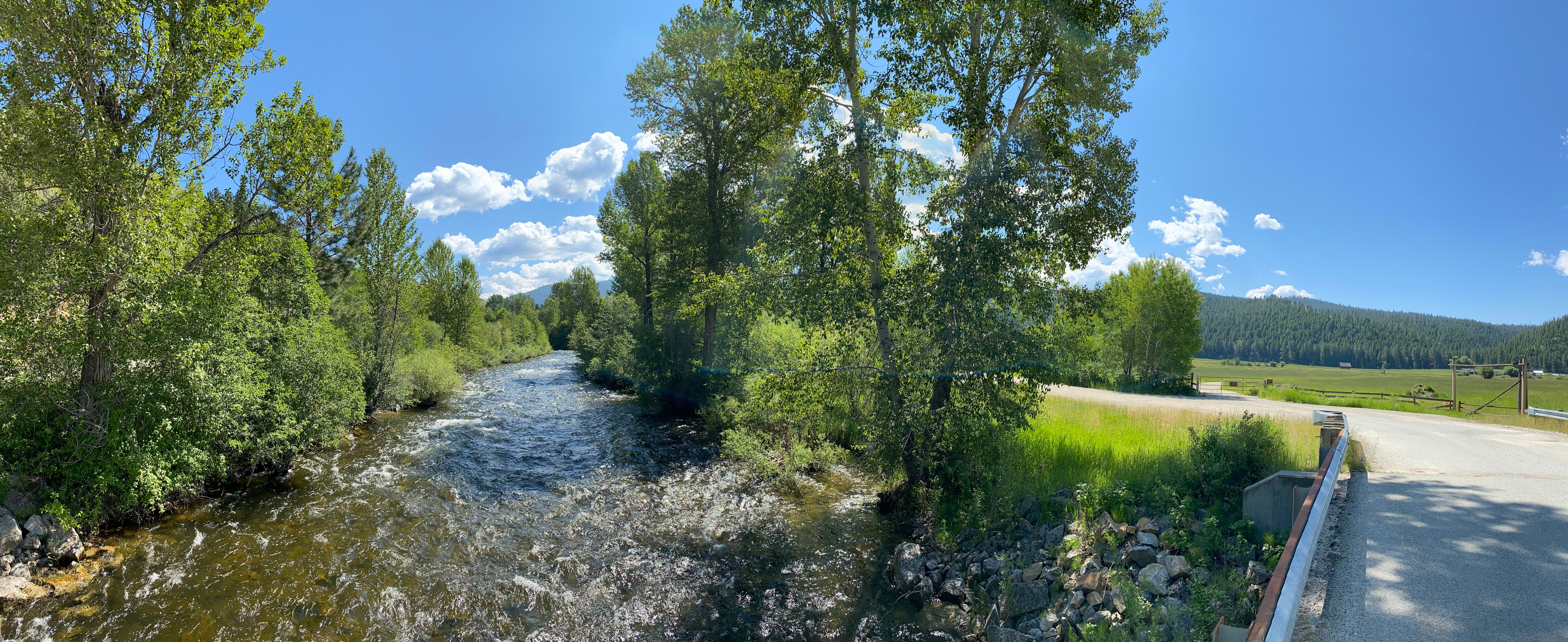
A couple things. The last I checked the supply of clean, cold trout rivers was not increasing. And it’s pretty difficult to reproduce these natural resources on any continuum other than a geological time scale. So, for those of us who live in human time scales, perhaps we should vote as if these things exist in human time scales. In Montana when we speak of places like the Bitterroot or the Blackfoot or the Flathead or the Clark Fork–these are names of rivers–but actually, to your point, what they really are are the names of entire social economic systems, small towns, cafes, hotels, fly shops, fishing guides, shuttle drivers, someone making sandwiches, someone else fixing boats. As my friend, former Montana governor Steve Bullock, used to say, “They ain’t coming here for our Walmarts, right?” They’re coming because we have these incredible rivers, valleys and resources.
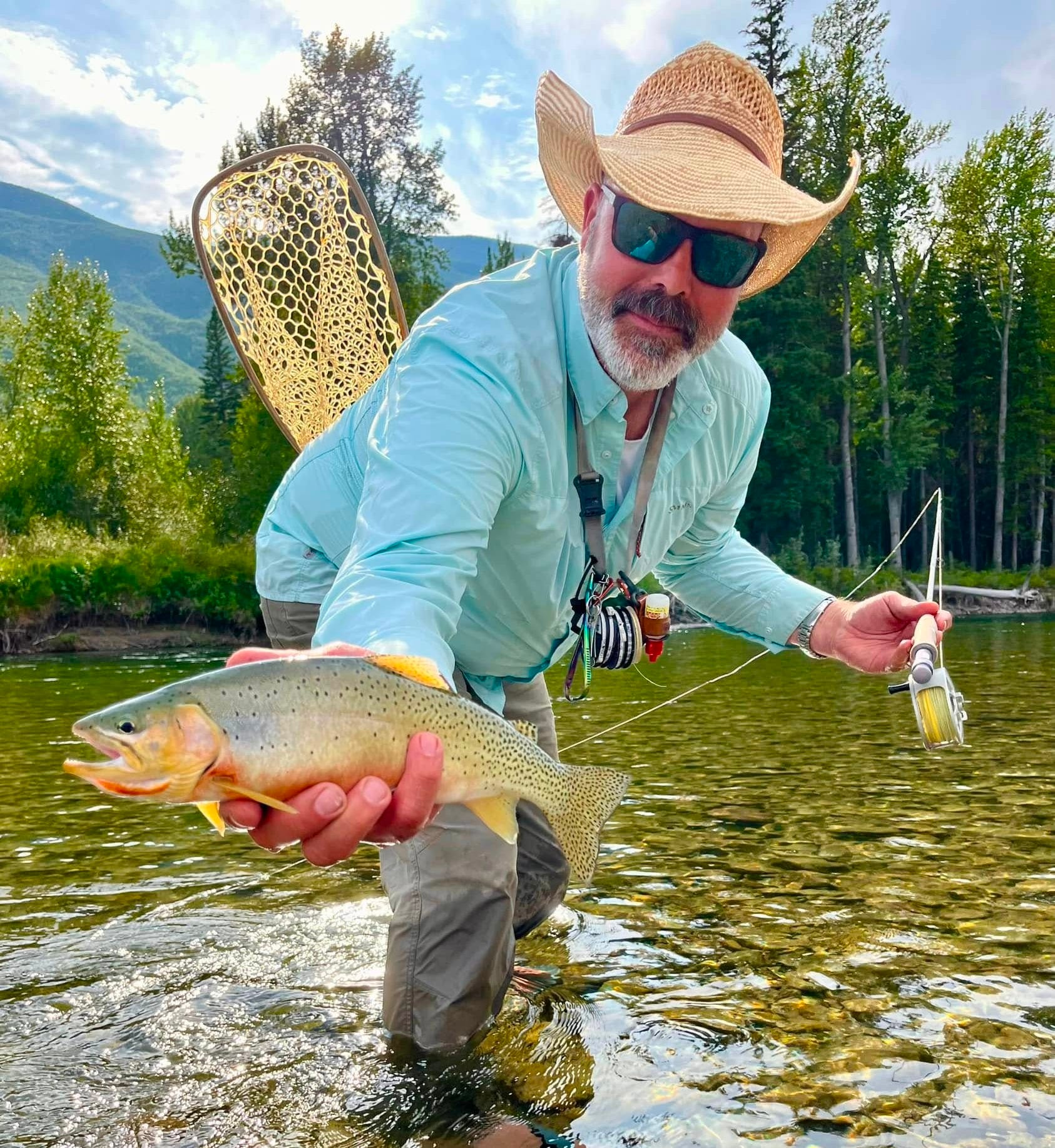
And for us to even think of potentially damaging these places in a way that will make them irreparable for our kids and grandkids (or whatever timeframe), is an unconscionable thing to consider. The problem here is that our economic system has found a way to quantify an ounce of copper or silver or a pound of rare earth minerals, but we don’t place a commensurate value on a native Westslope cutthroat or grizzly bear or an elk. Truth be told, I’m a bit of a cutthroat trout nut. If I could fish for native cutthroat and bird hunt for the rest of my life, that’s all I would do. For me, these experiences are irreplaceable.
So, when a mining operation or politicians pushing these projects say, “Well, we’re going to weigh the risk.” What’s this worth versus that? What’s the value of losing a cutthroat fishery? You cannot even quantify its worth. You don’t have enough money. You don’t have enough lawyers. You don’t have enough lobbyists. You don’t have enough private jets to try to convince me that you can quantify the loss of a river with native Westslope cutthroat trout. It’s impossible to do. Yet, that’s exactly the economic system we have set up, and that’s really what we’re fighting.
U.S. history is littered with foreign mining companies that come in, pollute entire communities, file chapter eleven, then walk away from the contamination and mitigation. This is basically why Congress, in 1980, had to create a law–officially known as the Comprehensive Environmental Response, Compensation, and Liability Act (CERCLA)–to clean up all these “orphaned” hazardous waste sites through the Environmental Protection Agency (EPA). You polluted the shit out of a watershed and community, and now the federal government has to come in and clean up decades and decades of mistakes, while the taxpayers foot the bill.
That’s 100% true.
The system we have set up privatizes profit and socializes the risk. So, we have a few people, a few mining executives, a few people trading stocks or a few tech bros–they make all the profit and when the risk bill starts coming to pass (the pollution, lost rivers, lost cutthroat trout), society bears all that burden. That’s not a free market or capitalism. In a true free market, these companies would have to bear every bit of the expense for their exposure and damage mitigation. And that’s really what I argue for–if you truly want a capitalist/free market system, okay, then the profit and risk are both privatized. But you can’t keep doing things the way we’ve been doing them, because the things that you and I love, the things that fly fishermen love, those are “socialized” things. Rivers are things we all own. Trout are resources we all protect, right?
We do have a system in place that can help save these resources–it’s called a regulatory system. And back to the original conversation we had, that’s what they’re attacking. The system that we set up to protect the things we love, which is regulation through the government. That’s what they’re attacking. And they’re doing a damn good job of it. I started seeing this about 10 or 15 years ago with people like Mike Lee and Ryan Zinke and others in the Republican party–you notice the first thing they did, they didn’t try to sell off public land. They didn’t try to remove all the regulations for about 10 years. They told you that the government sucks, that regulations are horrible, that socialized anything is evil. Well, news flash, folks, except for a few miles of private streams, if you’re a fly fisherman, most of what you love is socialized. Owning the rivers collectively is socialized. They’re protected through what? Regulation. Enforced by what? The government.
So, they were smart. They attacked the things, the bedrock structure that upheld the other things we cared about, before they started attacking public lands. Now they’re attacking the things we care about, because they have sufficiently weakened regulation and the perception of government. The answer is not for no government. The answer is for better government.
DOGE wasn’t a terrible idea, but the execution was awful. Who’s against streamlined government? Anyone? Can you use AI in a thoughtful way to go in and make systems smarter and more efficient? I think everyone’s in favor of that.
Who isn’t for more efficient things and better functioning government? Like, nobody. But DOGE was sold to us because we had to cut waste. The government under Donald Trump is spending more after DOGE than they spent before. People that bought into this, they’re being lied to. I meet government agency folks, who didn’t get removed, but they’re not accomplishing their work anymore because they’re completely overworked. They’re demoralized. And this is really important research in our fisheries. When our Big Hole River is boiling because of nutrient overload, warming water, flows that are being pulled–do we have more fisheries biologists, more hydrologists down there checking it out?
No, we’ve got a fraction of what we used to have. So, your votes for this administration, if you voted for them, are helping boil and kill one of the most famous and iconic fisheries ever in the history of the world, the Big Hole River. That should anger you. You should want to fix that. That’s what this midterm election is about.
When you’re in these valleys, talking to people about threats like this new proposed mine, what are the kinds of concerns you’re hearing? Are people apprehensive, across the aisle?
Most of the constituents I talk with about the Sheep Creek mine or Big Hole River challenges understand how real and existential these threats have become.
The upper Bitterroot–that’s actually the south end of the valley–when you look at a map (Hamilton, Corvallis etc.), that country down there is a very red part of the state. Ravalli County voted in favor of Trump by plus 41%–that gives you an idea how red it was. And yet, when there are meetings held about this proposed mine, 600 people show up. Are most of these people Democrats? No, not even close. These are conservative old ranchers. These are the conservative “Trump voting people” with camo on. These are mechanics. But they’re all scared to death about what might happen to the river in their valley. I think if I could put words in their mouths, they would say two things: We didn’t vote for this, and we’re scared. You can’t take our river from us, right?
And these are conservative people saying this. When the threat gets loud enough or close enough to your front door, people do wake up and they’re waking up down there. And for me running as a Democrat, that’s a heartening thing to see, because I’ve been waiting to see when this was going to happen. And here it is, happening in different parts of the state. And it scared the hell out of Senator Steve Daines (R-MT) and other Republican politicians here in Montana. And it should, because those people come from a mostly conservative, Trump-plus-41% county. It isn’t going to be Republican plus 41% in this race. I can promise you that.
I tell people, we don’t have to worry about who we voted for in the last presidential election, because you can’t change that. What you can change is what you do next. They’re worried about what’s coming down the pike, and they should be. Why would I want to stand in a social issue trap? Meanwhile, everybody cares about whether their river is healthy. Everybody cares about whether their kid can afford housing or not. And that’s the sort of stuff I worry about and am fighting for–those are 90% issues.
I’m not some pejorative, made-up, boogeyman Democrat. I hunt and fish with my kids with guns that I help design and sell. I drive a diesel truck. I have three bird dogs. I don’t mind partaking in an adult sparkling beverage here and there. I’ve even been known to utter four-letter words, so it’s not like I’m something drawn up in a lab. When people ask me, “Well, are you a liberal?” I generally say, “I don’t know. I don’t even know what that stuff means anymore.”
I believe that we’re 50 years behind every other developed country and we ought to have universal health care. Not because I think it’s liberal or conservative, but because it’s smart business. Why are we paying insurance companies to slow down service, instead of us having more efficient and better service? This is why Teddy Roosevelt argued for universal health care (a national health insurance system) almost 118 years ago.
Can you talk a little bit about the Outside piece on Ryan Zinke, particularly where the journalist and he were fishing and Zinke had rigged his reel backwards on the fly rod–in many ways, that probably sums up his legacy as a politician, public lands advocate and outdoorsman.
“As Zinke and I casted over the ice-cold water, I noticed something funny about his setup. He kept struggling to strip line out of the bottom of the reel. For a while, I thought he was simply having trouble concentrating on our conversation while casting. No, there was something wrong, and when I asked him to stand for a portrait, I finally saw what the problem was. He had rigged his reel backward, so that the line was coming out of the top of the reel. Every so often when he went to strip line out, he would grasp air where the line should’ve been. Seems like an inconsequential thing, but in Montana, it’s everything.” – Elliott D. Woods, Ryan Zinke Is Trump’s Attack Dog on the Environment
That writer is my friend Elliott Woods who put together the Zinke piece–great article. And Elliott texted me last night, because he was hoping to do a followup.
On Zinke, I tell voters it’s like a guy comes to your house and says, “I’m going to murder everybody and burn down your house.” And you say, “No, no, no, don’t do it.” And then he murders just about everybody, saves one kid, kills all but one of the dogs and you, and then you give him an award. You say, “Man, you could’ve killed everybody, but we’re going to give you an award, because you didn’t kill all of us.”
That’s how we’ve brainwashed ourselves to be thinking about people like this. Does that make any sense? But that’s what we’ve been doing with people and politicians like Zinke. He knows the one pet not to kill, and we give him an award when he murders everybody else in the house.
Do you think Zinke dropped out of the race because he saw the internal polling and knew he was going to lose? Or was it a “what will my legacy be” kind of decision?
I know he did. Our poll showed that I was gonna smoke him, and two other polls showed the same thing. Incumbents don’t just drop out. And look, I wanted to beat him head-to-head. I’m happy to have beaten him this way, I guess. But nothing is really accomplished until we win this race in November.
I want people who are reading this interview to know there’s never been a public lands champion like me to run for Congress. I was board chair of Montana Conservation Voters (MCV). I literally changed my entire outlook on life, my entire being because of public lands and public waters. I was the board chairman of Backcountry Hunters & Anglers for several years. I’ve testified to Congress. I’ve advised cabinet departments. Hell, my wife Sara recently asked me, “If the whole house burned down, what stuff would we save? The wedding books, or any important documents?” I said, the river raft, that’s the only thing we would save. Our life is completely centered on the outdoors. And that’s the kind of congressman I would be.
Do you think your politics are a new kind of politics–more to the center and about standing up and simply getting things done?
I don’t know if it’s a move to the center. I don’t know what it is, actually. Maybe it’s about standing up for the stuff that really matters to you, instead of the stuff that you’re being fed or ginned up about. I see all these people here in Kalispell who truly live for these wild places–they go to work, they work hard, but they don’t really live for their work. What they live for is elk hunting for six weeks out of the year, or floating with their family on the weekends. They work to live. They don’t live to work. I think, okay, I identify with that now. Just vote accordingly, vote for the stuff that really matters to you. And I think we’re on the cusp of that. Sadly, it’s taken a lot of risk and damage to things we love, but I think people are finally starting to see the stakes in all of this.
Here’s a passage from your recent Substack on hunting influencers: “For so many of us who are hunters and anglers who care enough about wild places to elevate them in our personal politics, the disappointment with Rinella, Hanes, and other influencers has only grown as the attacks on wild places have increased. We ask ourselves, how it is that we care more about this than the people who have made fortunes from it?”
The small guy, the common guy–he works in town, buys stuff at the local fly shop and cares deeply about public lands and rivers. He’s committed and in the fight. Then you’ve got guys with three million Instagram followers–hunting influencers–and they’re not being transparent about their motivations, or coming to the table to talk about these issues in an honest, defensible way. I suppose, at this point, they’re paid off…
Yes, I think they’re bought off. Cameron Hanes spends a lot of his time hunting on a ranch in Utah that charges about $50,000 for an elk. There is some public land on that ranch, but to get on that public land, you’re crossing private land–it’s landlocked. You got to pay your $50 grand. That’s not a guy who is really tethered to public land as an existential thing, the way my family is. I guess the way I look at it is, I spend more time on public lands than most of these people do. So, for me, I vote on it. I care about it more. And that’s really what I’m asking people who aren’t super wealthy, who can’t go on a $50,000 elk hunt, who can’t fly off to some private retreat and float on a river with private access.
The rest of us truly depend on public lands–physically and spiritually. That’s why I take them so seriously and that’s why I think people like me care about this stuff more than those hunting influencers. I’ll give you an example of what I would like to see different–if I was somebody like Steve Rinella and had that kind of platform and was going to have somebody like Donald Trump Jr. on my program. The first thing I would do for the first 10 minutes would be to say, “Okay, one of your best friends is Senator Mike Lee (R-UT), and he explicitly says he wants to sell off public lands. Tell me why I shouldn’t boot you off this program and why I should trust you? Why won’t you stand up and say that’s the wrong call?” But they’ll never do it. They’ll never do it because making the next buck and getting the next follower is more important to them than the thing that they’re making their money on, which is public lands. This kind of ethical weakness is reprehensible, and also pretty common.
And to be clear for our audience, we don’t have any problem with hunting influencers making money–do your thing. But you do, at some point, have to build a set of basic policy beliefs that are grounded in defensible ethics.
Nor do I, make your money. What Cameron did, and I appreciate him coming out against the sale of public lands, was to start using this phrase, “not one acre.” He just kept saying it over and over online. I’m like, okay, not one acre sold. I appreciate that. But what about the one acre up there on the Boundary Waters being mined by the party you supported and actively campaigned for during two election cycles? What about those acres? What about the 4,500 acres up here in the Bitterroot National Forest, where the Sheep Creek Proposed Mining Project could poison an entire river valley? What about those acres? Why aren’t they standing up for those?
If you’re going to make your money, your fortune, your empire based on the perception of how important public lands are, then you have more responsibility to stand up for them and be politically active to protect and save them. That is the part that I don’t see. I see them becoming less protective of our public lands as they make more money. And that should be the other way around.
But having said that, there are a lot of Republicans, people who call themselves Republicans, who are also in the hunting and fly-fishing industries who are pretty damn politically active, and in a good way. I think of my friend Jim Klug at Yellow Dog Flyfishing in Bozeman–he calls himself a Republican, or at least a conservative guy, and that dude pulls no punches when it comes to standing up for public lands and waters. I think people like that are pretty commendable. These fights are bigger than any party affiliation or making a few bucks.
Strong, ethical people will always stand up.
Any last thoughts?
I want folks to know that it’s not wrong to care about these sacred public places. It doesn’t make you weak or politically wrong to vote for people who are standing up for public lands, public waters and our bedrock environmental laws. There was a time in our nation’s existence, not very long ago, when none of that was a partisan question–wasn’t even close to a partisan question. So, it’s not like this recent thinking is embedded in 250 years of our national history. It’s embedded in an ugly couple of decades that we can just as easily reverse course on. But we have to start agreeing to vote on these issues.
Does that mean for a little while that candidates like me and others, who probably run as Democrats, will be the beneficiaries for a couple voting cycles? Maybe, but this is really about saving rivers. In time, the Republican Party will become more in-line with this thinking and that’s how we’ll make bigger change. That’s all I’m asking from people–to vote like they actually care about these things and places, and we’ll be in a lot better shape.
I’ll also say, let’s stop using all these pejorative terms about Democrats being fake hunters or fake fishermen. I’m like, really? I’ll challenge anybody watching, listening, or reading this to meet me on the river this summer to fish.
I can’t outcast everybody, but I can throw a loop pretty well. I put 62 days behind my bird dogs last year. I don’t know how much ammo I shot, and I don’t out bird hunt everybody, but I ain’t fake. I pack and butcher my own elk every year. There are definitely people that out elk hunt me, but I’m putting in the days and miles.
And, hey, I’d love an excuse to get on the river for a day.
Let’s go do it…
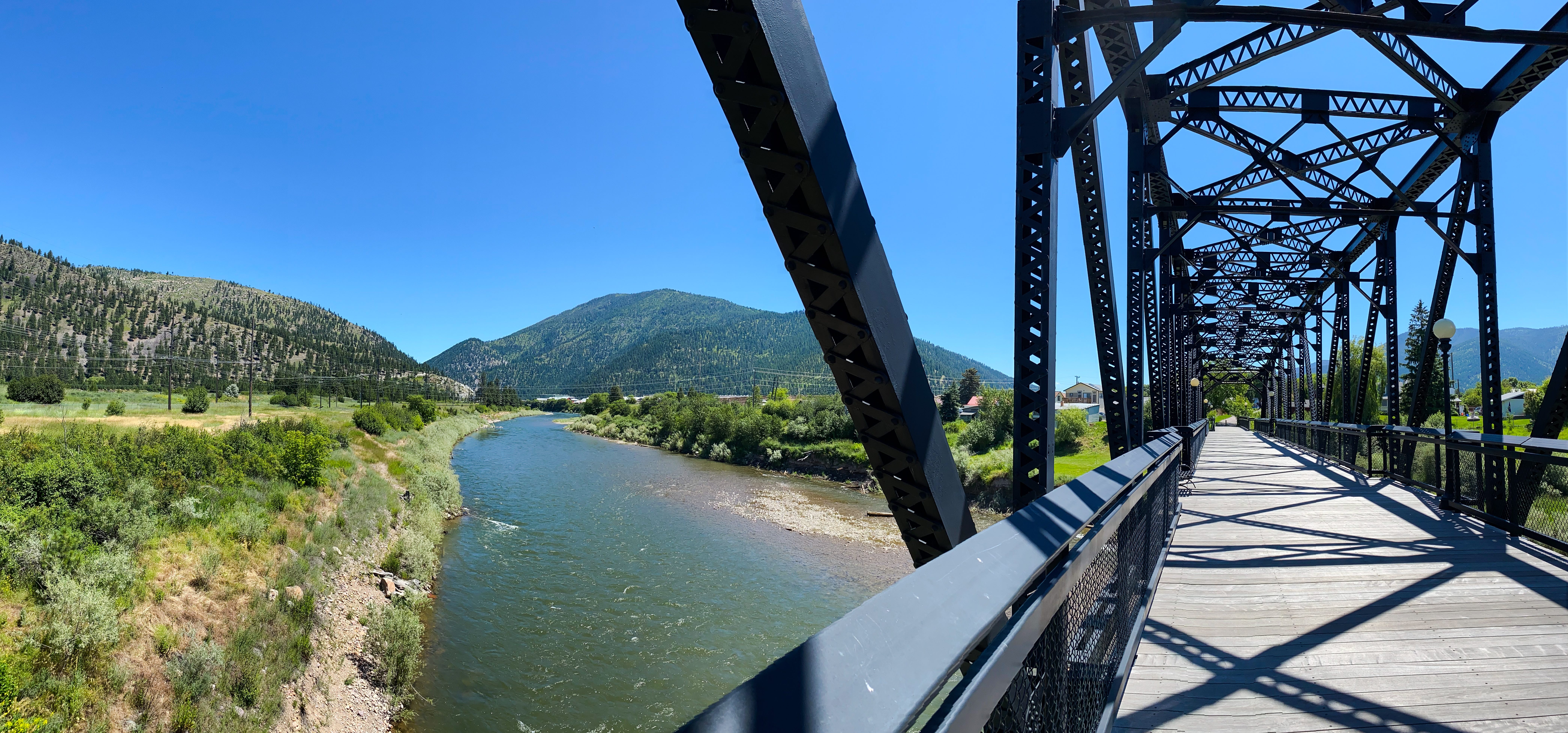
Photos: Image 1 and Image 3; courtesy of Ryan Busse for Montana.
 | A guest post by
|
 | A guest post by
|
Amen and Hallelujah. Thank you for this.
I am Canadian and similar stuff is happening here, too. The First Nations peoples value stewardship over profit-taking, as capitalism has never been their guiding light. In Alberta, Canada, orphaned gas wells spew their poison into the air, as Big Oil, subsidized heavily, asks for more money to close them properly.