

Casting Into The Wind
Wind is a fact of life in the West. If you’re going to fish out here, at some point you’ll be doing it in the wind.

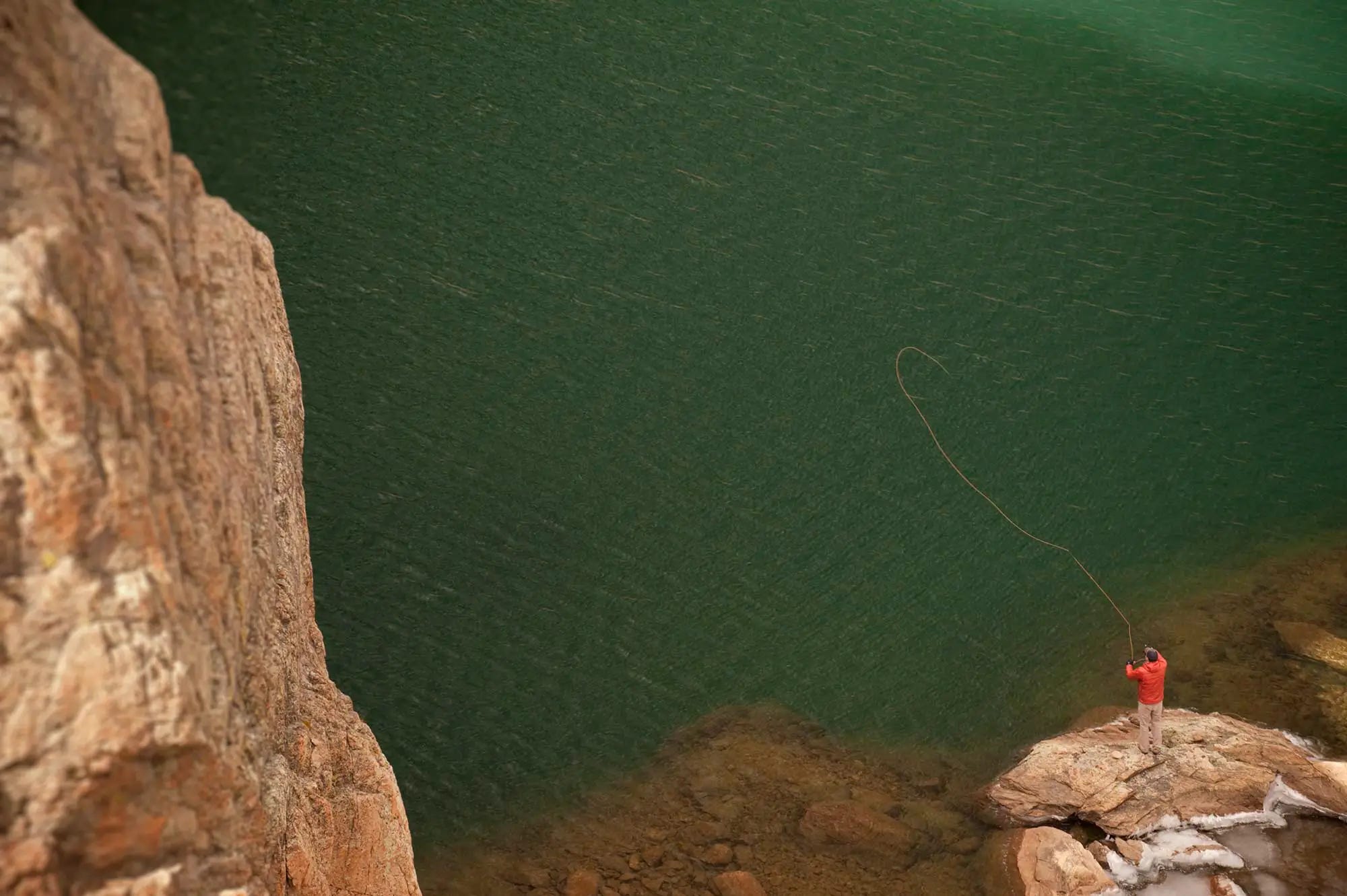
By John Juracek
A friend of mine is fond of saying that if you don’t learn to fish in the wind in Montana, you’ll fish two days a year. Now, he may be guilty of slight exaggeration, but his point is well taken.
Wind is a fact of life in the West. If you’re going to fish out here, at some point you’ll be doing it in the wind. I often field questions from visiting anglers about what adjustments are necessary when the winds start blowing.
The answer is simple: increase your line speed. All else being equal, the faster a line moves, the more energy it carries. And more energy is exactly what’s necessary to offset the effects of the wind.
There are two ways to achieve higher line speed. One is to speed up your casting stroke. Moving your arm and hand faster (and therefore your rod) makes your line move faster. The other way is to haul with your line hand. Whether single or double, a haul accelerates the line, imparting the extra energy needed to cut through wind.
Sounds simple enough. Is that really all there is to it? Technically, yes. Practically, well, maybe.
That’s because it all depends on your casting stroke. If you have a fundamentally sound stroke, then yes, the only adjustments you need to consider are speeding up your stroke, hauling, or doing both if the wind is particularly severe. Nothing else is necessary.
Unfortunately, very few anglers possess fundamentally sound casting strokes (in my estimation it’s less than 1%). So here’s the crux of the issue: If you have flaws in your casting stroke the wind will, at the very least, expose them. More likely, it will exacerbate them. Simple casting situations become difficult, and difficult ones become impossible.
There is but one good way around this. Improve your fundamentals. Sure, it’s sometimes possible to jerry-rig your stroke in order to get by, but any solution that fails to address proper fundamentals is destined for long-term failure. Covering up the problem is not the answer.
Because the basic principles of good fly casting are straightforward and easy to learn, we should all make an effort to learn them. But be forewarned: your fishing buddies are not the ones to listen to when it comes to casting advice (even if they’re credible fishermen). Seek professional help. Speaking from almost forty years of teaching experience, I guarantee you’ll be glad you did.
Fishing in high winds isn’t fun for anyone. But on certain days it’s that or nothing. If you know enough to render the wind irrelevant, as the experts do, then you’re still in the game. You’ll be able to catch fish and have fun doing it. And in the end, isn’t that what it’s all about?
John Juracek is a fly fisherman, writer and photographer from West Yellowstone, Montana. For twenty-some years he was a partner at Blue Ribbon Flies, a local fly shop, and is currently the head casting instructor at the School of Trout and Anglers Academy. His writing credits include Yellowstone: Photographs of an Angling Landscape, Fly Patterns of Yellowstone, Fishing Yellowstone Hatches and Fly Patterns of Yellowstone, Volume Two.
He is considered one of the sport’s expert fly casters and instructors and offers casting lessons for $100/hour at jjuracek@gmail.com or (406) 640-2828.
From a guy that grew up fishing the panhandle of Florida and only on rare occasions getting to fish freshwater, wind is a way of life. learning how not to smack yourself in the back of the head with a #2 clouser minnow while wading off st. george island with 15kt winds was fun........ but it made me a better caster. learning to keep the line low, increase line speed slightly, but FOCUS on shrinking your loop. A smooth cast with a smaller tight loop will outperform a guy focusing solely on seeing how fast he can go, every time.
Just returned from a very windy trip to Belize.
This is all great in practice—until a guide starts yelling at you to drop a cast 60 feet in a 35–40 mph wind.
Somehow, everything you practice goes straight out the window and chaos ensues.