

Carp Are Difficult to Pattern
No fish species connects the sports of angling and hunting better than carp.


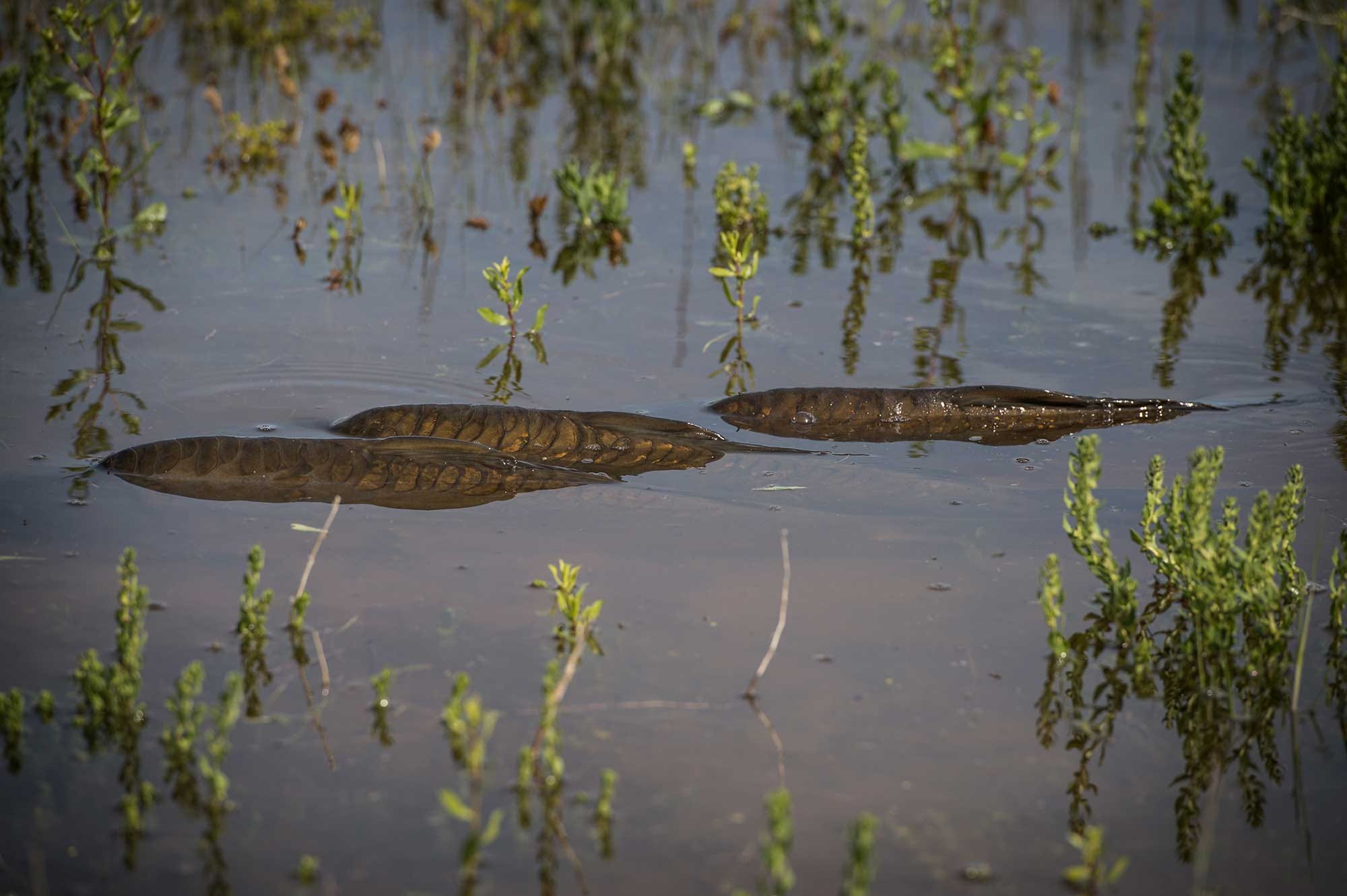
Some days, carp will feed like swine at the slop trough, plowing right over a flat, inhaling seemingly everything in their paths.
On other days, they can be as fickle and spooky as permit. I can’t tell you how many trout and bonefish guides I’ve heard tell me how much they respect carp as difficult fish to fool. You can travel throughout the West, for example, and learn that when the guides go fishing on their time off at the end of the day, they’re often not casting at trout–they chase carp.
Carp will eat just about anything, from crayfish to Cheetos. That’s a good news/bad news deal. The angler’s options are almost limitless, which means the angler has to think hard before choosing a fly to tie on.
They can be found almost anywhere–again, a good news/bad news deal. The good news is that you can fish for carp in an odd assortment of places, from the pristine flats of Lake Michigan to the less-than-bucolic aquascape of the Los Angeles River. The angler must stay sharp, keep his or her eyes peeled and factor in the less anticipated when they chase carp.
Compare that to the trout river. When the mayflies are hatching, even a novice angler can reasonably guess what to tie on. The rings left by rising trout on the river surface are de facto bull’s-eyes that give you a pretty good idea of where to drop the cast. Trout fishing is about understanding systems and patterns. The better you can do that, the better your chances for success. That’s also generally true when it comes to bonefish moving on tides, tarpon rolling through channels, or redfish feeding in a marsh–and it’s true with carp as well.
The thing is, in carp fishing, those systems and patterns are far more subtle and harder to predict, and they change more frequently than most anglers expect.
And yet another challenge is that carp are extremely sensitive, communicative fish. They have giant lateral lines, so they can sense danger from a distance. Not only that, they’ll also signal that danger to other fish. Oftentimes, I’ve seen a school of carp slowly cruise into range, and with one errant cast, one awkward slap of the line, not only did I cause the fish I was targeting to flee, but the whole school up and vanished in an instant. Poof.
No fish species connects the sports of angling and hunting better than carp.
Barry Reynolds, Brad Befus and John Berryman wrote Carp on the Fly: A Flyfishing Guide (with a foreword by Dave Whitlock) more than 29 years ago, and that book has been the standard that got many anglers to embrace the challenge of carp fishing. My dog-eared copy of that book has followed me on many fishing trips, even when I wasn’t planning to fish for carp.
The basic knowledge that these guys introduced to fly anglers is still very relevant and important.
As more anglers have endeavored to chase carp with flies, a few more tips and techniques have come to the fore, and I’ll be explaining some of them in this series. But the ultimate lesson a carp angler can learn is that the more one sees and experiences, the more he or she realizes that carp fishing with flies is a labyrinth of challenges that can last more than a lifetime.
This chapter is excerpted from The Orvis Guide to Fly Fishing for Carp: Tips and Tricks for the Determined Angler (2013).
Also, check out KD’s new book: A Fishable Feast: Fly Fishing and Eating Your Way Around the World–out this year and published by Rizzoli in New York. (order at Amazon, Barnes & Noble, Books-A-Million.) If you want a personalized copy with an inscription from me for yourself or a gift recipient–e.g. “to Susie, the greatest fly angler ever to grace the rivers of the Americas”–sure, I’m game. Just visit kirkdeeter.com to order and tell me what you want me to write.
 | A guest post by
|