

An Observation on Observation
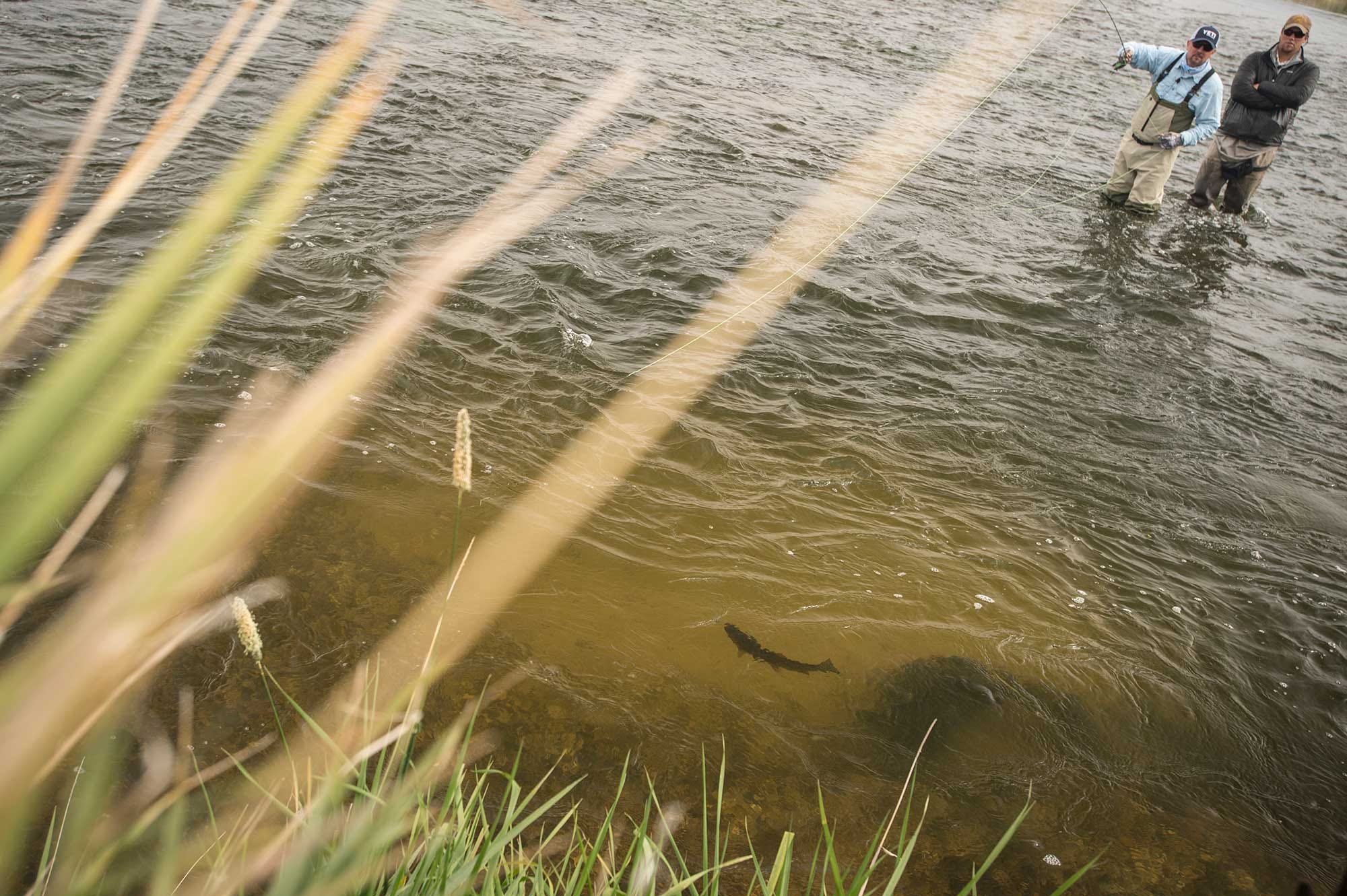
One of the acute differences I see between professional anglers and amateurs is in their respective approaches and entry to water they’re about to fish.

By John Juracek
One of the acute differences I see between professional anglers and amateurs–and I use “amateurs” here in the best sense of the word–is in their respective approaches and entry to water they’re about to fish.
Professionals always make a cautious approach and careful examination of the shallows. They’re looking for fish, those either visible or rising. Should visibility be limited, the shallows are probed with a series of casts before ever stepping into the water. Pros utilize this approach on rivers, streams, lakes, ponds–every kind of water they fish. Amateur anglers don’t do this. Almost universally, they immediately and unthinkingly wade for deeper water.
Funny thing is though, in every stream in the Yellowstone area the largest trout (particularly brown trout) want to lie and feed in skinny water. They harbor no qualms whatsoever about it, learning from a young age to trust their instincts and camouflage to avoid predation.
The exposure they risk in the shallows is worth it, because the pickings there are easy. All food is compressed into a short column, so taking on or below the surface requires little movement and effort from the fish. Often you will find large, Madison River brown trout lying in merely inches of water.
Given the right current speed–not too quick, not too slow–no water on the Madison is too thin to hold a feeding trout. This holds true for the length of the river. I’ve said for years, only half-jokingly, that if wading was banned on the Madison, we’d all catch more fish.
True or not, a ban on wading is never going to happen, and so every day–every, single day–big browns and rainbows are spooked from the shallows through careless approaches and over-eager wading.
So, I advise approaching all water on the Madison (and other rivers) with care, looking closely, and if no fish are seen, making a few casts anyway before stepping in.
The rewards can be large. Very large.
John Juracek is a fly fisherman, writer and photographer from West Yellowstone, Montana. For twenty-some years he was a partner at Blue Ribbon Flies, a local fly shop, and is currently the head casting instructor at the School of Trout and Anglers Academy. His writing credits include Yellowstone: Photographs of an Angling Landscape, Fly Patterns of Yellowstone, Fishing Yellowstone Hatches and Fly Patterns of Yellowstone, Volume Two.
He is considered one of the sport’s expert fly casters and instructors and offers casting lessons for $100/hour at jjuracek@gmail.com or (406) 640-2828.
Sage advice that Bears repeating. A local angler offered similar advice after seeing me struggle on the Madison between the dam and Ennis. What seemed illogical at the time has made me a much better angler on streams throughout the west. Thank you John and those I’ve met along the banks willing to help out a struggling amateur.