

A River Engineered – Colorado’s Lower Blue River
How private landowners have re-engineered a public river...

Opinion – Guest Essay
By Zach Weinzetl
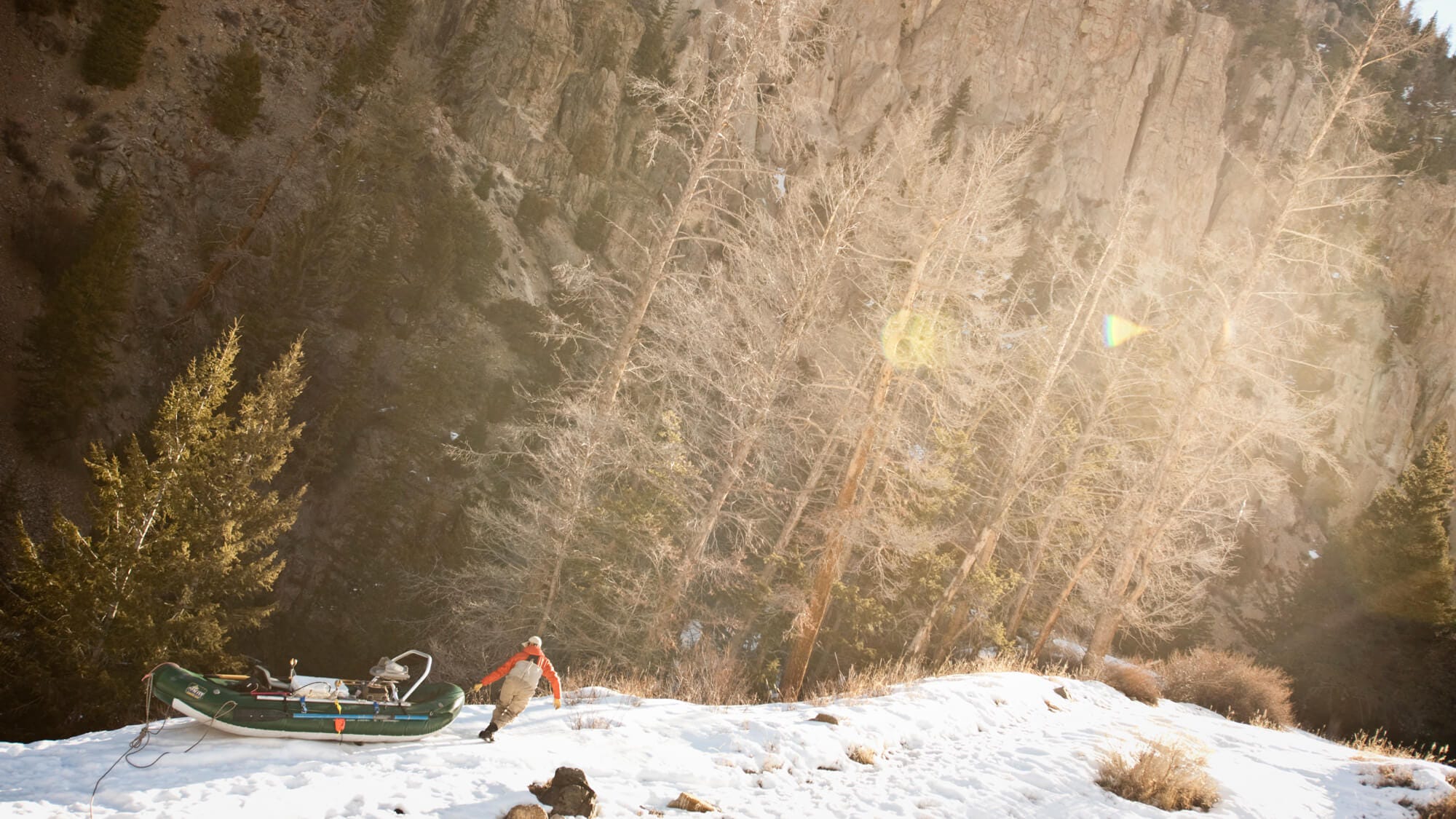
There’s a moment on the Lower Blue River–usually somewhere between the tight canyon walls and the open hay fields–where the light hits the water just right and the fog begins to lift. It’s the moment that makes anglers fall silent.
The moment you remember why you come back.
But lately, that moment carries something else beneath it. A tension. A feeling that the river isn’t moving with its own language anymore.
Something has been engineered into it–slowly, quietly and with more influence than most Coloradans realize…
The Ranch that Re-engineered the Lower Blue
To understand why the river feels different, you have to understand the largest landowner on this corridor: Blue Valley Ranch (~25,000 acres), owned by billionaire hedge fund manager Paul Tudor Jones.
Jones is often celebrated as a conservationist. A carefully curated narrative has been created around his restoration, habitat enhancement and stewardship efforts. But on the water, the picture is more complicated.
Over the past decade anglers have seen on the property he and adjacent landowners control:
Engineered boulder placements altering river hydraulics
Side-channel diversions feeding private (stocked) ponds
Narrowed river channels pushing boats into trespass-trigger zones (creating landowner vs. angler conflicts)
Camera surveillance throughout the river corridor
Private patrols approaching anglers, as if enforcing the law
Pellet feeding programs that inflate trout size and density beyond natural levels
These are not ecosystem restorations. They are ecosystem alterations and augmentations intended to impede the public’s enjoyment of a federally navigable waterway and enhance a “private” and modified fishery.
There also is no transparent public record showing site-specific permits, engineering analyses, or cumulative downstream biological assessments for these in-stream alterations.
Remember, this is a public waterway and Coloradans have a right to this information.
Just this year, an Environmental Impact Statement conducted for a recent Blue Valley Ranch land exchange with the State of Colorado was largely programmatic, and didn’t evaluate individual in-stream weirs, diversions, or fish-feeding practices, all of which could be impacting the short and long-term health of the river.
It goes without saying that the state’s anglers and the taxpaying public are guaranteed more visibility into this key artery of the Colorado River from a “river management and health” perspective.
What Really Happens When a River Is Modified
The prevailing Lower Blue River narrative, and one that’s being offered by the Friends Of The Lower Blue River (FOLBR), a non-profit organization focused on the Lower Blue River Valley, is that the river’s big fish are dying because there are too many anglers for this stretch of river to sustain, i.e. public fishing pressure is the main impact to the Lower Blue’s (modified) fish population.
But that story is misleading.
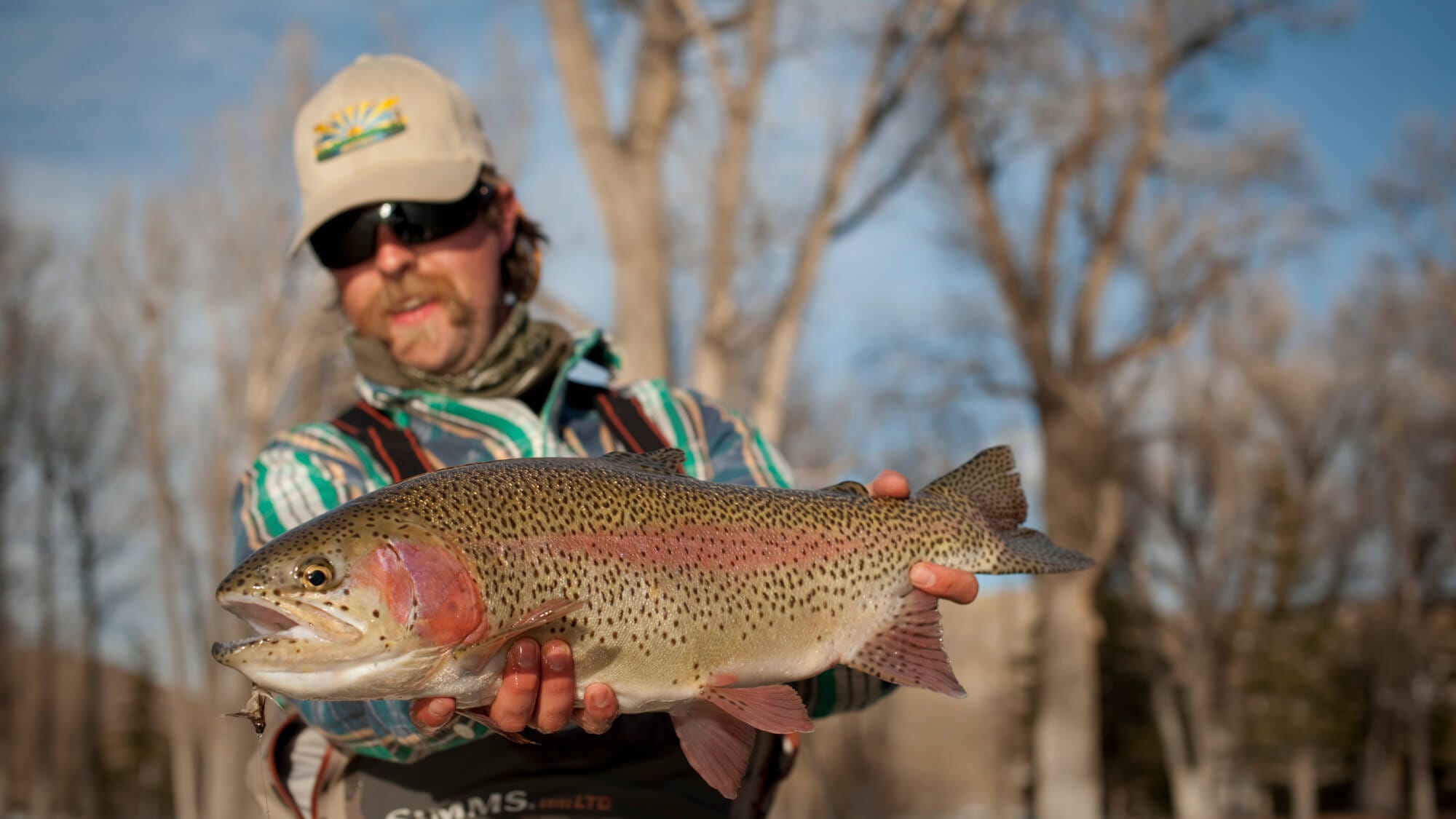
When trout are stocked and fed to reach sizes the natural food system cannot sustain, several things can occur:
They outcompete wild fish and distort species dynamics (driving wild populations out)
They cluster unnaturally around feeding zones (creating the potential for disease)
They become more susceptible to parasites, including gill lice (Lower Blue River fish are heavily infected)
They require proper in-stream revival after being caught–yet boaters are prohibited from exiting their boats to release them properly (further increasing mortality)
Gill lice thrive where fish are unnaturally concentrated, and pellet feeding creates that concentration. Local anglers, outfitters and journalists have been raising this alarm for years–not out of politics, but of ecological concern.
A river cannot support a hatchery-level biomass of oversized trout without biological consequences, and often with unforeseen and negative ones.
Most importantly, these consequences don’t end at the ranch boundary. They move directly into the Colorado River–one of the most economically important fisheries in the American West.
What happens if the Blue Valley Ranch stocking and fish feeding program finds a way to infect the Colorado River rainbow trout population with gill lice or even the brown trout with some other unforeseen parasite or disease?
As a sobering reminder, the state of Colorado has recently (since the mid-1990s) spent tens of millions of dollars to mitigate the spread of whirling disease (Myxobolus cerebralis) in its rainbow trout populations–cleaning and modernizing hatcheries, researching and re-establishing disease resistant rainbow populations and managing hatchery outbreaks–all because infected fish from private aquaculture were introduced to public waterways. And these cost-associated numbers don’t even begin to reflect the indirect economic impact to tourism or the state’s $2.4 billion recreational fishing industry.
To say there is a lot on the line for the Colorado River fishing resource, local outfitters, businesses and the tourism industry would be an understatement.
The Access Problem Beneath the Biology
The physical changes to the river are only half the story. Something deeper has also shifted: a cultural and psychological narrowing of the public’s legal access.
Over recent years, anglers have reported an increasingly adversarial relationship with Lower Blue River landowners:
Private side-by-side patrols (utility task vehicles) monitoring anglers
Confrontations over lawful eddying (stalling a boat while in the river)
Obstructed or diminished boat put-ins
Surveillance cameras
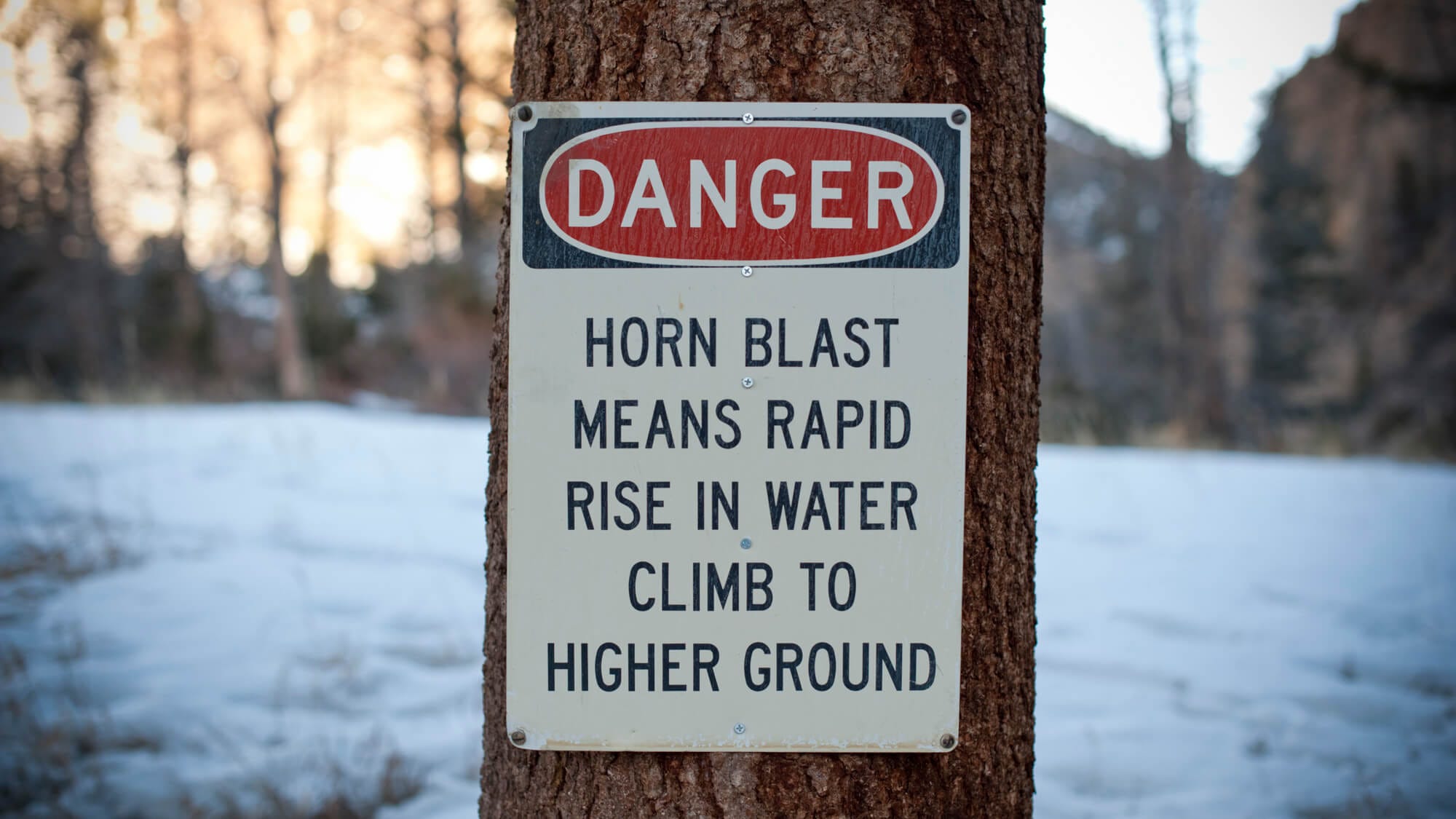
Pervasive “no trespassing,” “no slowing down or eddying” river signage
A general sense of being watched or unwelcome
Combined with engineered channel constrictions, the Lower Blue increasingly feels functionally private, despite being public water.
And now, in this increasingly combative landowner versus angler environment, a private-affiliated nonprofit–Friends of the Lower Blue River (FOLBR)–is proposing a 10-year boating permit system that would limit the public’s access to the river.
From the FOLBR’s Executive Summary and threat assessment: “The Lower Blue River is verifiably at risk of losing its defining qualities–clean water, abundant wildlife, solitude, thriving trout populations, and pristine beauty–unless changes are made to manage its carrying capacity. By regulating angling use, we can restore trophy fisheries and ensure high-quality experiences that support tourism in Kremmling, reduce service conflicts, enhance wildlife viewing, and improve safety. Without these regulations, the river’s integrity, conservation efforts, and resident water quality will continue to decline, resulting in an almost certain decline in visitor satisfaction.”
The messaging seems pretty straightforward: public anglers (legally) floating through the lower river are ruining the landowners’ wilderness experience.
It’s also critically important to understand the nonprofit’s legal management authority around a public resource and the veracity of its data collection and impact claims:
FOLBR has no regulatory authority over the river or its usage
Its “angler utilization level” numbers have already required corrections
Its ecological assumptions are unverified by independent biologists or the state
Yet, the nonprofit and its members are attempting to shape a public-resource management plan as though the river belongs to them.
This is not good faith stewardship.
It is the slow expansion of private governance over a public river.
What A Recent Fisheries Report Actually Shows
When Colorado Parks & Wildlife released its recent (December 2025) Lower Blue River Fishery Survey Report, the headline numbers created understandable alarm among anglers:
Fish per mile down at the sample site
Mortality increasing among large trout
Ecological stress detected in the system
But something important was left unsaid: the sample site sits in one of the least productive and “fishy” stretches of the Lower Blue. A wide, shallow reach naturally low in structure and holding water.
The reaches where fish density is actually highest–both above and below–were not sampled. Nor were the stretches shaped by artificial in-stream construction, channel modifications, or pellet feeding.
Objections to the sample site notwithstanding, the findings were fairly alarming where the practice of fish feeding occurs.
The multi-year fishery survey report authored by Jon Ewert, an aquatic biologist for Colorado Parks and Wildlife, flagged the fish pellet feeding program as a top risk factor in perpetuating fish “overcrowding,” gill lice infestations and mortality within the river system.
From Ewart: “The apparent association between fed fish and heavy gill lice infestation on this reach is a major concern regarding the health of this fishery as well as the Colorado River in Grand County. Fish feeding has the potential to negatively affect both the brown trout and rainbow trout populations by overcrowding and spreading disease. When fish populations within a system are pushed beyond their natural biomass limit through artificial supplementation, mortality within the system will drive the population down to the natural equilibrium. Larger rainbow trout, which are supported through supplemental feeding, can displace resident fish and result in higher natural mortality rates within the system.”
And more: “Gill lice are a highly visible indicator of conditions that have the potential to foster and proliferate other parasites or communicable diseases which may not be as obvious or detectable. The fact that these fish have direct access to Gold Medal reaches of the Colorado River intensifies this concern.”
The region’s lead aquatic biologist is being emphatically clear about a factor absent from the public narrative: pellet feeding produces unnaturally large trout in densities the natural food web cannot support. And that combination is a recipe for nutritional imbalances, disease susceptibility, disease communicability and mortality spikes.
The red flag warning here, obviously, is that the consequences of human modifications upstream (communicable fish diseases incubated on the Lower Blue’s private ranches) can make their way downstream to the larger Colorado River watershed.
It’s just a matter of time.
Why This Matters for the Entire State
What happens on the Lower Blue does not stay on the Lower Blue.
The river is a tributary of the Colorado River, which also supports:
A healthy, self-sustaining fishery
Guide services and outfitters
Rural tourism economies
Western river culture and identity
A complex, multi-state water system
If the Lower Blue becomes a biological hazard and disease vector, then the Colorado River suffers. And when the Colorado River suffers, the reach of that decline extends far beyond any private property line.
This is not about two or three extra boats a day floating the Blue. It’s about the ecological integrity of a watershed that hundreds of thousands of Coloradans depend on economically, recreationally and culturally.
We should be paying more attention.
What Should Happen Next
Given the presence of infected fish and the potentially devastating (future) impacts to the Colorado River, management responsibility should shift to our public agencies: Colorado Parks & Wildlife, the BLM and the State of Colorado, where they can collectively prioritize a number of key strategic objectives to ensure the long-term health of the fishery and watershed:
Conduct a full ecological audit of all in-stream modifications, diversions, feeding practices and structural alterations.
Require transparent permitting for any past, current, or future riverbed changes.
Investigate gill-lice prevalence and other disease pathways linked to unnaturally dense trout populations.
Review the legality and ecological consequences of pellet feeding in a connected watershed.
Reassert public-agency leadership in river management–not private nonprofits.
Safeguard lawful public access to ensure intimidation or obstruction does not become normalized on navigable waterways.
The truth is pretty straightforward: The Lower Blue is not declining as a fishery because a few more anglers are floating it.
It’s declining because it has been reshaped (over decades) into something nature never intended: a highly modified fishery with obese, unhealthy fish that are susceptible to disease, nutritional imbalances, angling pressure (of course) and natural mortality spikes.
Credible resource management should begin where the real (biological) impacts begin.
The River Belongs to All of Us
The Lower Blue River has carried generations of anglers, families, rafters and locals who understood that Colorado’s rivers are part of our shared inheritance.
We are now at a crossroads.
One path leads toward privatized influence disguised as conservation–toward a river where access is permission-based, science is selectively applied and ecological harm is framed as public fault.
The other path leads toward transparency, accountability and genuine stewardship.
Colorado would be smart to choose the latter.
Because if we lose the Lower Blue, we lose far more than a fishery. We lose the belief that a river–its currents, angling opportunities and freedom–belongs to all of us. We also risk the health of the Upper Colorado, a fishery rebuilt over decades.
And once that’s gone, it may not return in our lifetimes.
Zach Weinzetl is the founder of Fish On Adventuring, a fly-fishing travel company, and has been guiding anglers for nearly three decades. He began on Montana’s Madison River in 1995 and has worked as a professional river guide in Colorado since 2009. He also has hosted custom travel adventures in the Bahamas, Belize, Mexico, Costa Rica, Hawaii, Florida, Montana and Idaho. When not on the water, he spends time as a wilderness first responder, professional mentor, father and writer.
Epic read, sounds like a job for the monkey wrench gang. If I still lived in the area I would be furious. I am. Privatization is not the way.
The Lower Blue situation seems so emblematic of what's going on across public lands. Much appreciation for those that continue to press for our rights as citizens, and the rights of the river.