

A Love Letter to Redfish
Some fish feel like home.


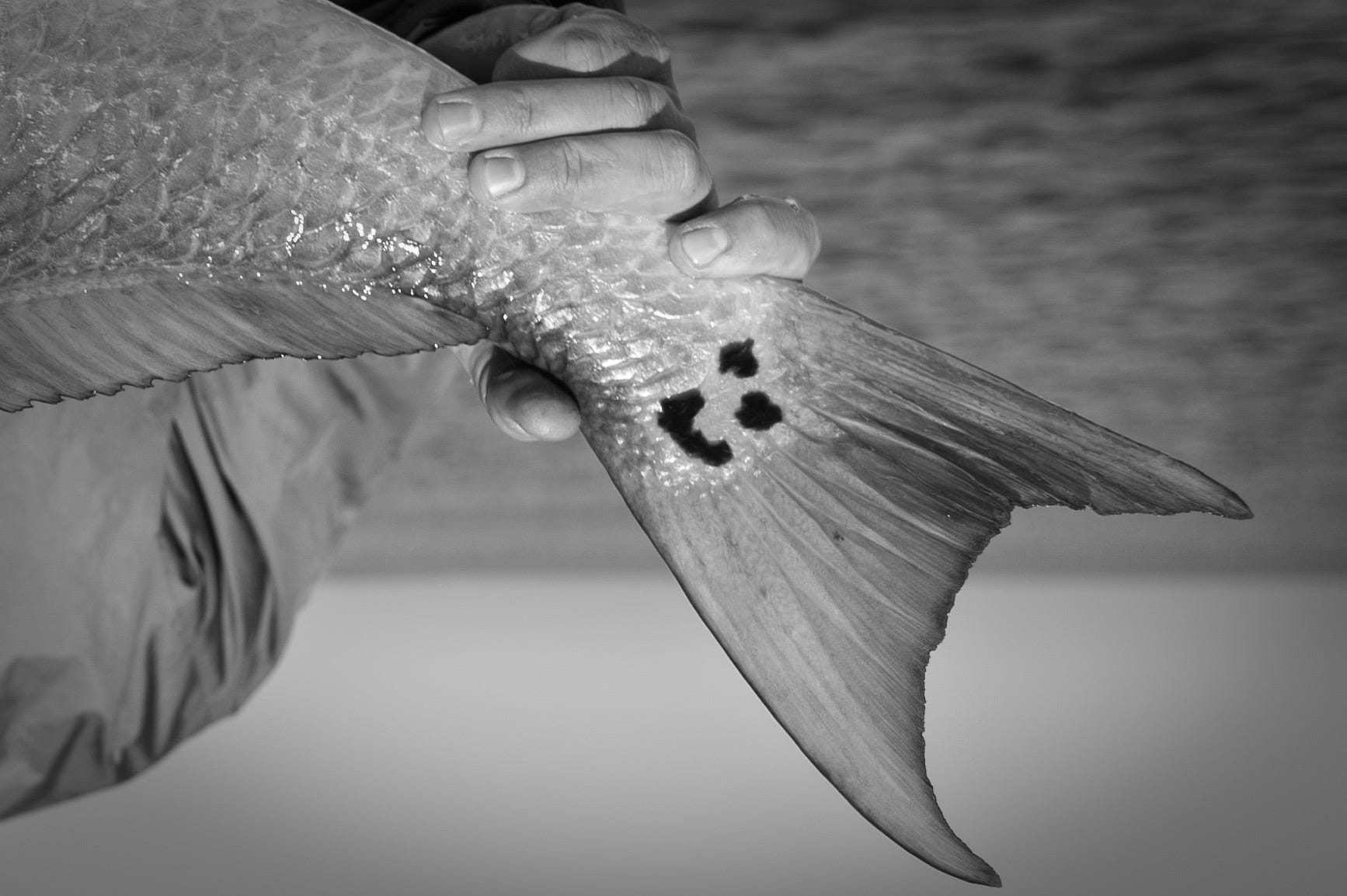
We were on full plane when I glanced over to a stretch of water I had long neglected. Our photographer for Drifter, Mason Irwin, asked if we could sneak out for an afternoon session while he was in town. The weather was nice, the tide was low, and he offered to buy the beer. That was enough for me.
As I idled down, I could see shimmers over nervous water–wakes painting the surface with flashes of orange and yellow. I tucked the skiff in, cut the motor, and quietly climbed onto the poling platform. Almost on cue, the flat came alive.
Some fish were tailing, barely breaking the surface and leaving trails of dimples like breadcrumbs. Others cruised the shoreline, so shallow that at times their entire backs breached the water–resembling a shark attack scene in one of those corny, low-budget movies.
I’d seen this pattern before and felt pretty proud of myself. The action was instant, and from my polling platform, everything felt suspiciously under control–like I knew what I was doing.
Then a loud pop echoed from a nearby creek. It caught me completely off guard.
My skiff can get pretty skinny, but even with all of its accolades, the water was far too low to push us in–and honestly, much lower than I expected any fish to care for either.
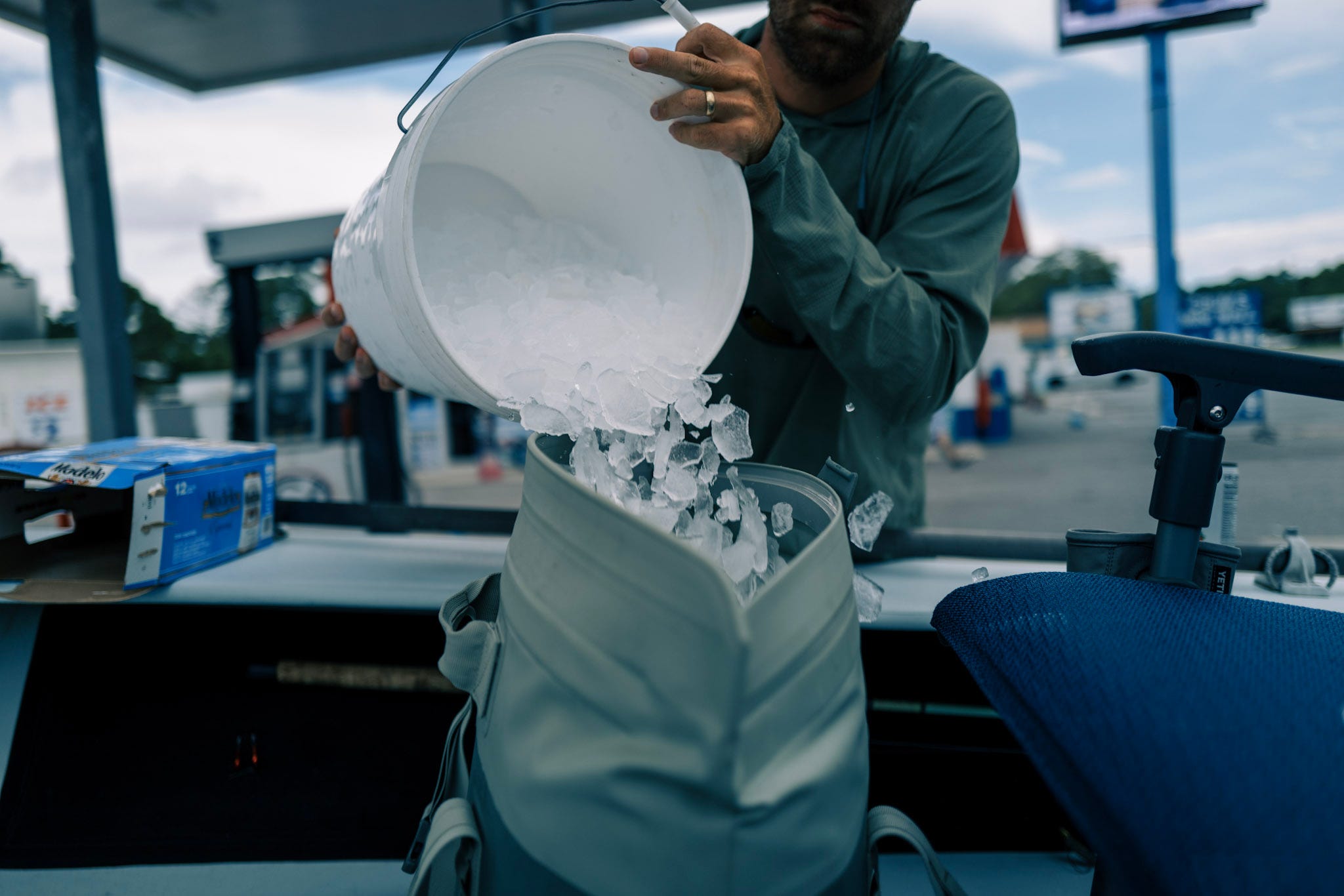
I situated the boat, dropped anchor, and threw a couple Modelos into my wading bag, just in case of emergency. We crossed a small patch of spartina grass that turned out to be a minefield of mud and oyster. The result: several days of hydrogen peroxide treatments and bandages.
Quick field note–always keep wading boots in the boat.
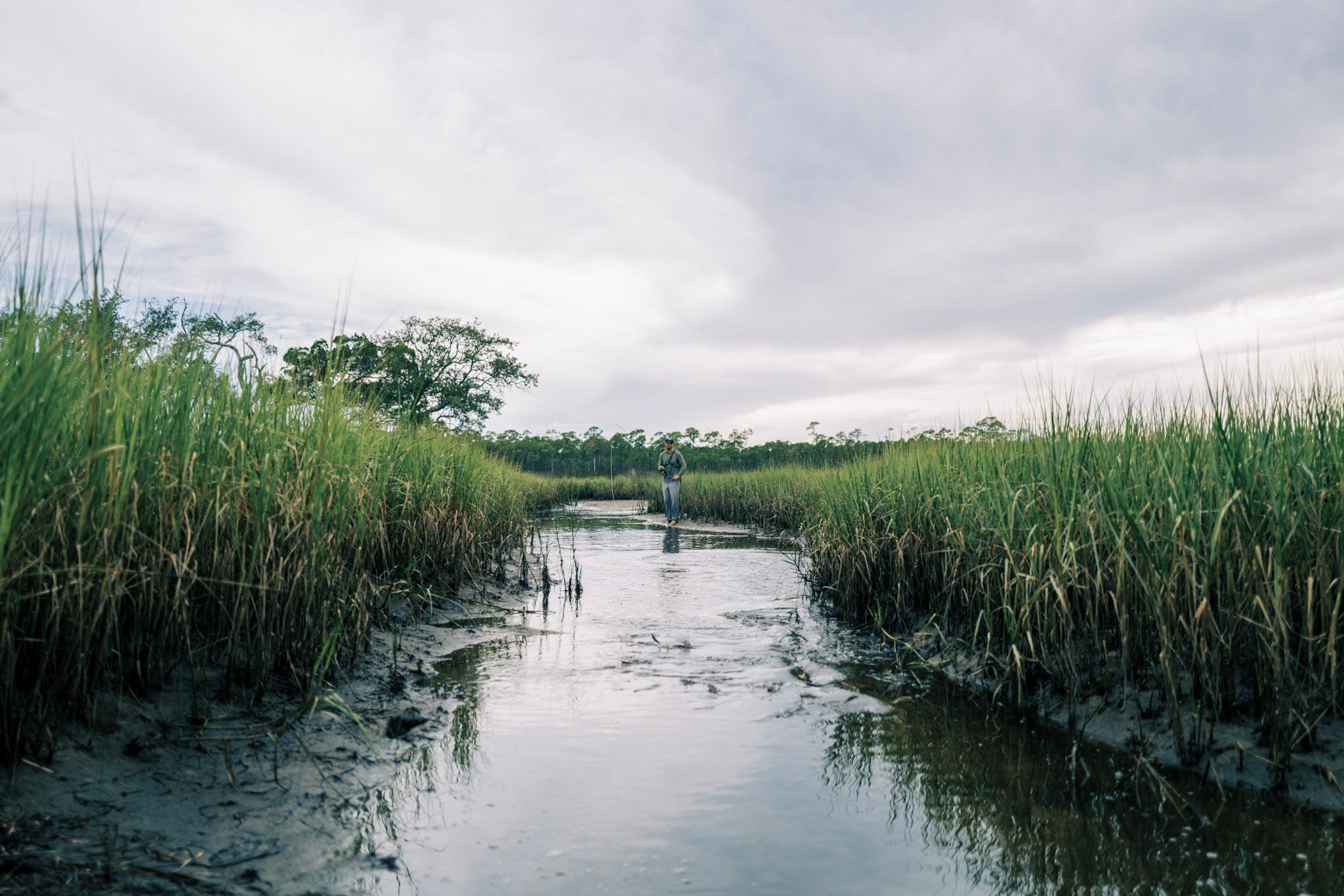
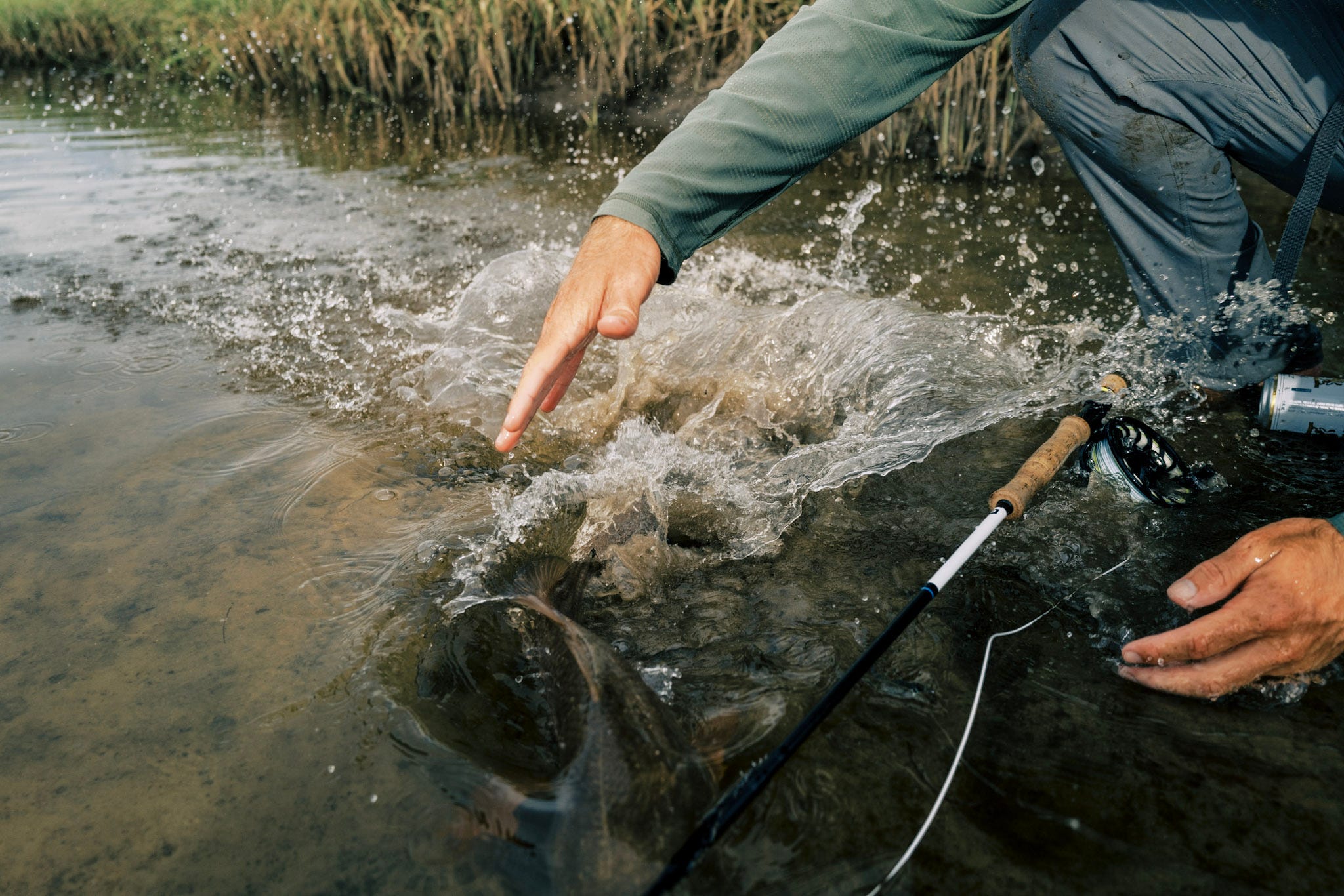
When we reached the bank of the creek, I was surprised to see a quality redfish seemingly trapped in what passed for a “deep” run. Mason and I were spread about sixty feet apart as the fish thrashed between us, followed by a few more working their way around the bend.
I led them a few feet, waited, and found them willing to cooperate.
Releasing a redfish barefoot, shallow enough to set my beer down beside me, is a moment I’ll never forget. Not because the fish was a “trophy,” or because the destination was a “bucket list,” but because there’s something special about making new memories in places where you have deep roots.
And there is also something special about redfish.
A Budding Love for Redfish
In a bucket-list culture, much of our attention goes to the exotic–the fish that justify airline miles, weeks of planning and always seem to require a camera nearby. Permit gliding over white sand. Bonefish that look like small submarines. Tarpon exploding in sprays of water, fly placed perfectly in the button.
You know the deal.
Those fish matter. They’ve earned their place in our lexicon. They’ve fueled dreams, forged friendships and fed an entire industry. I get it. I really do.
But there is just something special, at least to me, about redfish.
As a Gulf Coast kid, my relationship with them feels like it has always been there. Some of my earliest memories involve running the shoreline with a wooden-handled net, and scooping up small crabs for my dad and his friends. They paid a quarter per crab. Inflation has not been kind.
My own progression was predictable and a little cliché–live bait, then topwater, then sight fishing with plastics. Eventually, inevitably, fly fishing entered the picture.
A Tale as Old as Time
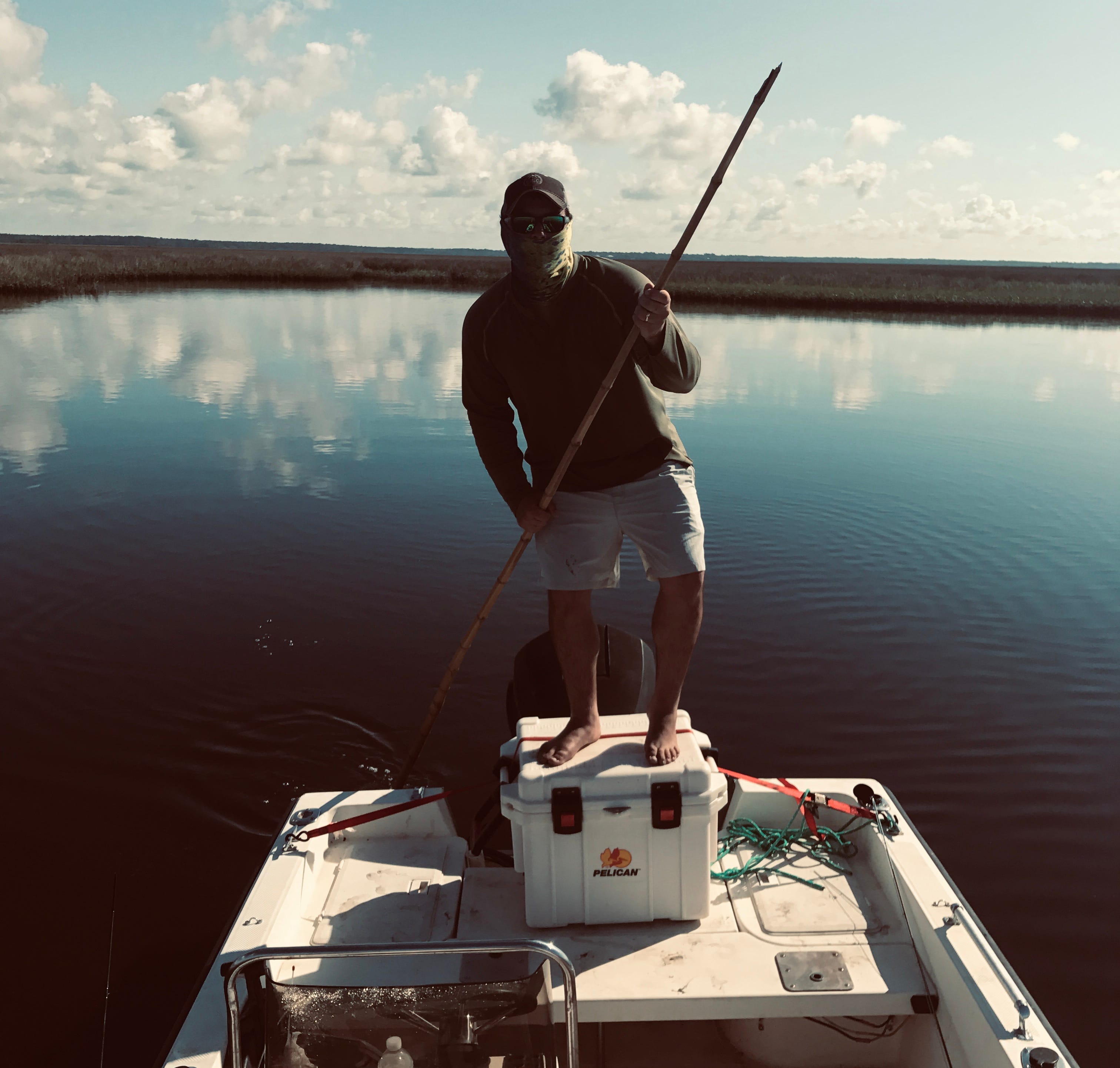
Not long after realizing what was possible with a fly rod, my best friend Josh and I threw an old cooler into the back of his boat, cut a piece of bamboo that was far too short and started poling oyster bars and muddy shorelines close to home.
Slowly–like kids learning the rules of a playground–we started to see patterns. Bank fish. Small schools. Big tailing black drum that were definitely not redfish. And eventually, redfish that moved through their days on quiet, more dependable routines.
Mullet were mistaken for redfish. Redfish were maliciously assaulted by bad casting. Nothing came easy.
With fly fishing, it rarely does.
But this was different. It asked more of me. It slowed everything down. It changed the way I saw the water. It felt like my relationship with fishing had been reignited, and once again, we couldn’t stop thinking about each other.
Challenging yourself will do one of two things. Sometimes it convinces you the juice isn’t worth the squeeze. Other times, if you’re unlucky in the best kind of way, it turns an interest into an obsession.
I became obsessed.
A Stable Love
Between trips and travel, I still find myself slipping out with friends. I might be staring at a computer screen or doing something responsible when the phone rings: “It looks good. Let’s sneak out.”
I tell my wife my intentions–to be gone only a few hours–throw a handful of essentials into a bag, grab a rod, a couple gas-station snacks, and go.
Looking back on nearly a decade of new fishing experiences that have come with the Captains Collective Podcast and the Drifter Fish Club, my mind still wanders to moments on my home water with redfish.
When people ask me what my favorite fish is, I usually hesitate. It’s like being asked “What’s the best meal you’ve ever had?” Your answer might be entirely different than discussing what your last meal would be, or what your favorite restaurant is. It’s an intricate thing.
Redfish aren’t fine dining.
They’re comfort food.
They’re homemade chicken noodle soup when you’re sick. A grilled cheese cooked hot in a cast-iron pan. Pizza eaten straight from the box. A backyard steak with the people you love.
Familiar. Fun. And widely fantastic.
Some fish help you see the world.
Redfish help you stay in it.
Hunter Leavine is the host of the Captains Collective Podcast and founder of the Drifter Fish Club. A fifth-generation Floridian, he lives along the Forgotten Coast where he enjoys exploring local dives, fishing with friends and–most recently–attempting to camp with his family.
Photos: Mason Irwin
Header photo: Tim Romano
 | A guest post by
|
Wonderfully written, and a necessary reminder of the easily-overlooked joy of immersion — the obverse of “bucket-list culture.” Thank you for running this piece.
That sounds wonderful as I sit here in the frozen northland they call Minnesota looking at the frozen lake across the street.